 English
 Le français
 Türkçe

When a ball mill stops, the balls and material form a heavy mass at the bottom of the drum; at start-up the motor has to lift this mass together with the drum. This first moment requires more torque than normal running, and because of the drum’s large inertia acceleration takes a long time. If starting torque is insufficient, the motor either cannot turn at all or heats up by drawing high current for a long time.
Three factors that make starting harder
- Breakaway torque: The initial torque needed to set a stationary load in motion is higher than the torque during rotation.
- Inertia: Until the drum, liners and ball mass reach rated speed, the motor stays in the starting current zone.
- Frozen charge: In wet grinding, after long stops the material can stick the balls together; the drum starts with an unbalanced mass.
Values to look for in the motor catalogue
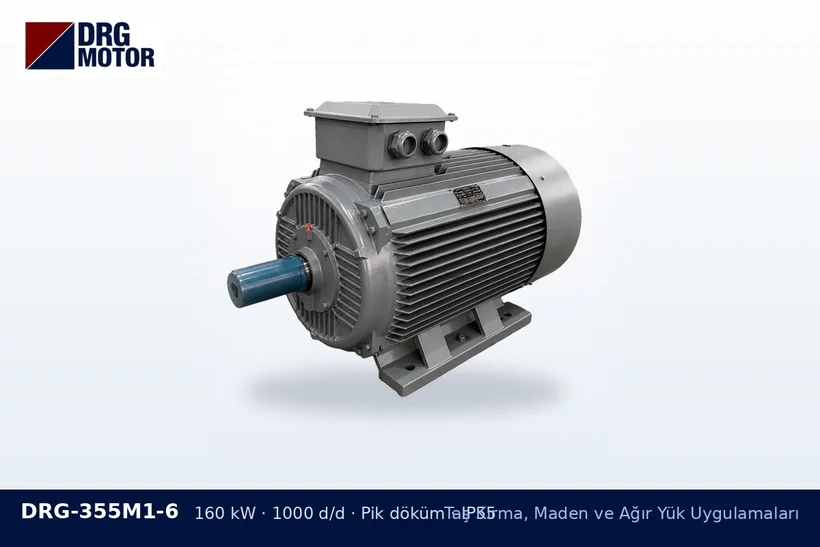
Besides rated torque, the starting torque ratio (Ms/Mn), breakdown torque ratio and starting current ratio should be compared. The starting time and inertia data supplied by the mill manufacturer are needed to judge whether the motor can accelerate during this time without overheating. These ratios are usually found not on the nameplate but in the manufacturer’s catalogue and documentation.
The starting method changes the torque
With star-delta starting, starting torque drops to about one third of that with direct-on-line starting; this is often insufficient for a loaded mill. A soft starter also reduces torque along with voltage. Starting with a frequency inverter maintains torque better at low speed. Which method is chosen depends on the supply capacity, the motor nameplate, the manufacturer’s documentation and the assessment of qualified electrical personnel. The concept is explained in detail on the star-delta starting page.
Information requested for selection
Drum diameter and length, ball charge ratio, wet or dry grinding, drum speed, gearbox or girth gear ratio and the previous motor’s nameplate. With this information, following the approach on the ball mill motors page, the right power and number of poles can be weighed among the options in the three-phase motor shop.