 English
 Le français
 Türkçe

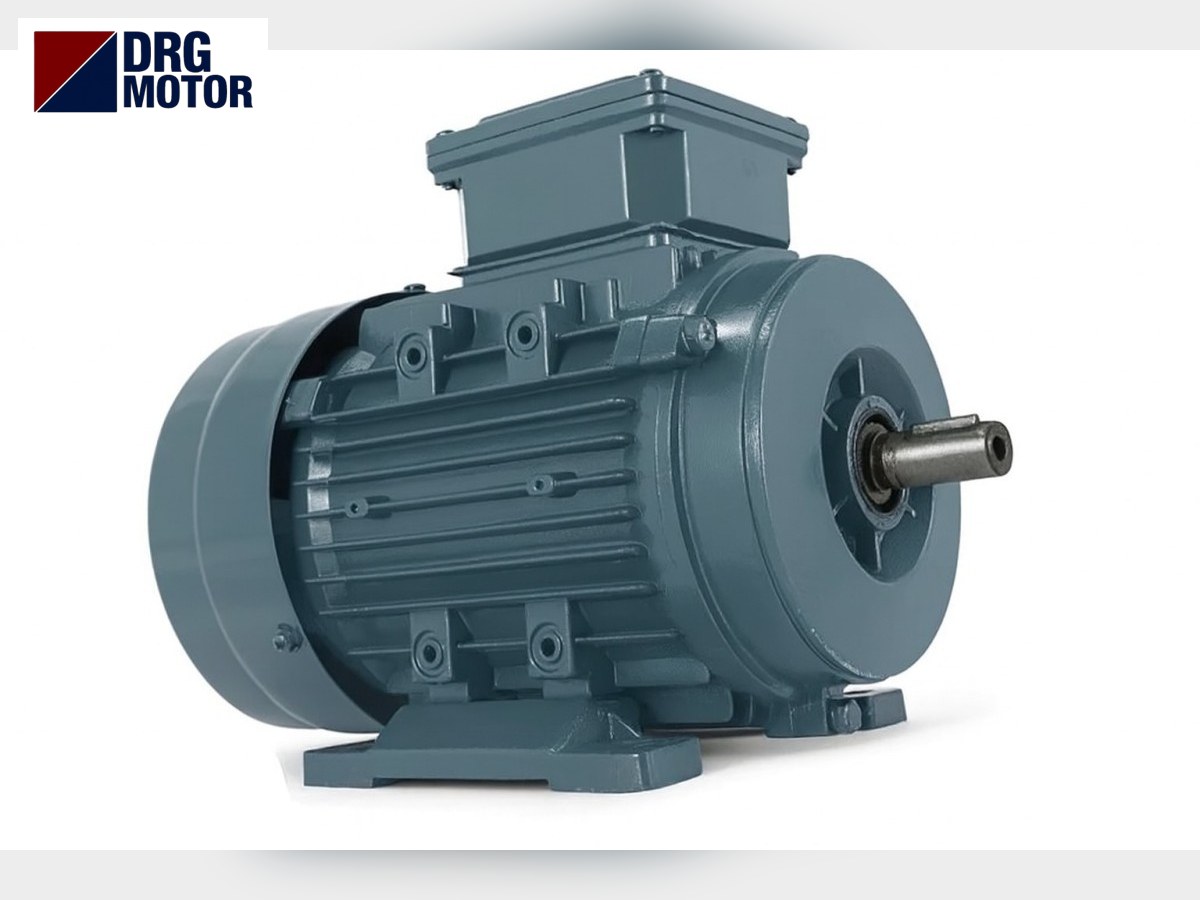
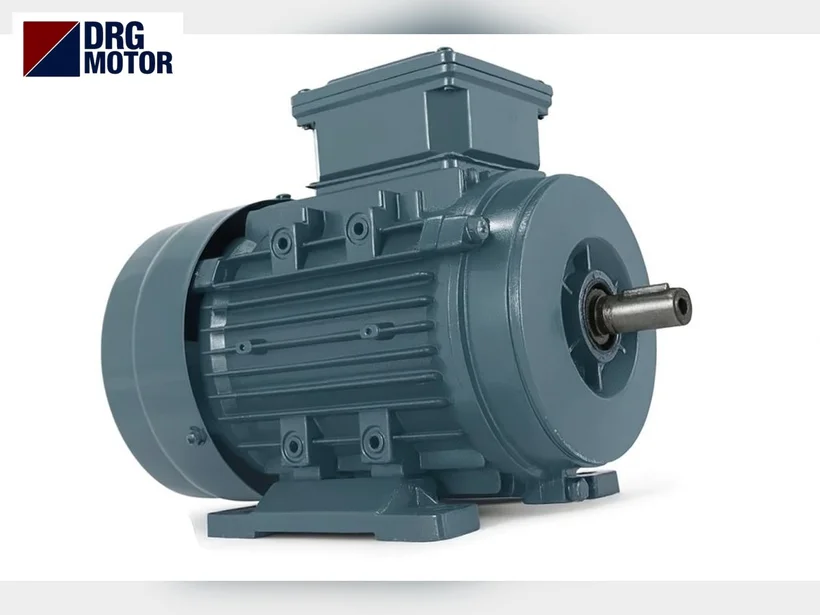
The raw material box feeder is the first machine where clay enters a brick or roof tile line: a large box filled by loader, a steel apron or rubber belt creeping along its floor, and chipper shafts at the outlet that cut the clay and let it flow evenly. The machine usually carries two separate electric motors: the apron motor, which drives the floor very slowly through a gearbox, and the chipper motor, which spins the chipper shaft through belts. The rest of the line runs on the flow these two motors deliver.
DRG Motor is a manufacturer, supplier and seller of electric motors. We do not sell the feeder box, its apron plates, chain, gearbox or inverter; nor do we offer machines, hydraulic power packs, pumps or impellers. Our share is the motor on the two drives, apron and chipper; models are on Buy Electric Motors Online.
What is a box feeder and where does it sit?
Clay from the pit or the open yard heap, sand, coal additive or a second clay type each go into their own box feeder. Each feeder discharges at its own speed, so the recipe ratio is set by feeder speeds. The feeder is also a buffer: the loader fills it now and then, while the line wants a steady flow.
Steel apron and rubber belt floors
A steel apron floor has overlapping steel plates fixed between two chains; it is chosen for lumpy, wet and sticky clay straight from the pit. A rubber belt floor is a belt sliding over rollers, used for lighter, finer material; one maker notes this type can also act as a distributor feeding a roller mill. With a steel apron the chain load decides; with a belt floor the drum and belt tension do.
Chipper shafts and dosing gate
The chipper shaft at the outlet cuts into the clay heap and turns the mass brought by the floor into an even curtain. Gate height, apron speed and chipper speed set how fine the flow is. Catalogues show the chipper shaft driven by a motor, a shaft-mounted gearbox and belts.
How many kW is a feeder motor? Catalogue values
A) What box feeder makers print for apron and chipper motors:
| Feeder / bed size | Motors (apron, chipper) | Single / total | Note |
|---|---|---|---|
| Steel apron, 750 × 2,500 mm | 1.5 + 3 kW | two separate motors | first maker, smallest model |
| Steel apron, 1,200 × 5,500 mm | 4 + 5.5 kW | two separate motors | first maker, mid-size model |
| Heavy-duty steel apron, 1,800 × 11,500 mm | 11 + 11 kW | two separate motors | first maker, largest model |
| Rubber belt, 800 × 3,500 mm | 1.5 + 3 kW | two separate motors | first maker, belt series |
| Rubber belt, 1,200 mm useful width | 3 + 4 to 4 + 5.5 kW | two separate motors | second maker |
| Steel apron, 1,470 mm useful width | 5.5 + 7.5 to 7.5 + 7.5 kW | two separate motors | second maker, large series |
| Enclosed belt, 30–80 m³/h | 1.5 + 1.5 to 5.5 + 2.2 kW | two separate motors | third maker |
| Box feeder, 10–90 m³/h | 5.5–11 kW | single value in the table | fourth maker |
Depending on maker model and floor size, this machine group shows roughly 1.1–11 kW for each of the two motors per machine; on one maker’s smallest model the apron takes 1.1 kW and the chipper 2.2 kW. Power grows with box volume and floor width: more clay on the floor and more chain friction mean a bigger apron motor, a wider clay curtain a bigger chipper motor. One feeder carries two motors; “4 + 5.5 kW” in the table means a 9.5 kW machine total.
B) Where DRG fits: apron and chipper motors from 1.1 to 11 kW match our 4-pole cast iron 90S to 160M frames, and aluminium frames up to 11 kW; the whole span in the table lies inside our range. On very large feeders, or where a one-piece geared motor is required, we can supply the motor alone.
Click to see current electric motor prices and order nowSEE PRICES →
Apron motor: low speed, high torque
The floor moves a few metres a minute. One catalogue gives 4–5 m/min apron speed; another data sheet shows a 149 mm pitch apron chain turned by an 8-tooth sprocket. These two facts show how much speed must be taken off between motor and sprocket:
| Step | Operation | Result | Comment |
|---|---|---|---|
| Sprocket pitch diameter | 149 / sin(180° / 8) | about 389 mm | 8-tooth sprocket, 149 mm chain pitch |
| Sprocket speed at 5 m/min apron speed | 5 / (π × 0.389) | about 4.1 rpm | upper apron speed in the catalogue |
| Total ratio with DRG-132S-4 | 1,460 / 4.1 | about 357 | gearbox (plus a chain stage if needed) |
| Torque on the sprocket shaft, 5.5 kW | 9,550 × 5.5 / 4.1 | about 12,800 Nm | gearbox losses excluded |
| Apron speed at 25 Hz on an inverter | 5 × 25 / 50 | about 2.5 m/min | the motor fan also turns at half speed |
The result shows why a feeder is a torque machine more than a power machine: the motor gives 36 Nm at 1,460 rpm, while the sprocket shaft needs thousands of Nm. The gearbox makes that conversion, so the motor is chosen together with the gearbox input speed and flange. Try output speed and torque on our gearbox output speed tool.
Dosing with an inverter
To hold the recipe ratio, apron speed is usually set by a frequency converter; in one plant quotation the apron motors of two box feeders run on inverters while the chipper motors are fed direct. Hours at 15–20 Hz leave the shaft-mounted fan short of air, which is why one maker lists a force-ventilated motor as a belt-floor option. In that case let us discuss before ordering whether an external fan is needed. The inverter itself is not in our range.
Chipper motor: belts and speed
The chipper motor digs straight into the clay; its load fluctuates and jumps when a lump arrives. Belts soften that shock a little and the pulley ratio sets the speed. We found no sourced catalogue value for chipper speed, so we give no figure; selection follows the plate speed of the existing motor and the pulley diameters. Work out the pulley ratio with our pulley and belt calculator.
Wet clay, starting and protection
The feeder stands near the open yard, in a dusty, rainy area where the loader tips. The box starts full in the morning; at that moment the apron motor has to pull the chain from under all the clay in the box.
Starting with a full box
The apron motor is small, but because of the high gearbox ratio it works close to full torque at start. On the small 4-pole frames in our range, starting torque is about 2 to 2.3 times rated torque (2.0 for DRG-132S-4, 2.3 for DRG-100L1-4). With an inverter, a current-limited ramp that builds torque slowly is set.
Clay dust, rain and mud
Our motors are IP55: protected against dust and water splashes. The terminal box should face down or sideways, and the cable entry should not sit where rainwater runs. Clay falling from under the box must not pile on the motor fan cowl; some plants place a separate cleaning belt under the floor.
DRG motors for raw material feeders
Four-pole models of ours suited to apron and chipper drives (current at 400 V):
| Model | Power / speed | Frame · shaft D×E | Current 400 V |
|---|---|---|---|
| DRG-90S-4 | 1.1 kW / 1445 rpm | 90S cast iron · 24×50 | 2.48 A |
| DRG-90L-4 | 1.5 kW / 1445 rpm | 90L cast iron · 24×50 | 3.3 A |
| DRG-100L1-4 | 2.2 kW / 1450 rpm | 100L cast iron · 28×60 | 4.52 A |
| DRG-100L2-4 | 3 kW / 1450 rpm | 100L cast iron · 28×60 | 6.02 A |
| DRG-112M-4 | 4 kW / 1450 rpm | 112M cast iron · 28×60 | 7.95 A |
| DRG-132S-4 | 5.5 kW / 1460 rpm | 132S cast iron · 38×80 | 10.7 A |
| DRG-132M-4 | 7.5 kW / 1460 rpm | 132M cast iron · 38×80 | 14.3 A |
| DRG-160M-4 | 11 kW / 1465 rpm | 160M cast iron · 42×110 | 20.4 A |
An apron motor flanged to its gearbox uses a B5 or B14 flange motor, a belt-driven chipper shaft a foot-mounted B3 motor; vertical mounting is not needed. Before the swap, photograph the plate and measure shaft, key, flange and pulley; those figures go against the feeder manual, and until we have them we cannot promise the new motor will bolt straight on.
B5 dimensions for the gearbox motor
B5 flange values of frames common on apron drives, mm:
| Frame | Shaft D×E | Flange P / M / N | Hole S |
|---|---|---|---|
| 90S/90L | 24×50 | 200 / 165 / 130 | 12 |
| 100L/112M | 28×60 | 250 / 215 / 180 | 14.5 |
| 132S/132M | 38×80 | 300 / 265 / 230 | 14.5 |
Because the shaft slides into the gearbox bore, any difference in D, E or the spigot N stops the motor from seating. Foot-mounted dimensions are on the technical drawings page.
Items outside our range
Vibrating feeders and vibrating screens run on vibration motors; these are a separate product group, see our vibration motors article. A feeder fitted with a hoist or robotic loading arm may also carry a brake motor, a servo or a single-phase motor; none of these three appears in our catalogue. Feeders dosing coal or coke into the mix may stand in a classified dust zone; in that case only an Ex-approved motor is allowed, and none of our standard motors holds that approval.
Live price table
Prices of our models in feeder apron and chipper ratings come live from the shop:
| Model | Power / speed | Frame · current 400 V | Price |
|---|---|---|---|
| DRG-90S-41.5 HP | 1.1 kW · 1500 rpm | Cast iron 90S · 2.48 A | $124.09 (€110.82) Details & buy → |
| DRG-90L-42 HP | 1.5 kW · 1500 rpm | Cast iron 90L · 3.3 A | $144.14 (€128.73) Details & buy → |
| DRG-100L1-43 HP | 2.2 kW · 1500 rpm | Cast iron 100L · 4.52 A | $188.32 (€168.18) Details & buy → |
| DRG-100L2-44 HP | 3 kW · 1500 rpm | Cast iron 100L · 6.02 A | $203.84 (€182.05) Details & buy → |
| DRG-112M-45.5 HP | 4 kW · 1500 rpm | Cast iron 112M · 7.95 A | $254.38 (€227.18) Details & buy → |
| DRG-132S-47.5 HP | 5.5 kW · 1500 rpm | Cast iron 132S · 10.7 A | $342.01 (€305.44) Details & buy → |
| DRG-132M-410 HP | 7.5 kW · 1500 rpm | Cast iron 132M · 14.3 A | $394.89 (€352.66) Details & buy → |
| DRG-160M-415 HP | 11 kW · 1500 rpm | Cast iron 160M · 20.4 A | $568.76 (€507.94) Details & buy → |
DRG MOTOR motors are guaranteed against material and manufacturing defects for 2 years from the delivery date (warranty certificate).
Motors in this power range
- DRG-100L1-4 – 2.2 kW – 1450 rpm – 100L cast iron
- DRG-112M-4 – 4 kW – 1450 rpm – 112M cast iron
- DRG-132S-4 – 5.5 kW – 1460 rpm – 132S cast iron
- DRG-132M-4 – 7.5 kW – 1460 rpm – 132M cast iron
- DRG-160M-4 – 11 kW – 1465 rpm – 160M cast iron
Click to see current prices and order these motors nowSEE PRICES →
Browse the products, ask for a quote: suitable motors for your feeder are on Buy Electric Motors Online. A picture of the apron motor plate plus one of the gearbox face, sent on WhatsApp, is enough to begin; by phone (+90 (542) 666 11 11), floor width and box volume are the first two figures we ask for.
Frequently asked questions
What speed should a brick machine feeder motor have?
Four poles (about 1,450 rpm) are common on apron and chipper motors; the real low speed comes from the gearbox. Keeping the old motor’s pole count keeps the gearbox ratio.
Can I run a clay feeding system motor without an inverter?
Yes; but apron speed stays fixed and the recipe ratio has to be set with the gate height. When several feeders build a blend, speed control makes the job easier.
For questions: +90 (542) 666 11 11 · info@drgmotor.com · contact.


