 English
 Le français
 Türkçe

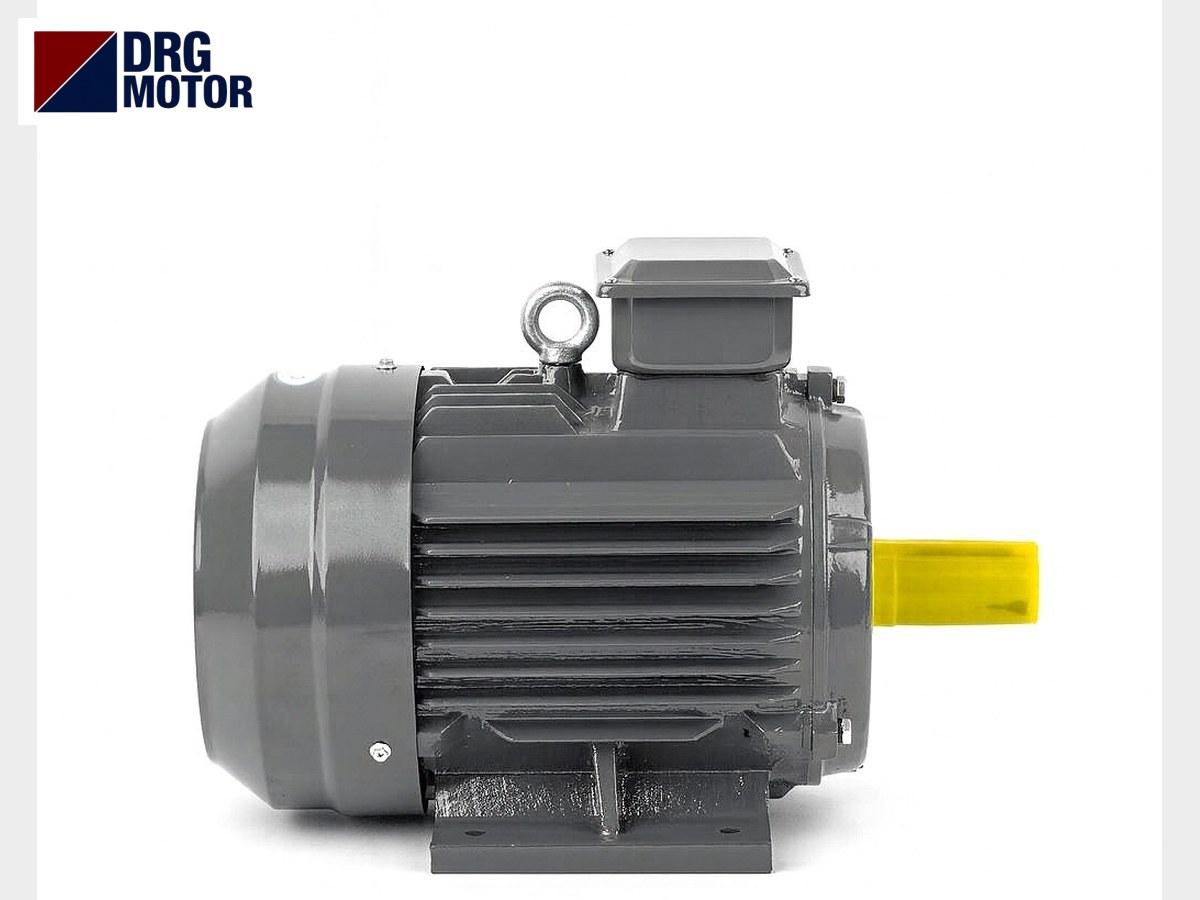
On an auger filler packing powders such as flour, sugar, milk powder, coffee and spices, the dose is measured by how many turns the auger makes; the auger is turned either by an induction motor with a clutch-brake or by a servo motor. Servo and stepper motors are outside our range. The induction auger motor of clutch-brake machines, the hopper agitator, the screw feeding the filler, the vacuum feeder and the bucket elevator all run on standard three-phase motors. Maker data sheets show 0.37–11 kW for these motors.
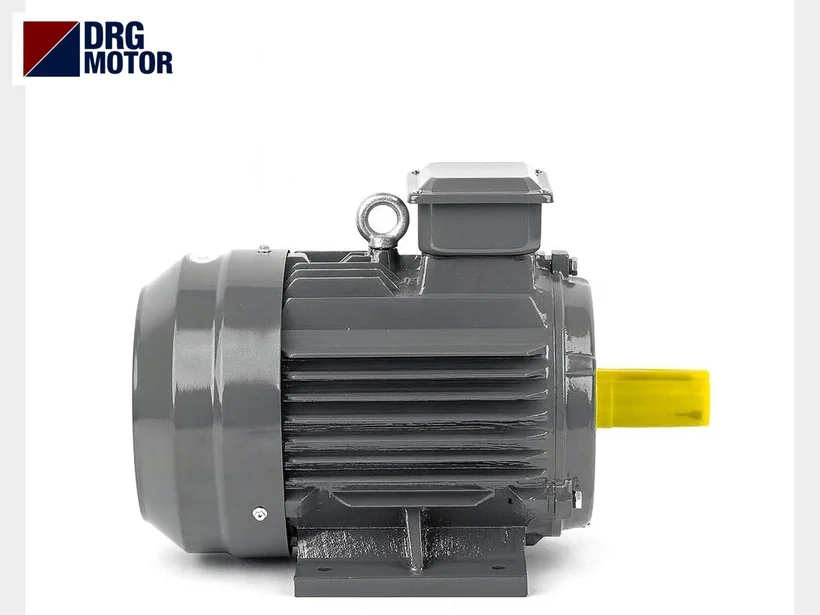
DRG Motor is a manufacturer, supplier and seller of electric motors. We do not sell the powder filler, auger and hopper, weighing system, vertical packaging machine, gearbox or inverter. The three-phase induction motors that turn auger, agitator and feeder on these machines are listed on Buy Electric Motors Online.
Where do the motors work on a powder filler?
Powder is carried from sacks or big-bags into the filler hopper by a vacuum feeder or an inclined screw. Inside the hopper a slow agitator stops the powder from bridging, a vertical auger below pushes it down through the nozzle, and the pack (jar, can or the bag of a vertical packaging machine) fills underneath. Unlike free-flowing sugar and granules, powders compact and change their flow; that is why the auger is the most common form of volumetric dosing.
Auger drive: clutch-brake or servo
One maker offers its auger filler in two versions: an AC motor with a clutch-brake system or a servo motor; in both, the dose is set on the touch screen. On a clutch-brake machine the motor runs all the time; at each dose the clutch engages for a set number of auger turns and the brake then stops it. On the first maker’s machine of this kind the auger drive motor is 1.5 hp at 1140 rpm (60 Hz data) and the agitator motor 0.5 hp with a 60 rpm output. With a servo drive the motor starts and stops on every dose and reports its position; the second maker’s servo machines draw 1.0–1.5 kW in total. On a servo machine we cannot supply the auger motor, but we can quote for agitator and feeder motors.
Hopper agitator
The agitator turns slowly (60 rpm output in the data sheet) and is driven through a gearbox; the motor sits on top of the hopper, flanged to the reducer. This motor is right above the powder: fan cowl and fins collect dust, and if they are not cleaned the motor runs hot.
Volumetric cup filling, weighing and vertical packaging
For free-flowing rice, sugar, pulses and granulated coffee, a volumetric cup filler replaces the auger: telescopic cups on a rotating plate fill with product and empty into the bag. According to one maker this plate is driven either mechanically by a cam or by a motorised clutch-brake unit. In weigh filling the product reaches the weigh buckets through vibratory feeders; their vibrators are not standard motors, as vibration motors form a separate product group. For vibrating feeders and screens see our vibration motors article.
Auxiliaries of the vertical packaging machine
An auger filler often sits on top of a vertical form-fill-seal (VFFS) machine. The seventh maker’s powder VFFS draws 3 kW on average and 7.5 kW at peak; that figure includes the heat-sealing jaws and is not one motor. Film pull and jaw movements are servo-driven on most machines and outside our range.
Dust, explosion risk and motor position
Flour, sugar and milk powder form fine dust clouds. If the plant’s risk assessment classifies the filling room or the silo-filter section as an explosive dust area, the motors there must carry Ex approval for dust; we have no Ex motors, so our standard units stay outside such zones. In unclassified areas our IP55 motors are protected against dust; the motor fan cowl should still be cleaned regularly. Where a wet-cleaned filling room demands a stainless-housed motor, that type is not in our range either; please ask us. Small workshop benchtop powder fillers mostly plug into a single-phase socket, and we carry no single-phase motor.
How many kW is a powder filler motor? Catalogue values
A) What the data sheets of augers, feeders and elevators print as motor rating:
| Machine / section | Motor power | Single / total | Note |
|---|---|---|---|
| Auger filler (clutch-brake): auger drive | 1.5 hp (about 1.1 kW), 1140 rpm | single motor; 60 Hz data | first maker |
| Same machine: hopper agitator | 0.5 hp (about 0.37 kW), output 60 rpm | geared motor | first maker |
| Servo auger filler, 26 l and 45 l hopper | 1.0 kW and 1.5 kW | machine consumption | second maker |
| Filler feed screw (inclined), 1–5 m³/h | 0.82–1.2 kW | feed + vibration motor | third maker |
| Inclined feed screw, ø100–250 mm, 0.5–15 m³/h | 1.1–5.5 kW | single motor | fourth maker |
| Vacuum powder feeder, 400–6,000 kg/h (flour, 4 m) | 1.1–11 kW | vacuum generator motor | fifth maker |
| Z-type bucket elevator, 2–10 m | 1–2 hp (about 0.75–1.49 kW) | single motor | sixth maker |
| Auger vertical form-fill-seal (VFFS), powder | peak 7.5 kW, average 3 kW | machine total | seventh maker |
Depending on model and capacity, this equipment group uses roughly 1.1 kW for the auger drive, 0.37 kW for the agitator, 0.82–5.5 kW for feed screws, 1.1–11 kW for vacuum feeders and 0.75–1.49 kW for bucket elevators. The 3 and 7.5 kW on the VFFS row are machine totals including heaters.
B) Where DRG fits: every rating from 0.37 to 11 kW in the table has a 4- or 6-pole match in our list; for the agitator DRG-712-4 or DRG-801-6, for the auger DRG-90S-4 or DRG-90L-6. Servo and stepper axes, vibration motors and Ex motors are outside our range.
Click to see current electric motor prices and order nowSEE PRICES →
Worked example: a 60 Hz auger motor on 50 Hz
Data sheets of imported machines are often written for 60 Hz supply. The first maker’s auger motor turns at 1140 rpm on 60 Hz; on 50 Hz the same motor slows in proportion to frequency. Comparing two DRG motors as replacements:
| Case | Motor speed | Effect on auger speed | Note |
|---|---|---|---|
| Motor in the data sheet, 60 Hz supply | 1140 rpm | reference | first maker’s value |
| Same motor on 50 Hz supply | about 950 rpm | about 5/6 | if the pulleys stay the same |
| Replaced by DRG-90L-6 (1.1 kW) | 945 rpm | 945 / 1140 ≈ 0.83 | speed falls, dosing time grows |
| Replaced by DRG-90S-4 (1.1 kW) | 1445 rpm | 1445 / 1140 ≈ 1.27 | pulley ratio must change |
On a clutch-brake machine the dose is counted in auger turns; if motor speed falls, the same turns take longer and packs per minute drop, while dose weight stays the same because it follows the clutch counter. The 6-pole DRG-90L-6 is therefore the closest speed to the old motor; with a 4-pole motor the pulley or gearbox ratio must be recalculated. Try pulley ratios with our pulley and belt calculator (rated torque: DRG-90L-6, 11.1 Nm).
Output and motor on a vacuum feeder
The fifth maker’s vacuum feeder series shows how motor power relates to output (flour, 4 m pipe):
| Model in the series | Motor | Output (flour, 4 m) | Power per kg/h |
|---|---|---|---|
| Smallest | 1.1 kW | 400 kg/h | about 2.75 W |
| Third | 3 kW | 1,200 kg/h | about 2.5 W |
| Sixth | 7.5 kW | 4,000 kg/h | about 1.9 W |
| Largest | 11 kW | 6,000 kg/h | about 1.8 W |
Larger models need less power per kg/h conveyed; but output drops as the pipe gets longer and as powder density changes, which the data sheet also notes. For a filling line wanting about 1,000 kg of flour per hour the 3 kW class looks sufficient; the final choice is made by the maker with pipe length and product. Check on the machine plate whether the vacuum generator motor is a separate IEC motor or built into one housing with the blower.
DRG motors for powder filling and feeding lines
Our models in agitator, auger, feed screw and vacuum feeder sizes, with 400 V current:
| Model | Power / speed | Frame · shaft D×E | Current 400 V |
|---|---|---|---|
| DRG-712-4 | 0.37 kW / 1340 rpm | 71 aluminium · 14×30 | 0.92 A |
| DRG-801-6 | 0.37 kW / 890 rpm | 80 aluminium · 19×40 | 1.04 A |
| DRG-90S-4 | 1.1 kW / 1445 rpm | 90S cast iron · 24×50 | 2.48 A |
| DRG-90L-6 | 1.1 kW / 945 rpm | 90L cast iron · 24×50 | 2.69 A |
| DRG-90L-4 | 1.5 kW / 1445 rpm | 90L cast iron · 24×50 | 3.3 A |
| DRG-100L2-4 | 3 kW / 1450 rpm | 100L cast iron · 28×60 | 6.02 A |
| DRG-132S-4 | 5.5 kW / 1460 rpm | 132S cast iron · 38×80 | 10.7 A |
| DRG-160M-4 | 11 kW / 1465 rpm | 160M cast iron · 42×110 | 20.4 A |
Auger and agitator motors are mostly flanged (B5 or B14) to a gearbox or clutch-brake unit; on feed screws and elevators the motor-gearbox sits shaft-mounted or on feet. For powder lines the useful sizes stay below 11 kW, so light aluminium frames usually do; 6-pole versions help where the old motor ran near 950–1140 rpm. When replacing, note the old motor plate (it may carry 60 Hz values), flange size, shaft diameter and key; we line these up with the filler’s manual and confirm the swap together, never on guesswork.
B5 dimensions for auger and agitator motors
B5 flange values of small frames found on powder fillers, mm:
| Frame | Shaft D×E | Flange P / M / N | Hole S |
|---|---|---|---|
| 71 | 14×30 | 160 / 130 / 110 | 10 |
| 80 | 19×40 | 200 / 165 / 130 | 12 |
| 90S/90L | 24×50 | 200 / 165 / 130 | 12 |
| 100L | 28×60 | 250 / 215 / 180 | 14.5 |
The shaft D × E and spigot N of a motor entering a clutch-brake unit must match exactly. For the agitator reducer, the gearbox output speed calculator turns motor rpm and ratio into paddle speed.
Live price table
Prices of our models in sizes suited to powder filling and feeding equipment are pulled live from the shop:
| Model | Power / speed | Frame · current 400 V | Price |
|---|---|---|---|
| DRG-801-60.5 HP | 0.37 kW · 1000 rpm | Aluminium 80 · 1.04 A | $99.32 (€88.70) Details & buy → |
| DRG-712-40.5 HP | 0.37 kW · 1500 rpm | Aluminium 71 · 0.92 A | $76.76 (€68.55) Details & buy → |
| DRG-90L-61.5 HP | 1.1 kW · 1000 rpm | Cast iron 90L · 2.69 A | $137.68 (€122.96) Details & buy → |
| DRG-90S-41.5 HP | 1.1 kW · 1500 rpm | Cast iron 90S · 2.48 A | $124.09 (€110.82) Details & buy → |
| DRG-100L1-43 HP | 2.2 kW · 1500 rpm | Cast iron 100L · 4.52 A | $188.32 (€168.18) Details & buy → |
| DRG-100L2-44 HP | 3 kW · 1500 rpm | Cast iron 100L · 6.02 A | $203.84 (€182.05) Details & buy → |
| DRG-132S-47.5 HP | 5.5 kW · 1500 rpm | Cast iron 132S · 10.7 A | $342.01 (€305.44) Details & buy → |
| DRG-132M-410 HP | 7.5 kW · 1500 rpm | Cast iron 132M · 14.3 A | $394.89 (€352.66) Details & buy → |
DRG MOTOR motors are guaranteed against material and manufacturing defects for 2 years from the delivery date (warranty certificate).
Motors in this power range
- DRG-801-6 – 0.37 kW – 890 rpm – 80 aluminium
- DRG-90L-6 – 1.1 kW – 945 rpm – 90L cast iron
- DRG-90S-4 – 1.1 kW – 1445 rpm – 90S cast iron
- DRG-100L2-4 – 3 kW – 1450 rpm – 100L cast iron
- DRG-132S-4 – 5.5 kW – 1460 rpm – 132S cast iron
Click to see current prices and order these motors nowSEE PRICES →
Browse the products, ask for a quote: suitable motors for your powder filler are on Buy Electric Motors Online. Tell us whether the machine is servo or clutch-brake and send the motor plate photo via WhatsApp, or call +90 (542) 666 11 11.
Frequently asked questions
Can an induction motor replace the servo on an auger filler?
On a clutch-brake design it is the normal choice; converting a servo-designed machine to an induction motor changes controls and dosing method, and is a job for the machine maker.
Why does the agitator motor of a powder filler run hot?
Sitting above the powder, its fan cowl clogs. Clean the cowl regularly, keep the hopper lid closed and check that the agitator is not jammed in the powder.
How is the price of a powder filler motor shown?
The price of the model chosen by rating and speed is in the live table above, refreshed from the shop.
Questions: +90 (542) 666 11 11 · info@drgmotor.com · contact page.


