 English
 Le français
 Türkçe

A weak base can wear out a new motor within its first weeks: as the base flexes, belt tension fluctuates, the shaft and bearings take shock loads and the fixing bolts work loose. If a new motor repeats the failure the old one suffered, the problem usually lies not in the motor but in the structure supporting it.
Symptoms: is it the base or the motor?
- The motor frame visibly rocking while the crusher runs
- Belts constantly slackening, flapping or jumping off the pulley
- Noise from the drive-end bearing after a short time
- Foot bolts needing to be retightened frequently
- Hairline cracks in weld seams, on the concrete surface or in the base frame sections
Types of damage seen on the new motor
Bearings and shaft
When the base flexes, the alignment between the pulleys changes during operation. The belt slackens one moment and tightens the next; this fluctuation reaches the shaft end as impact and shortens bearing life. Over time, shaft fatigue may also appear.
Feet and frame
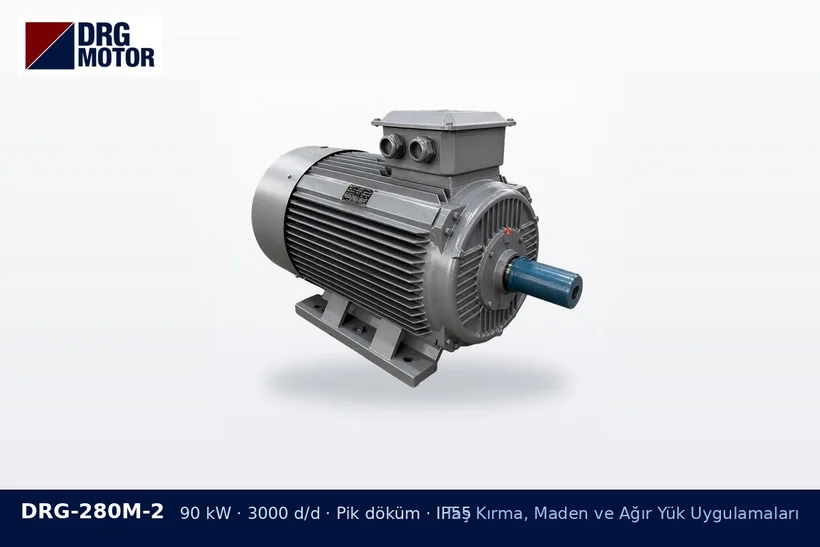
If one foot is not seated (soft foot), the frame is strained when the bolts are tightened. Cast iron feet resist impact well, but they can crack when forced down onto an uneven surface. Vibration can also loosen the connections in the terminal box.
What to do before fitting the motor
Measure the flatness and rigidity of the base, check the anchors and the concrete foundation, and reinforce the base frame if necessary. Confirm that the foot holes match the new motor and that the slide rails leave enough adjustment travel, using the dimensions on the technical drawing page. Damage caused by faulty installation is treated as outside the warranty; correcting the base is therefore also part of protecting the motor itself.
You can review motor options by crusher type under stone crushing plant motors and in the list of cast iron frame motors.