 English
 Le français
 Türkçe

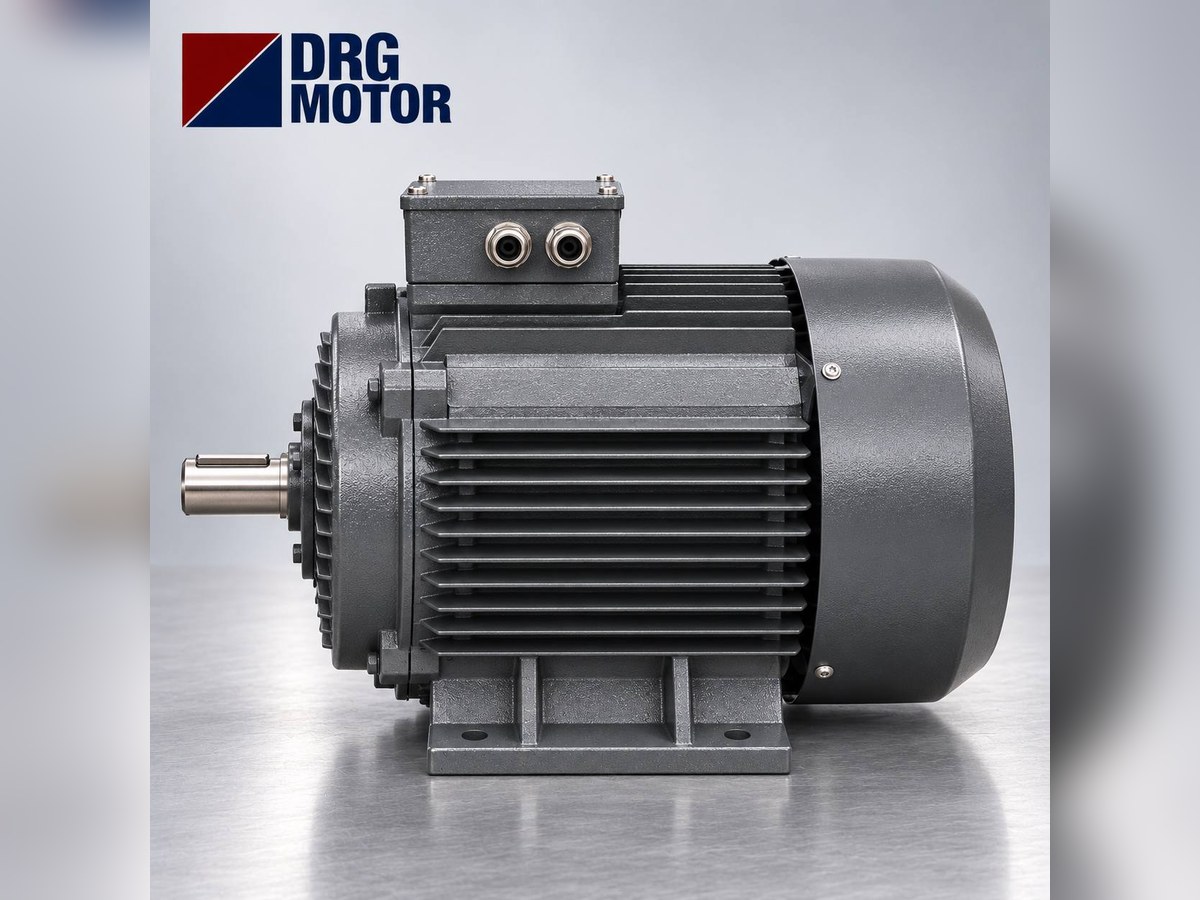
A purifier (semolina purifier, semolina cleaning machine) is a vibrating sieve machine that grades the semolina coming from the break passages by particle size and uses an air stream to separate the bran particles it still carries. On most machines the sieve box is driven by two vibration motors rotating in opposite directions; manufacturer catalogues list these at 0.18–0.5 kW per motor and 560–600 rpm. On the less common eccentric-driven type, a standard induction motor shakes the box through a belt and eccentric masses; one manufacturer gives 0.75 kW installed power for this arrangement. The air that carries the bran leaves through the aspiration outlet on top of the machine and goes to the mill's aspiration fan; that fan motor is not the purifier's own motor.
This page explains where the purifier sits in the mill, how the two drive arrangements differ, the power values collected from catalogues, a simple calculation showing why the speed is never changed, and which part DRG's range covers. All standard motors are listed on Buy Electric Motors Online; vibration motors are quoted through the Vibration Motors page.
Where does the purifier sit in the mill flow?
After cleaning and tempering, wheat enters the first break roll. The break rolls open the kernel; the plansifter splits the mixture into flour, semolina, coarse bran and intermediate stock. The semolina leaving the plansifter still carries bran flakes. This is where the purifier comes in: it grades semolina into coarse, medium and fine, sends branny particles to a separate outlet and passes clean semolina to the reduction rolls. In short, the purifier is the intermediate station between grinding and sifting that raises product purity.
Purifiers in a soft wheat mill
In a plant producing bread flour, the purifier is used to obtain low-ash, white flour. When bran-free semolina is ground on the reduction rolls, the flour colour gets lighter. In this type of mill the number of purifiers is relatively small and they are often reserved for break semolina.
Purifiers in durum wheat and semolina lines
In a plant making pasta semolina from durum wheat, the end product is semolina itself, so the purifier stands at the centre of the line and the number of machines rises markedly. Semolina passes through purifiers several times to remove specks (bran dots). One manufacturer's data sheet gives 3.6 t/h for coarse, 2.3 t/h for medium and 1.4 t/h for fine wheat semolina on the same machine; a purifier handling fine semolina therefore has less than half the capacity of one handling coarse semolina. The line tonnage sets the number of purifiers, not the motor power: each purifier runs with the same small motors.
How is the sieve box vibrated: a pair of vibration motors or an eccentric drive
The purifier body has two parts: a fixed frame and an oscillating sieve box resting on rubber mounts. The box usually holds three sieve layers; brushes under the sieves travel back and forth to keep the mesh open. The box motion pushes the product along the sieve towards the outlet while the air stream lifts light particles.
Two vibration motors rotating in opposite directions
In the common arrangement, two vibration motors are bolted directly to the box and rotate against each other. Each motor carries adjustable eccentric weights on its shaft ends. With opposite rotation, the lateral forces cancel and a single straight back-and-forth vibration remains; this is the motion that walks the product along the sieve. One manufacturer's sheet states that the rotation directions and weight settings of the motors must be calibrated together to obtain the correct stroke. Catalogues give a stroke of 4.0–5.0 mm. So when one of the two motors is replaced, it must match the other in type, speed and weight setting.
A vibration motor is a different product from a standard motor: its bearings are designed for vibratory load and its frame for bolting to the box. You cannot turn a standard motor into a vibration motor by fitting external weights. DRG's vibration motor range is given as 0.12–15 kW on the Vibration Motors page, and these motors are sold by quotation, not through the online store.
Standard motor, belt and eccentric masses
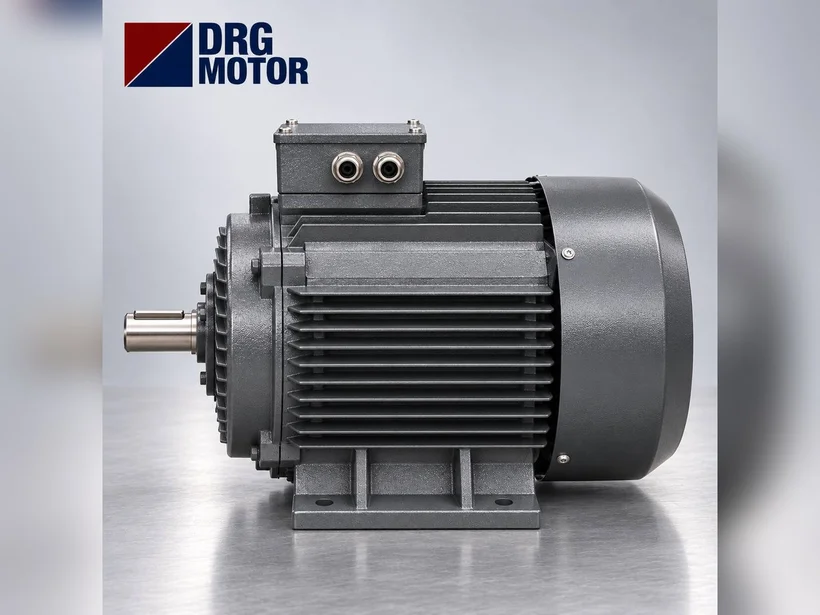
On some purifiers, vibration is produced by eccentric masses attached to the box and turned by a standard induction motor. One manufacturer explains that a timing belt keeps the two eccentric masses fully synchronised during start, stop and normal running and that the machine runs on a standard motor; the same sheet gives installed power of 0.75 kW at 50 Hz and 0.86 kW at 60 Hz. In this layout the motor sits on the frame, outside the vibration. If it fails, a standard motor with the same power, pole number and shaft size can be fitted; the belt ratio belongs to the machine and is not changed.
Aspiration connection and air demand
Air channels and adjusting flaps in the purifier hood spread an even vacuum over the sieve surface. Catalogues give an air demand of 40–80 m³/min for single-box models and 100–160 m³/min for double-box models. This air does not come from the machine's own motor but from the mill's central aspiration system or from a fan dedicated to the purifier group. Fan motor selection is outside this page; see Fan Motors for fan types and their motors. On a purifier with a badly set vacuum the semolina is not cleaned even when the motors are healthy; when troubleshooting, check the flaps and filter pressure first.
Click to see current electric motor prices and order nowSEE PRICES →
How many kW is a purifier motor? Values from manufacturer catalogues
A) Motors seen in catalogues
| Purifier type / capacity | Vibro or main motor | Per purifier | Note |
|---|---|---|---|
| Single box, 46×200 sieve | 2 × 0.20 kW, 560 rpm | Total 0.40 kW | Manufacturer catalogue, small model |
| Single box, 15–20 t/h | 2 × 0.22 kW, 600 rpm | Total 0.44 kW | Manufacturer catalogue |
| Single box, 49–60/200 | 2 × 0.28 – 2 × 0.4 kW | Total 0.56–0.8 kW | Manufacturer catalogue |
| Double box, 46/200C | 4 × 0.40 kW, 600 rpm | Total 1.6 kW | Manufacturer catalogue, large model |
| Double box, 75×2×3 | 4 × 0.25 kW | Total 1.0 kW | Manufacturer catalogue, 3.7–5.6 t/h |
| 50×2×3, 2.4–3.8 t/h | 2 × 0.5 kW | Total 1.0 kW | Same catalogue, two-motor version |
| Eccentric drive, 24 sieves | 0.75 kW standard motor | Single motor | Manufacturer sheet, timing belt |
In this machine group, depending on the manufacturer's model and capacity, vibration motors of about 0.18–0.5 kW per motor are seen; with two or four motors this adds up to 0.36–1.6 kW per purifier. On the eccentric-driven type, the single standard motor is 0.75 kW. The aspiration fan is not in the table; that power belongs to the mill's aspiration system and is calculated collectively according to the number of purifiers.
What raises the power is not capacity but the number of boxes and the sieve width. A double-box model carries twice the motors of a single-box one. Whether a box handles coarse or fine semolina, the motor stays the same; what changes is the sieve number and the air setting.
B) Where DRG's range fits on a purifier
DRG Motor is a manufacturer, supplier and seller of electric motors. Our range covers 0.25–11 kW in aluminium frames and 0.55–355 kW in cast iron frames, 1000/1500/3000 rpm, three-phase 230/400 V or 400/690 V; B3, B5, B14 and B35 mounting is specified with the order note. On a purifier, the part this range covers is the 0.25–0.75 kW standard motor of eccentric-driven machines; at this power there are 4- and 6-pole aluminium and cast iron models. The 560–600 rpm vibration motors seen in catalogues are outside DRG's range: the speeds listed on the Vibration Motors page are 750, 1000, 1500 and 3000 rpm. These motors must not be replaced with a different speed (see the calculation below). For a purifier with vibration motors, send the nameplate through the contact page or WhatsApp and ask for a quotation; if there is no suitable match, the right path is the machine manufacturer's spare motor.
The table below applies only to eccentric-driven purifiers:
| Model | Power / speed | Frame · current 400 V | Price |
|---|---|---|---|
| DRG-711-40.37 HP | 0.25 kW · 1500 rpm | Aluminium 71 · 0.66 A | $73.16 (€65.33) Details & buy → |
| DRG-801-60.5 HP | 0.37 kW · 1000 rpm | Aluminium 80 · 1.04 A | $99.32 (€88.70) Details & buy → |
| DRG-712-40.5 HP | 0.37 kW · 1500 rpm | Aluminium 71 · 0.92 A | $76.76 (€68.55) Details & buy → |
| DRG-802-60.75 HP | 0.55 kW · 1000 rpm | Cast iron 80 · 1.43 A | $106.98 (€95.54) Details & buy → |
| DRG-801-40.75 HP | 0.55 kW · 1500 rpm | Cast iron 80 · 1.31 A | $91.72 (€81.91) Details & buy → |
| DRG-90S-61 HP | 0.75 kW · 1000 rpm | Cast iron 90S · 1.93 A | $109.90 (€98.15) Details & buy → |
| DRG-802-41 HP | 0.75 kW · 1500 rpm | Cast iron 80 · 1.75 A | $101.93 (€91.03) Details & buy → |
Why the speed is not changed: vibration frequency and centrifugal force
In a vibration motor, the force produced by the eccentric weight grows with the square of speed according to F = m·r·ω² (m: weight mass, r: distance of its centre of gravity from the shaft, ω: angular speed). At the same weight setting, changing the speed changes the force as follows:
- 600 rpm → vibration frequency 600 / 60 = 10 Hz. This is the speed of the purifier motors in the catalogues.
- 750 rpm → 12.5 Hz; force ratio (750 / 600)² ≈ 1.56, i.e. about 56% more force.
- 1000 rpm → about 16.7 Hz; force ratio (1000 / 600)² ≈ 2.78, i.e. nearly three times.
The result cuts both ways. When the force rises, the stroke grows, semolina moves too fast along the sieve and grading suffers; rubber mounts, sieve frames and motor bearings carry more load than they were designed for. When the frequency changes, the box also moves away from the design point of the frame and mounts. Even reducing the weights to equalise the force does not restore the frequency. That is why a purifier's vibration motor is replaced only by an equivalent at the same speed. On the eccentric-driven type, the box speed is set by the belt ratio; if the pole number on the nameplate is kept, the machine speed does not change.
Checklist for replacing a purifier motor
- Identify the drive type: two motors bolted to the box means vibration motors; a motor on the frame connected by a belt means an eccentric drive.
- For a vibration motor, note power, speed, centrifugal force and weight setting position from the nameplate; mark the angle of the weights before removal.
- Check the rotation of both motors: if they turn the same way, the box moves in a circular or wobbling path instead of a straight line. Changing the phase sequence reverses rotation; the connection must be made by a qualified electrician.
- On an eccentric drive, pulley diameter, belt type and motor shaft size must match the old ones. DRG product pages show shaft and foot dimensions.
- The overload relay follows the current printed on the nameplate. At this power currents are around 1 A; a relay with the wrong range will not protect the motor.
- Flour and semolina dust: DRG motors are IP55. If the plant's explosive dust zone classification calls for an Ex motor, that is not in DRG's range; a certified motor is needed there.
- After replacement, check stroke and product flow at no load and under load; readjust the air flaps.
DRG motor options for purifiers
The table shows models that can be used on eccentric-driven purifiers and small auxiliary drives in the purifier group:
| Model | Power / speed | Frame | Current 400 V |
|---|---|---|---|
| DRG-711-4 | 0.25 kW / 1340 rpm | 71 aluminium | 0.66 A |
| DRG-712-4 | 0.37 kW / 1340 rpm | 71 aluminium | 0.92 A |
| DRG-801-4 | 0.55 kW / 1400 rpm | 80 cast iron | 1.31 A |
| DRG-802-4 | 0.75 kW / 1420 rpm | 80 cast iron | 1.75 A |
| DRG-802-6 | 0.55 kW / 890 rpm | 80 cast iron | 1.43 A |
| DRG-90S-6 | 0.75 kW / 935 rpm | 90S cast iron | 1.93 A |
DRG MOTOR motors are guaranteed against material and manufacturing defects for 2 years from the delivery date (warranty certificate). For the mill's roll motors, read our roller mill motor selection and spare motor article; for motor supply across the whole line, see flour mill motor supply.
Motors in this power range
- DRG-712-4 – 0.37 kW – 1340 rpm – 71 aluminium
- DRG-802-4 – 0.75 kW – 1420 rpm – 80 cast iron
- DRG-801-6 – 0.37 kW – 890 rpm – 80 aluminium
- DRG-90S-6 – 0.75 kW – 935 rpm – 90S cast iron
Click to see current prices and order these motors nowSEE PRICES →
Purifier motor: frequently asked questions
How many kW is a semolina purifier motor?
On purifiers with vibration motors, catalogues show 0.18–0.5 kW per motor, with two or four motors per machine. On one eccentric-driven model, the single standard motor is 0.75 kW.
Why do the two purifier motors rotate in opposite directions?
The lateral forces of two counter-rotating eccentric weights cancel out, leaving a straight vibration that pushes the product along the sieve. If they turn the same way, the box wobbles and grading suffers.
Can a 750 rpm vibration motor replace a 600 rpm one?
It is not recommended. At the same weight setting the force rises by about 56% and the vibration frequency goes from 10 Hz to 12.5 Hz. The speed is not changed without the machine manufacturer's approval.
Is the purifier aspiration fan motor selected together with the purifier?
No. The fan belongs to the mill's aspiration system and is selected for the total air demand of several purifiers. The 40–160 m³/min value on the purifier sheet is an input to that calculation.
Send us the purifier nameplate or a photo of its drive; we will settle the right model for the standard-motor type or the quotation option for the vibration-motor type. Phone +90 (542) 666 11 11, e-mail [email protected], contact page. Standard motors for eccentric purifiers, with live prices, are on Buy Electric Motors Online.


