 English
 Le français
 Türkçe

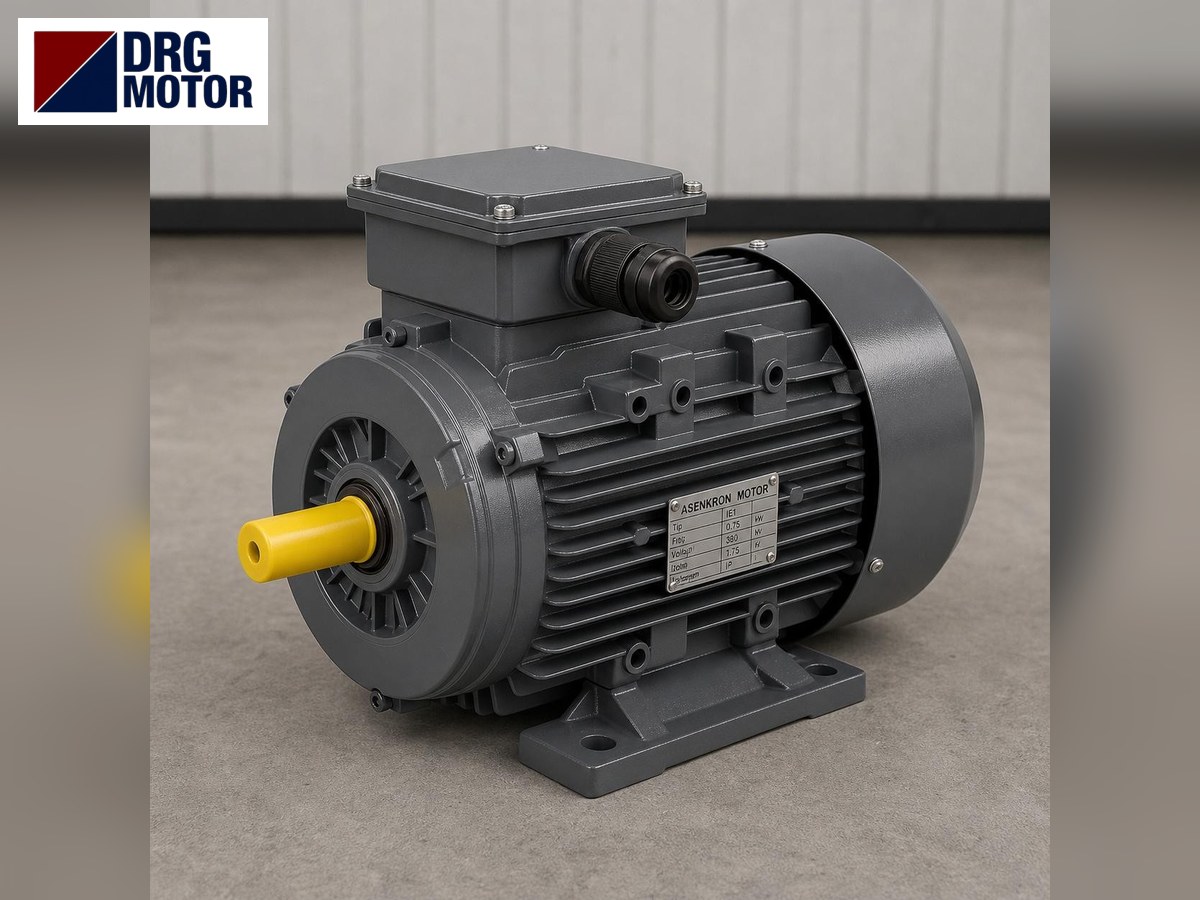
The de-airing extruder (brick extruder, vacuum press) is the shaping machine of a brick and roof-tile line: it removes air from the prepared clay, compresses it and pushes it out of the die as a continuous column. Three separate electric motors usually work inside it: the large extrusion motor that turns the lower auger, a second motor turning the upper mixing and feeding shafts, and the motor of the pump that draws air from the vacuum chamber. Maker catalogues show 45–110 kW on small single-motor extruders, 55–500 kW for the lower auger and 30–160 kW for the upper stage on two-stage machines, while the pump catalogue gives 11 kW for the vacuum pump type named in an extruder data sheet.
DRG Motor is a manufacturer, supplier and seller of electric motors. We do not sell the extruder, the auger, the die and mouthpiece, the gearbox, the clutch or the vacuum pump body; and inverters, hydraulic power packs or mill balls are not ours to offer. Our contribution is the three-phase induction motor for each of the three drives; the models are on the Buy Electric Motors Online page. Extruders making plastic pellets or profiles are not the subject here; for those see our Plastic Extruder and Pelletizing Motors page.
Where do the motors work on a de-airing extruder?
On a two-stage extruder the clay first enters the upper mixing chamber. Two shafts knead it and cut it into small pieces, pushing it into the vacuum chamber. There the air is drawn off and the clay drops onto the lower auger, which compresses it and forces it through the die. The column leaving the die goes on to the cutter. Each section carries a different load, so most machines use separate motors.
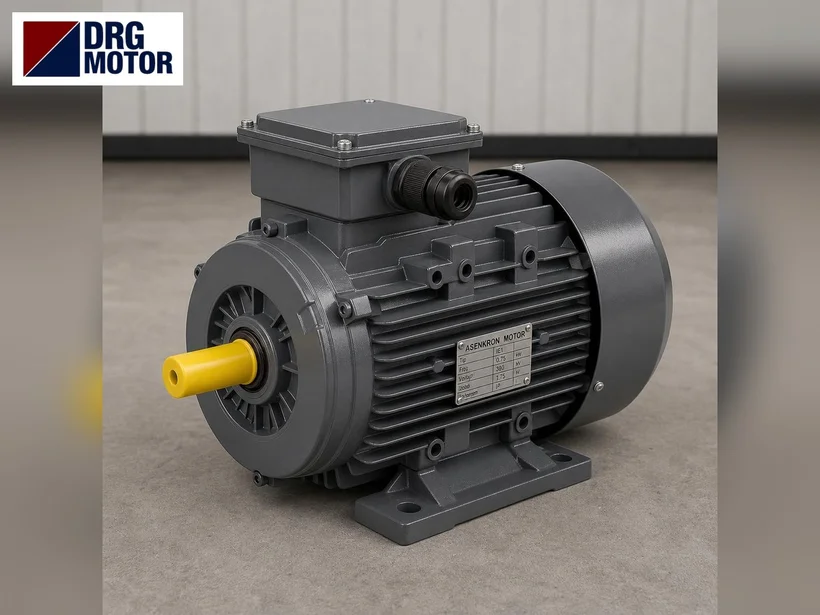
Lower auger (extrusion) motor
This is the largest motor on the machine. Through belts and a large gearbox it turns the auger at a few dozen revolutions per minute; one data sheet gives 24–28 rpm for a Ø450–500 mm auger. Resistance at the die changes with clay hardness, moisture and die type, so the current of this motor also fluctuates during production. Extruders shaping stiff and semi-dry clay need a larger motor for the same auger diameter.
Upper mixer and feeding motor
It drives the twin shafts of the upper chamber and in catalogues its power sits roughly between one third and two thirds of the lower auger motor. In some series the mixer is a fully separate machine connected to the extruder in line or at a right angle. On compact single-motor extruders both stages are fed from one gearbox and there is no separate mixer motor.
Vacuum pump motor
Clay lines usually use a liquid-ring vacuum pump. One extruder data sheet names the pump type; the same type’s own catalogue lists an 11 kW motor and a pump speed of 1,440 rpm. That speed shows a 4-pole motor directly coupled. The pump motor is small, but if it stops, air stays in the column and the bricks crack in the dryer; that is why it is among the most requested spares.
How it differs from a plastic extruder
The names are alike but the machines work differently. A plastic extruder melts granulate with heater bands; screw speed is part of product quality and is usually set by a drive. A clay de-airing extruder is not heated: it compresses cold plastic clay, removes its air and shapes it at the die. The vacuum chamber and separate vacuum pump are specific to the clay press; even where a plastic extruder has a venting zone, its duty and load are different. On a clay press the auger turns very slowly and needs very high torque, and abrasive clay wears the auger and liners. For motor choice on plastic extruders see our extruder motor selection article.
Motor difference between roof-tile and brick extruders
Roof-tile lines use the same type of de-airing extruder, but the column is thinner and the machine usually smaller. On the roof-tile extruder we studied, a 350 mm auger is driven by a single 55 kW motor through a stepped belt and an air clutch. Large brick extruders run two main motors on separate gearboxes.
Click to see current electric motor prices and order nowSEE PRICES →
How many kW does a de-airing extruder motor need? Catalogue values
A) Ratings that extruder and vacuum pump makers state for clay work:
| Machine / auger | Motor power | Single / total | Note |
|---|---|---|---|
| Compact single-motor de-airing extruder, Ø400/350 mm | 45–55 kW | single motor | first maker, smallest model |
| Compact de-airing extruder, Ø450 mm | 90–110 kW | single motor | first maker |
| Two-stage, lower auger Ø400 mm | upper 30–45 kW + lower 55–75 kW | two main motors | first maker |
| Two-stage, lower auger Ø500 mm | upper 55–90 kW + lower 90–160 kW | two main motors | first maker |
| Two-stage, lower auger Ø640 mm | upper 90–110 kW + lower 220–280 kW | two main motors | first maker |
| Two-stage, lower auger Ø750–850 mm | upper 110–160 kW + lower 315–500 kW | two main motors | first maker, largest |
| Two-stage, Ø450–500 mm auger, 24–28 rpm | 110 or 132 + 55 + 2 × 7.5 kW | distributed power, four motors | second maker; duty of the 7.5 kW units not stated |
| Roof-tile de-airing extruder, Ø350 mm auger | 55 kW | single motor, air clutch | third maker |
| De-airing extruder with separate pug mixer, 3,000–20,000 bricks/h | extruder 90–260 kW + mixer 60–110 kW | two main motors | fourth maker |
| Large extruder series | 150–450 kW | extruder motor | fourth maker |
| Liquid-ring vacuum pump, 6 m³/min | 11 kW | single motor, pump 1,440 rpm | fifth maker, pump catalogue |
Put side by side, the figures give single-motor extruders carry 45–110 kW, two-stage extruders 55–500 kW for the lower auger and 30–160 kW for the upper mixing stage; on the vacuum pump side an 11 kW motor is listed. As auger diameter grows and clay gets stiffer, the lower auger motor rises sharply. On a two-stage extruder the total is not one motor; the totals in the table add separate motors together.
B) Overlap with the DRG range: from 30 to 315 kW, extrusion and mixing drives find a 4-pole cast iron match between frame 200L and 355L, while the 11 kW vacuum pump takes a 160M. The 400–500 kW lower auger motors and the extruder motors up to 450 kW seen on the largest machines exceed our 355 kW upper limit and are outside our range; medium voltage may also come into play at these powers, so please ask us.
Worked example: 4 or 6 poles on a 132 kW lower auger
Two options for the 132 kW lower auger motor and 28 rpm auger speed in the data sheet:
| Option | Operation | Result | Comment |
|---|---|---|---|
| Auger shaft torque | 132 × 9,550 / 28 | about 45,020 Nm | losses ignored |
| Ratio with 4-pole DRG-315M-4 | 1,488 / 28 | about 53.1 | belt × gearbox |
| Ratio with 6-pole DRG-315L2-6 | 988 / 28 | about 35.3 | smaller gear ratio |
| Rated torque at motor shaft | 847.2 Nm / 1,276 Nm | 4-pole / 6-pole | same power, different speed |
| Rated current, 400 V | 224 A / 232 A | 4-pole / 6-pole | for cable and protection |
Torque at the auger is the same in both options; what changes is the ratio between motor and auger and the torque at the motor shaft. The 6-pole motor works with a smaller gear ratio but has a heavier frame, and its shaft end size may differ. Keeping the pole count when replacing an old motor is the easiest way to leave gearbox and pulleys untouched. You can try the ratios with our pulley-belt and gearbox output speed tools.
Starting, clutch and inverter
Starting with a packed auger
When the extruder stops, auger and die stay full of compressed clay. On restart the motor must produce enough torque to move that clay. Per its data, the DRG-315M-4 delivers twice rated torque at start but also seven times rated current, roughly 1,570 A across the line. The air clutch seen on the roof-tile extruder solves this: it sits inside the large pulley, the motor starts unloaded and the clutch closes afterwards. During short stops the clutch can be opened without switching the motor off. Extruders without a clutch use a soft starter or an inverter; star-delta may fall short with a packed auger. For a comparison of methods see our starting methods tool.
Auger speed with an inverter
In the roof-tile example the motor is driven by a frequency converter, matching auger speed to cutter speed. The drive itself is not something we sell. At this power, confirm the motor stays cool when slowed down; extended slow running often calls for an independent blower.
Clay dust, mud and shift work
The extruder house gets dirty with die oil, wet clay and water. Keep the fan cover of our IP55 motors clean and the belt guard closed. The extruder runs at high load over long shifts; watching motor temperature and current reveals faults early.
What is outside our range
Our ceiling is 355 kW at low voltage; brake motors, single-phase units and servo motors are also missing from what we offer. Extruder rooms are not normally hazardous zones; if yours is classified, an Ex-marked motor is mandatory, and ours carries no such marking.
De-airing extruders with DRG motors
Our models suited to extrusion, mixer and vacuum pump drives (current at 400 V):
| Model | Power / speed | Frame · shaft D×E | Current 400 V |
|---|---|---|---|
| DRG-132M-4 | 7.5 kW / 1460 rpm | 132M cast iron · 38×80 | 14.3 A |
| DRG-160M-4 | 11 kW / 1465 rpm | 160M cast iron · 42×110 | 20.4 A |
| DRG-250M-4 | 55 kW / 1485 rpm | 250M cast iron · 65×140 | 97.6 A |
| DRG-280M-4 | 90 kW / 1486 rpm | 280M cast iron · 75×140 | 155 A |
| DRG-315S-4 | 110 kW / 1488 rpm | 315S cast iron · 85×170 | 187 A |
| DRG-315L2-6 | 132 kW / 988 rpm | 315L cast iron · 85×170 | 232 A |
| DRG-315L1-4 | 160 kW / 1488 rpm | 315L cast iron · 85×170 | 271 A |
| DRG-355L-4 | 315 kW / 1490 rpm | 355L cast iron · 100×170 | 526 A |
Large extruder motors sit foot-mounted (B3) on a belt slide, while the vacuum pump motor shares a base frame with the pump. When replacing, compare power, speed, voltage and connection on the old plate together with shaft diameter, key, foot holes and shaft height. With the extruder builder’s papers and our technical drawings side by side, we agree the replacement with you; no measurements, no fit promise.
Live price table
Prices of our models in extruder, mixer and vacuum pump power classes come live from the shop:
| Model | Power / speed | Frame · current 400 V | Price |
|---|---|---|---|
| DRG-160M-415 HP | 11 kW · 1500 rpm | Cast iron 160M · 20.4 A | $568.76 (€507.94) Details & buy → |
| DRG-200L-440 HP | 30 kW · 1500 rpm | Cast iron 200L · 53.8 A | $1,235.00 (€1,102.93) Details & buy → |
| DRG-225M-460 HP | 45 kW · 1500 rpm | Cast iron 225M · 80.2 A | $1,688.50 (€1,507.94) Details & buy → |
| DRG-250M-475 HP | 55 kW · 1500 rpm | Cast iron 250M · 97.6 A | $2,065.73 (€1,844.82) Details & buy → |
| DRG-280S-4100 HP | 75 kW · 1500 rpm | Cast iron 280S · 129 A | $2,916.93 (€2,605.00) Details & buy → |
| DRG-315S-4150 HP | 110 kW · 1500 rpm | Cast iron 315S · 187 A | $4,863.00 (€4,342.97) Details & buy → |
| DRG-315M-4180 HP | 132 kW · 1500 rpm | Cast iron 315M · 224 A | $5,621.72 (€5,020.55) Details & buy → |
| DRG-315L1-4200 HP | 160 kW · 1500 rpm | Cast iron 315L · 271 A | $6,135.24 (€5,479.15) Details & buy → |
DRG MOTOR motors are guaranteed against material and manufacturing defects for 2 years from the delivery date (warranty certificate).
Motors in this power class
- DRG-225M-4 – 45 kW – 1485 rpm – 225M cast iron
- DRG-280S-4 – 75 kW – 1486 rpm – 280S cast iron
- DRG-315M-4 – 132 kW – 1488 rpm – 315M cast iron
- DRG-315L2-4 – 200 kW – 1490 rpm – 315L cast iron
- DRG-355M-4 – 250 kW – 1490 rpm – 355M cast iron
Click to see current prices and order these motors nowSEE PRICES →
Browse the products, ask for a quote: motors for your extruder are on the Buy Electric Motors Online page. Send the nameplate via WhatsApp and say which stage it drives, or call +90 (542) 666 11 11 and start with the auger diameter.
Frequently asked questions
What happens if the vacuum pump motor stops?
Air remains in the column, brick density falls and the risk of cracks in drying and firing grows. Keeping a spare pump motor therefore limits production loss.
Can the extrusion motor be replaced with a stronger one?
Gearbox, belts and auger shaft must be approved for the new torque by the machine builder; panel, cable and protection are also chosen for the new power.
Does a 6-pole extruder motor change the budget?
Yes, at equal kW the 6-pole frame is heavier; compare both rows in the live table further up.
Questions: +90 (542) 666 11 11 · info@drgmotor.com · contact.


