 English
 Le français
 Türkçe

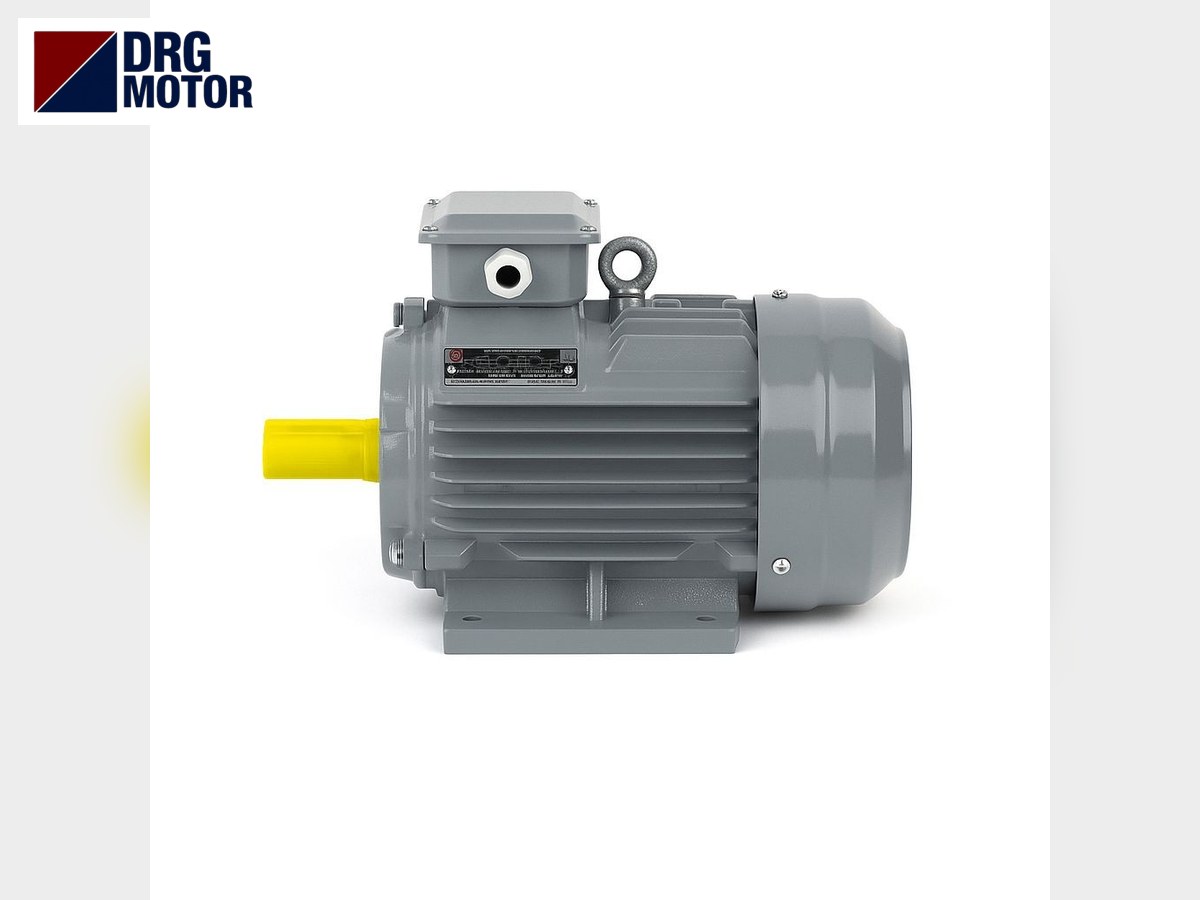
On a walnut, hazelnut or almond cracking machine, the electric motor turns the shaft, drum or roller pair that splits the shell; the same line has motors for the aspiration fan that separates broken shell from kernel, the sizing screen that grades nuts before cracking and the feed conveyor. With nuts in shell the aim is to crack the shell and keep the kernel whole, so the gap setting matters more than raw force. Maker catalogues show 0.75–6.75 kW for a single cracker motor and around 9 kW for a line total including sizers and separators.
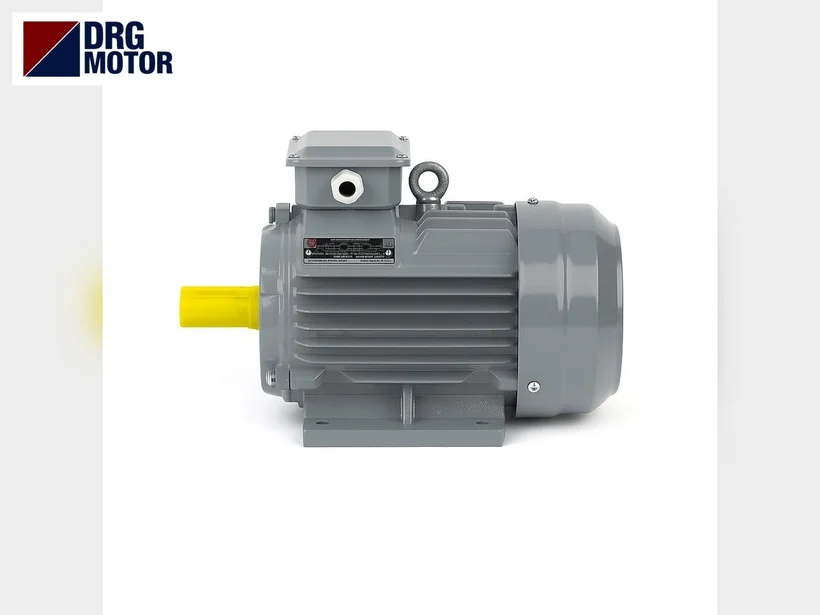
DRG Motor is a manufacturer, supplier and seller of electric motors. We do not sell the cracking machine, sizing screen, cracking stone, rollers, gearbox or inverter. Our share is the three-phase induction motor inside these machines; options are on Buy Electric Motors Online.
Walnut, hazelnut and almond: three cracking principles
The three shells behave differently. Walnut shell is large and irregular, hazelnut small and hard, almond thin and ductile. Machine design, and with it the load seen by the motor, follows that difference.
Walnut: slotted shaft, cone plates and cylinders
In small walnut crackers a rotating slotted shaft squeezes the nut against the housing wall until the shell breaks; the gap is set to nut size. Larger machines use cone plates; one catalogue says its cone mechanism works with uncalibrated walnuts and that plate spacing and pressing force are set for shell thickness. In cylinder types the gap between two cylinders does the same work.
Hazelnut: stone-gap crackers and drums
In hazelnut cracking plants the classic method passes sized nuts through a set gap between a rotating stone and a fixed surface, with a separate gap for each size grade. We found no reliable catalogue value for the motor rating of stone hazelnut crackers, so we give no figure. Here the motor is chosen from application data: the stone diameter, kilograms per hour, belt arrangement and whatever the existing motor’s nameplate says are what we need. In drum crackers the hazelnut is split inside a rotating drum; one maker’s 200 kg/h drum model runs on a single 1.1 kW motor.
Almond: roller pair
Almond crackers use grooved hard rubber or steel rollers turning at a set distance, opening hairline cracks in the shell. One maker notes that almonds of mixed size passing one gap either stay whole or get crushed, so they should be graded first. After the roller cracker, shell and kernel are parted on a gravity separator table.
Shell separation, sizing and feed motors
Aspiration fan and shell separator
The cracked mix passes through an air column; light shell is lifted, heavy kernel drops. A fan on the machine does this. In the cone walnut cracker example the machine total is 2.05 kW and the cracking motor 1.5 kW, leaving about 0.55 kW for aspiration and auxiliary drive. For a separate aspiration fan motor see our Fan Motors category.
Sizing screen
Before cracking, nuts are graded by size. Rotary drum sizers split them into 3 to 8 fractions and run on 0.75–2.95 kW motors. The drum usually turns slowly through a geared motor, which may be flange-mounted (B5 or B14).
Vibratory feed
Many crackers have a vibratory feeder at the inlet that spreads nuts evenly. If that feeder runs on vibration motors, it belongs to a separate product group of ours, supplied on quotation rather than through the shop: vibration motors.
How many kW is a nut cracking machine motor? Catalogue values
A) Motor ratings published by makers of walnut, hazelnut and almond crackers and their auxiliary machines:
| Machine / model group | Motor power | Single / total | Note |
|---|---|---|---|
| Walnut cracker, slotted shaft against housing wall, 300 kg/h | 0.75 kW | single motor | first maker |
| Walnut cracker, same principle, larger body | 1.1 kW | single motor, 220–240 V | first maker |
| Cone-plate walnut cracker + aspiration column, 200 kg/h | 1.5 kW cracking; 2.05 kW | cracking motor; machine total | second maker |
| Drum cracker for hazelnut and almond, 200 kg/h | 1.1 kW | single motor | second maker |
| Hazelnut sizer, 3 fractions, 200 kg/h | 0.75 kW | single motor | second maker |
| Hazelnut sizer, 8 fractions, 500 kg/h | 2.95 kW | machine total | second maker |
| Empty walnut sorter, 300 kg/h | 4.5 kW | machine total | second maker |
| Hazelnut cracker with aspiration, 200 kg/h | 3.15 kW | machine total | third maker |
| Roller almond cracker 200–300 kg/h + gravity separator | 1.5 kW + 2.2 kW | two separate machines | fourth maker |
| Almond cracking line, 300–500 kg/h | 9.08 kW | line total | fourth maker |
| Almond cracker 1000 kg/h + gravity separator | 6.75 kW + 4 kW | two separate machines | fourth maker |
In this machine group a single cracker motor takes roughly 0.75–6.75 kW and separators and sizers 0.75–4.5 kW; a 300–500 kg/h almond line totals 9.08 kW, which is not one motor. As hourly output grows, roller length and motor rating rise together.
B) Where DRG fits: our 4-pole cast iron 80 to 132M frames from 0.55 to 7.5 kW, with their aluminium counterparts, cover the whole table; 6-pole models are available for slow sizing drums. If the small 220–240 V walnut cracker in the table is built for a single-phase supply, its motor is outside our range.
Click to see current electric motor prices and order nowSEE PRICES →
Example: motor currents on a 200 kg/h walnut line
Take a small line of sizer, cone cracker and aspiration at catalogue ratings and match each to a model from our range (rated torque: DRG-90L-4, 9.91 Nm):
| Machine (200 kg/h walnut line) | Catalogue rating → DRG model | Rated current (400 V) | Starting current |
|---|---|---|---|
| Sizer | 0.75 kW → DRG-802-4 | 1.75 A | 1.75 × 6.6 ≈ 11.6 A |
| Cone cracker | 1.5 kW → DRG-90L-4 | 3.3 A | 3.3 × 7.0 ≈ 23.1 A |
| Aspiration column (2.05 − 1.5) | 0.55 kW → DRG-801-4 | 1.31 A | 1.31 × 5.2 ≈ 6.8 A |
| All three running | 1.75 + 3.3 + 1.31 | about 6.4 A | largest single start ≈ 23 A |
Total current is small; what deserves attention is the cracker’s loaded start. If the machine stopped full of nuts, starting the cracker without emptying it puts the motor through its hardest moment. Direct-on-line starting is common at these ratings; when the start jams, opening the gap and emptying the cracker is a better fix than a bigger motor.
Speed, mounting and environment
Cracker speed and drive
The cracking shaft or rollers turn slowly; motor speed is brought down by a gearbox or by belts and pulleys. One almond machine maker states that its rollers are driven by geared motors. To check gearbox output speed and torque use our gearbox calculator, and to change pulley ratio our pulley and belt tool.
Shell dust and motor position
Cracking throws off shell dust. Keep the cracker motor outside the product-contact area, low under the frame or behind its belt guard, and wipe shell dust off the fan cowl before it cakes. Our IP55 motors suit a dusty room. If nuts are washed later, the motor in the washing section is never hosed directly. If a stainless-steel washdown motor is required, it is not in our range; talk to us.
Motors outside our range
Household and small-shop nut crackers often run single-phase; that motor type is missing from our line-up, as are the brake motor, the servo motor and the pole-changing two-speed motor.
DRG motors for cracking machines
Models matching sizing, cracking and separating ratings (current at 400 V):
| Model | Power / speed | Frame · shaft D×E | Current 400 V |
|---|---|---|---|
| DRG-801-4 | 0.55 kW / 1400 rpm | 80 cast iron · 19×40 | 1.31 A |
| DRG-802-4 | 0.75 kW / 1420 rpm | 80 cast iron · 19×40 | 1.75 A |
| DRG-90S-4 | 1.1 kW / 1445 rpm | 90S cast iron · 24×50 | 2.48 A |
| DRG-90L-4 | 1.5 kW / 1445 rpm | 90L cast iron · 24×50 | 3.3 A |
| DRG-100L1-4 | 2.2 kW / 1450 rpm | 100L cast iron · 28×60 | 4.52 A |
| DRG-112M-4 | 4 kW / 1450 rpm | 112M cast iron · 28×60 | 7.95 A |
| DRG-132M-4 | 7.5 kW / 1460 rpm | 132M cast iron · 38×80 | 14.3 A |
| DRG-90L-6 | 1.1 kW / 945 rpm | 90L cast iron · 24×50 | 2.69 A |
Cracker motors are usually 4-pole (1500 rpm); 6-pole (1000 rpm) is an option on drum and sizer drives. Small ratings also come in aluminium; the cast iron series covers every rating on this page. Before replacement, photograph the old motor plate, shaft diameter and key, flange or foot dimensions and the gearbox input bore. With those photos and the cracker’s manual side by side we confirm the match; dimensions come first, promises after.
Tahini and paste mills that grind roasted hazelnut or sesame are a different subject; see our tahini mill motor article.
Live price table
Prices of models matching cracking line ratings come live from the shop:
| Model | Power / speed | Frame · current 400 V | Price |
|---|---|---|---|
| DRG-801-40.75 HP | 0.55 kW · 1500 rpm | Cast iron 80 · 1.31 A | $91.72 (€81.91) Details & buy → |
| DRG-802-41 HP | 0.75 kW · 1500 rpm | Cast iron 80 · 1.75 A | $101.93 (€91.03) Details & buy → |
| DRG-90S-41.5 HP | 1.1 kW · 1500 rpm | Cast iron 90S · 2.48 A | $124.09 (€110.82) Details & buy → |
| DRG-90L-42 HP | 1.5 kW · 1500 rpm | Cast iron 90L · 3.3 A | $144.14 (€128.73) Details & buy → |
| DRG-100L1-43 HP | 2.2 kW · 1500 rpm | Cast iron 100L · 4.52 A | $188.32 (€168.18) Details & buy → |
| DRG-100L2-44 HP | 3 kW · 1500 rpm | Cast iron 100L · 6.02 A | $203.84 (€182.05) Details & buy → |
| DRG-112M-45.5 HP | 4 kW · 1500 rpm | Cast iron 112M · 7.95 A | $254.38 (€227.18) Details & buy → |
| DRG-132S-47.5 HP | 5.5 kW · 1500 rpm | Cast iron 132S · 10.7 A | $342.01 (€305.44) Details & buy → |
| DRG-132M-410 HP | 7.5 kW · 1500 rpm | Cast iron 132M · 14.3 A | $394.89 (€352.66) Details & buy → |
DRG MOTOR motors are guaranteed against material and manufacturing defects for 2 years from the delivery date (warranty certificate).
Motors in this power range
- DRG-802-4 – 0.75 kW – 1420 rpm – 80 cast iron
- DRG-90L-4 – 1.5 kW – 1445 rpm – 90L cast iron
- DRG-100L2-4 – 3 kW – 1450 rpm – 100L cast iron
- DRG-112M-4 – 4 kW – 1450 rpm – 112M cast iron
- DRG-132M-4 – 7.5 kW – 1460 rpm – 132M cast iron
Click to see current prices and order these motors nowSEE PRICES →
Browse the products, ask for a quote: motors for your walnut, hazelnut or almond cracker are on Buy Electric Motors Online. Photograph the nameplate and where motor meets gearbox, then post both on WhatsApp; nut type and hourly output can also be shared by phone at +90 (542) 666 11 11.
Frequently asked questions
How many kW is a walnut cracking machine motor?
Catalogues show 0.75–1.1 kW on small slotted-shaft types and a 1.5 kW cracking motor on cone types with aspiration. The value rises with output.
Can a three-phase motor be fitted to a hazelnut cracker?
If the machine is built for a single-phase supply, the panel and wiring must be redone. Make that call together with the machine maker and your electrician.
What sets the price of a cracking machine motor?
kW, pole count and frame material; current figures are in the table above.
For questions: +90 (542) 666 11 11 · info@drgmotor.com · contact.


