 English
 Le français
 Türkçe

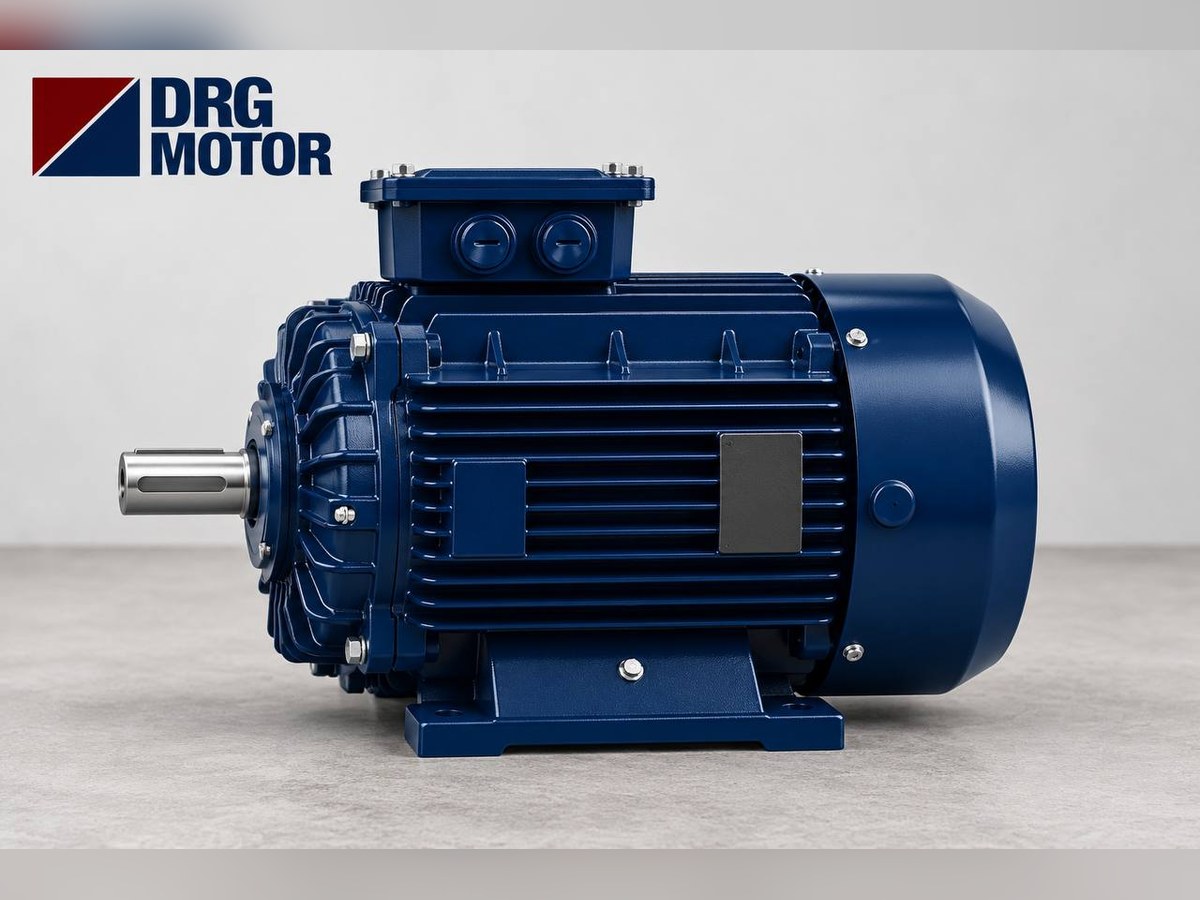
Tile and mosaic cutting machines are the lowest-power group in the marble series. On a bridge tile saw that cuts a tile-sized piece with one thin blade, the motor turns the blade directly; on a multi-blade machine that produces strips and mosaic, one motor drives a shaft carrying dozens of blades side by side; on mosaic splitting and breaking presses the motor only runs the hydraulic pump. The motor, power and connection of these three machines must be considered separately.
First, the scope in plain words: DRG Motor is a manufacturer, supplier and seller of electric motors. We do not sell cutting tables, mosaic presses, blade shafts, hydraulic pumps and valves, water pump bodies, gearboxes, drives (inverters), electrospindles or servo motors. Our part in these machines is the three-phase motor driving the blade, the shaft, the belt or the pump; the options are on Buy Electric Motors Online.
Tile saw: thin blade, small motor
On a bridge tile saw used in workshops and on site, the blade is fixed to a carriage running along the bridge. The operator pushes the carriage or uses a lever to cut, and a water pump keeps the blade wet. Blade diameter is usually between 200 and 350 mm, and the blade turns at the same speed as the motor shaft. Cutting depth is small and little volume is removed, so the motor is small too.
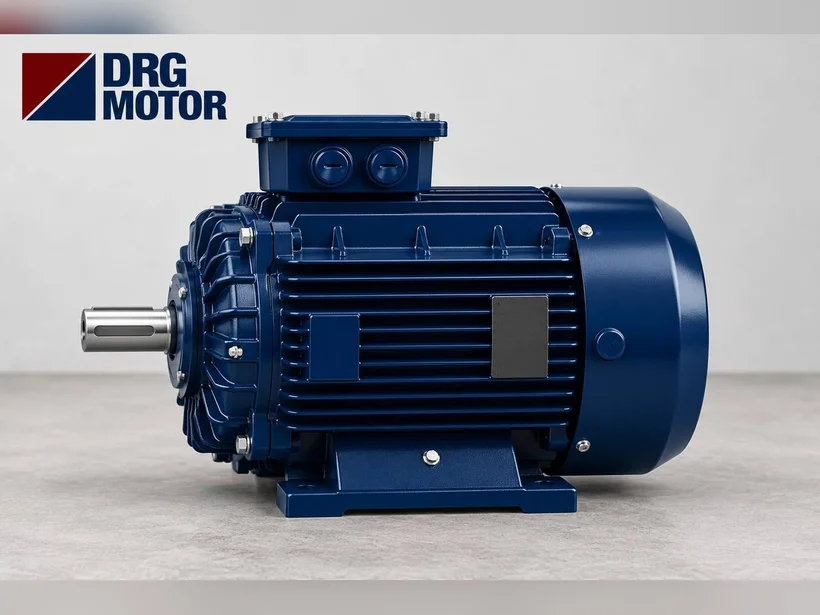
Small single-phase saws and the DRG range
Most portable saws run from a 230 V single-phase socket. There are no single-phase motors in the DRG range; if the motor of such a saw burns out, you will not find its replacement with us. In a workshop with a three-phase supply, converting the saw to a three-phase motor can only be considered if the switch, the water pump supply and the cable are dealt with together; that decision belongs to the machine maker and a qualified electrician.
Fixed saws and sizing cuts
Heavier saws fixed in the workshop may have a three-phase motor, a motor-driven carriage and blades above 350 mm. These come close to bridge saws; for large blades and heavy cutting, see our stone and marble cutting motor article, which starts motor selection from blade peripheral speed.
Multi-blade strip and mosaic cutters
Mosaic production begins by dividing the slab into strips and then into small squares. On a multi-blade machine a belt carries the slab or strips under a shaft fitted with many thin blades separated by spacer rings. The gap between blades sets the mosaic size: change the rings and you get 10, 15, 25 or 50 mm pieces. When the strips are turned and passed again, squares come out.
How blade count and cutting depth affect power
A single blade opens one kerf; a ten-blade shaft opens ten at once. Roughly speaking, the total area cut grows with the number of blades and with cutting depth. That is why, even at the same blade diameter, the shaft motor of a small two-blade strip cutter and that of a wide mosaic machine differ by several times. Feed is lowered for hard granite and raised for soft marble; keeping the motor out of overload depends on setting belt speed correctly.
Shaft motor, belt and lift motor
The blade shaft is usually belt-driven, with the motor beside or above it. The belt motor is geared and on most machines its speed is changed by an inverter. The lift motor that resets head height as the blades wear is small but runs often. The blades do not cut under water but are flushed from above; muddy water splashes onto the motor frame and the belt guard.
Mosaic splitting and breaking presses
Natural-faced (split-look) mosaic and wall stone are made by splitting with a knife rather than a blade. On small manual models the power source is the operator’s arm. On motorised models an electric motor turns a hydraulic pump, the pump pushes the cylinder, and the upper and lower knives break the strip. Motor power here comes from pump pressure and flow, not from the press force. The splitting described here is different from crushing plants that produce aggregate; for large crusher motors see the Stone Crushing Plant Motors page.
Worked example for the hydraulic unit motor
Hydraulic power in kilowatts equals pressure in bar times flow in litres per minute, divided by 600 and by pump efficiency: P = p·Q / (600·η). Let us size a mosaic press that needs 110 bar working pressure and 16 L/min, assuming a pump efficiency of 0.85:
| Step | Operation | Result | Meaning |
|---|---|---|---|
| 1 | 110 × 16 | 1760 | bar × L/min |
| 2 | 600 × 0.85 | 510 | unit constant × assumed pump efficiency |
| 3 | 1760 / 510 | 3.45 kW | power required at the pump shaft |
| 4 | next standard rating | 4 kW | DRG-112M-4, 26.3 Nm |
| 5 | 16 × 1000 / 1450 | 11.0 cm³/rev | pump displacement needed at this speed |
| 6 | 9550 × 3.45 / 1450 | 22.7 Nm | below the motor’s rated torque |
The result is above 3 kW, so the smaller size is not chosen. Pressure and flow must be read from the pump label and the unit circuit diagram; the formula and pump types are covered in detail in our hydraulic pump motor kW calculation article. Here a bell housing normally sits between motor and pump; the flange size is compared with the old motor.
Click to see current electric motor prices and order nowSEE PRICES →
Motor power on tile and mosaic machines on the market
A) Values given in maker data sheets:
| Machine type | Motor power | Single / total | Note |
|---|---|---|---|
| Portable bridge tile saw, Ø250 blade | 1.5 kW, 230 V | Single motor | first maker; single-phase |
| Bridge tile and stone saw, Ø350 blade | 2.2 kW, 230 V | Single motor | second maker; single-phase, 2800 rpm |
| Hydraulic mosaic splitting press, 5–12 t | 1 kW | Hydraulic unit | third maker, small models |
| Hydraulic mosaic splitting press, 20 t and 40 t | 3 kW and 5 kW | Hydraulic unit | third maker, large models |
| Sensor-controlled hydraulic mosaic breaker, 110 bar | 4 kW + 0.37 kW | Unit + belt | fourth maker |
| 8-blade strip cutting machine, Ø300 blades | 7.5 kW | Main motor; total 8.62 kW | fifth maker |
| Multi-blade mosaic cutter, Ø150–300 blades | 22 kW + 1.5 kW + 0.55 kW | Spindle + belt + lift | sixth maker, 300–800 mm working width |
| Multi-disc strip cutter, Ø300–350 blades | 22 kW + 0.75 kW + 0.55 kW | Spindle + belt + lift | fourth maker |
For this machine group, a single motor of about 1–22 kW is seen depending on the maker’s model and working width; auxiliary motors such as belt and lift drives sit between 0.37 and 1.5 kW. On hydraulic presses the power is set by the pressure and flow the pump needs, not by the tonnage; that is why the smallest presses run on 1 kW.
B) Where DRG fits: on three-phase machines, everything from 0.37 to 22 kW can be met from our aluminium or cast iron frame motors; for non-standard ratings such as 5 kW, the next standard size (5.5 kW) is assessed against the nameplate and winding connection. Single-phase portable saw motors are outside our range.
Information needed for selection, and installation notes
What to send us
- The old motor’s nameplate: kW, speed, voltage, current and connection diagram
- What the motor drives: blade, multi-blade shaft, belt or hydraulic pump
- Mounting: foot (B3), flange (B5) or both (B35)
- Shaft diameter and length, key, pulley or coupling size
- Supply: single or three phase, inverter or not
Water, slurry and protection
On mosaic machines water flows all the time, and fine stone dust mixes with it into a heavy sludge. Our motors are IP55; still, for long life the sludge must not block the fan inlet, the belt guard should stay closed and the terminal box should face away from the water. Washing the shaft seal with a pressure jet is not a use covered by the protection class.
DRG motors: models for tile and mosaic machines
Our 4-pole models in the power sizes often seen on hydraulic units, belts and blade shafts (current at 400 V):
| Model | Power / speed | Frame · shaft D×E | Current 400 V |
|---|---|---|---|
| DRG-90S-4 | 1.1 kW / 1445 rpm | 90S cast iron · 24×50 | 2.48 A |
| DRG-100L2-4 | 3 kW / 1450 rpm | 100L cast iron · 28×60 | 6.02 A |
| DRG-112M-4 | 4 kW / 1450 rpm | 112M cast iron · 28×60 | 7.95 A |
| DRG-132M-4 | 7.5 kW / 1460 rpm | 132M cast iron · 38×80 | 14.3 A |
| DRG-180L-4 | 22 kW / 1470 rpm | 180L cast iron · 48×110 | 39.7 A |
We decide suitability from three documents: the removed motor’s plate, the machine maker’s manual and the DRG data sheet. In these, power, speed, winding voltage, frame, mounting type, keyed shaft, flange, pulley or coupling connection and position in the wet area are checked together. Without that comparison we give no firm fit promise for any machine.
Live price table
This table pulls live shop figures for motors in the tile and mosaic power band:
| Model | Power / speed | Frame · current 400 V | Price |
|---|---|---|---|
| DRG-802-41 HP | 0.75 kW · 1500 rpm | Cast iron 80 · 1.75 A | $101.93 (€91.03) Details & buy → |
| DRG-90S-41.5 HP | 1.1 kW · 1500 rpm | Cast iron 90S · 2.48 A | $124.09 (€110.82) Details & buy → |
| DRG-90L-42 HP | 1.5 kW · 1500 rpm | Cast iron 90L · 3.3 A | $144.14 (€128.73) Details & buy → |
| DRG-100L2-44 HP | 3 kW · 1500 rpm | Cast iron 100L · 6.02 A | $203.84 (€182.05) Details & buy → |
| DRG-112M-45.5 HP | 4 kW · 1500 rpm | Cast iron 112M · 7.95 A | $254.38 (€227.18) Details & buy → |
| DRG-132M-410 HP | 7.5 kW · 1500 rpm | Cast iron 132M · 14.3 A | $394.89 (€352.66) Details & buy → |
| DRG-160M-415 HP | 11 kW · 1500 rpm | Cast iron 160M · 20.4 A | $568.76 (€507.94) Details & buy → |
| DRG-180L-430 HP | 22 kW · 1500 rpm | Cast iron 180L · 39.7 A | $919.45 (€821.13) Details & buy → |
DRG MOTOR motors are guaranteed against material and manufacturing defects for 2 years from the delivery date (warranty certificate).
Motors in this power range
- DRG-802-4 – 0.75 kW – 1420 rpm – 80 cast iron
- DRG-90L-4 – 1.5 kW – 1445 rpm – 90L cast iron
- DRG-112M-4 – 4 kW – 1450 rpm – 112M cast iron
- DRG-160M-4 – 11 kW – 1465 rpm – 160M cast iron
Click to see current prices and order these motors nowSEE PRICES →
Browse the products, ask for a quote: every three-phase model in the shop is at Buy Electric Motors Online. Pass the pump label of your mosaic press or the motor plate of your cutter to our WhatsApp line; to reach us by phone, +90 (542) 666 11 11.
Frequently asked questions
What speed should the shaft motor of a mosaic cutter have?
It is set together with blade peripheral speed and belt ratio; motor speed alone is not the answer. If the old motor speed and pulley diameters are known, choosing a motor of the same speed is the safest way to keep the shaft speed unchanged.
If I fit a stronger motor on a hydraulic mosaic press, will the press become stronger?
No. Press force is set by the relief valve setting and the cylinder bore. A stronger motor only lets the pump turn at higher flow or pressure; without changing pump and valve, the force does not increase.
What does the price of a tile cutting motor depend on?
On power, frame material and mounting type; check the live table above for today’s figure.
For questions: +90 (542) 666 11 11, info@drgmotor.com or the contact page. For mosaic cutting machine motor options, see Buy Electric Motors Online.


