 English
 Le français
 Türkçe

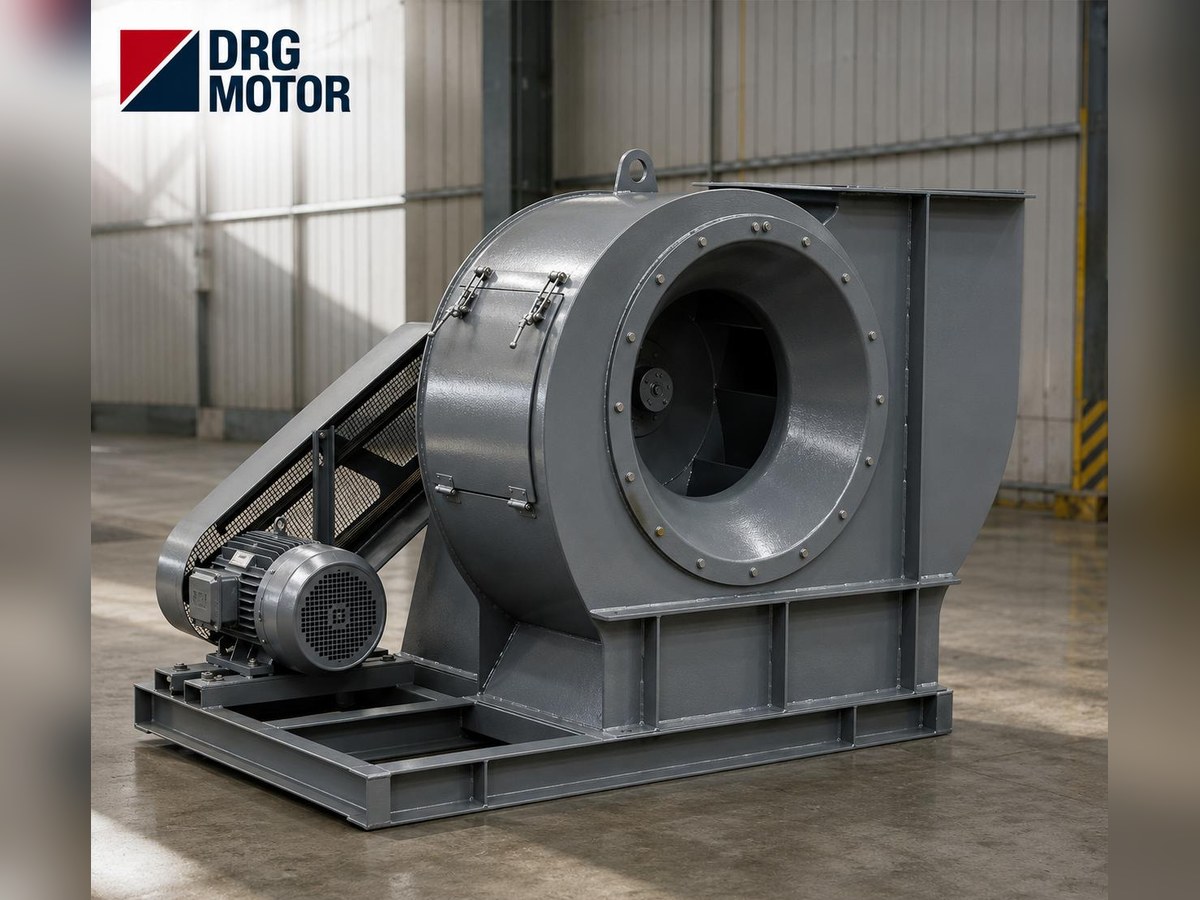
In a ceramic roller kiln, tiles travel from one end to the other on hundreds of ceramic rollers laid side by side. Geared motors placed section by section along the kiln turn these rollers through chains and gears; the fans that supply combustion air, draw off flue gas and cool the tiles run on separate electric motors. All of these motors stand outside the kiln, behind the insulation. Maker catalogues show 0.75 kW per roller drive motor and 0.75–11 kW for kiln fans. The roller tables and centring units at kiln entry and exit work with small 0.55–0.75 kW motors.
DRG Motor is a manufacturer, supplier and seller of electric motors. We do not sell the kiln, ceramic rollers, chains, gearboxes, burners, fan impellers or casings, reducers or inverters. From us comes the motor alone: three-phase units for the roller sections, the fans and the transfer tables; models are on Buy Electric Motors Online. For the full motor picture of a plant, see our ceramic plant motor guide.
How does a roller kiln work, and where do the motors sit?
A roller kiln is built from sections a few metres long, called modules, joined end to end. The tile first loses moisture and organic matter in the preheating zone, reaches peak temperature in the firing zone, then passes rapid and slow cooling zones to the exit. Both ends of each roller stick out through the kiln walls, and one end is linked to a gear or sprocket on the drive side. Motor, gearbox and chain therefore work outside the kiln wall in open air; no electric motor goes inside the kiln.
Kiln length and number of modules
Catalogues show small tile and terracotta kilns 38 m long, made of 18 modules of 2 m; large slab kilns may be 3.2 m wide and longer than 200 m. More modules mean more roller drive motors.
Temperature seen by the motor
The motor sits outside the kiln and is selected by stating the ambient temperature. One maker writes that the outer surface of well-insulated modules stays at most 40 °C above ambient. If the drive side is an enclosed corridor, measure its summer air temperature and state it on the order; on fan motors, keep the fan’s heat barrier (cooling disc) in place so that heat from the hot gas duct does not reach the motor through shaft and flange.
Roller drive: a geared motor per section
In older kilns one big motor turned the whole kiln through a long shaft and chain. Today the drive is split into sections: each module, or each group of modules, has its own geared motor with inverter speed control. On one maker’s tile kiln this is done by 22 cycloidal geared motors of 0.75 kW, grouped onto 5 drives. Another maker fits an inverter-controlled geared motor every three modules and notes that the arrangement runs dry, without oil.
Chain, gears and bevel gears
From the gearbox output the motor reaches the rollers through a chain or a train of 45° bevel gears, with a small gear on each roller end. Gears are located by key and interference fit, and chains may run in an oil bath. These mechanical parts belong to the kiln maker; when replacing a motor, only the flange and shaft size that fit the gearbox input matter.
Differential speed and back-and-forth motion
A sectional drive can run sections at different speeds to close the gaps left by tile shrinkage during firing. During a fault, tile advance can be stopped while the rollers keep turning back and forth; a hot roller that rests in one spot may bend. Inverter-driven roller motors running slowly at varying speed are therefore normal. A motor kept at low speed for long periods may lose part of its own fan cooling; discuss with the kiln maker whether a separate fan is needed.
Kiln fans: combustion air, exhaust and cooling
The largest motors on a roller kiln are the fans. The combustion air fan feeds the burners, the exhaust (flue) fan draws gas from the preheating zone, the rapid cooling fan blows air onto fired tiles, the hot air extraction fan carries heat from the cooling zone to the dryer or stack, and tail cooling fans bring the tiles down to a handling temperature at the exit. Catalogues list each fan’s rating on its own line.
Fan motor mounting
Kiln fans are either direct-drive, with the impeller on the motor shaft, or belt-driven. The fan and its impeller belong to the fan maker; for the general rules of fan motor selection see the Fan Motors category. Fans of brick and ceramic dryers are covered on another page; only kiln fans are dealt with here.
Entry and exit transfers
Tiles arriving from the glazing line are lined up on a roller table before the kiln, and the loading table at the entry spreads them across the kiln width; at the exit a similar table hands them on to the sorting line. These tables and centring units run on small geared motors. The car pusher of a brick tunnel kiln is not part of this page but of the cutting, setting and stacking topic.
Click to see current electric motor prices and order nowSEE PRICES →
How many kW is a ceramic roller kiln motor? Catalogue values
A) Motor ratings published by kiln and transfer table builders, line by line:
| Kiln / unit | Motor power | Single / total | Note |
|---|---|---|---|
| 38 m roller kiln, dehumidification fan | 11 kW | one fan | first maker |
| Same kiln: combustion air / rapid cooling | 7.5 / 5.5 kW | one fan each | first maker |
| Same kiln: exhaust / tail cooling | 11 / 0.75 kW | exhaust 1, tail 2 fans | first maker |
| Same kiln: roller drive | no rating given | 10 sets, inverter-controlled | first maker |
| Narrower 38 m kiln: dehumidification / combustion / exhaust | 5.5 / 5.5 / 5.5 kW | one fan each | first maker, second model |
| Same kiln: rapid cooling / tail | 3 / 0.75 kW | rapid 1, tail 2 fans | first maker, second model |
| Tile kiln, sectional roller drive | 0.75 kW | per motor; 22 units | second maker |
| Same kiln, speed control drives | 5.5 kW | per drive; 5 units | second maker |
| Roller table / centring unit, 600–1400 mm | 0.55–0.75 kW | per unit | third maker |
Depending on model, kiln width and length, this kiln group uses roughly 0.75 kW per roller drive motor, 0.75–11 kW for kiln fans and 0.55–0.75 kW for entry and exit tables. Total motor power of the kiln grows with the number of modules and fans; each row in the table describes a single motor. One catalogue gives no rating for its roller drive motors; on such a kiln the motor is chosen from the old motor plate and the gearbox input size.
B) Where DRG fits: 0.55–0.75 kW roller and table motors match our 80 frames, and 3–11 kW fan motors the 100L to 160M frames. All single-motor ratings in the table lie inside our range; for stronger fans on large slab kilns, take the rating from the fan data sheet and send it to us.
Worked example: roller speed and an exhaust fan started cold
The first maker’s 38 m kiln has 65 mm rollers and a firing cycle of 300–420 minutes. Let us find the tile speed and the speed at which the roller must turn, using the 0.75 kW DRG-802-4 (1420 rpm) as roller motor:
| Cycle | Product speed | Roller speed | Motor / roller ratio |
|---|---|---|---|
| 300 min | 0.127 m/min | 0.62 rpm | about 2,289 |
| 420 min | 0.090 m/min | 0.44 rpm | about 3,205 |
The roller does not even complete one turn per minute; gearbox, chain and bevel gears together cut motor speed 2,300–3,200 times. Shortening or lengthening the cycle calls for a speed change on the inverter, not a different motor. The gearbox output calculator helps when comparing reduction options.
Current of the module motors and cold start of the exhaust fan
| Case | Operation | Result | Note |
|---|---|---|---|
| 22 roller module motors | 22 × 0.75 | 16.5 kW | roller drive only |
| Rated current, DRG-802-4 | 22 × 1.75 | 38.5 A | 400 V |
| Exhaust fan, hot gas | catalogue | 11 kW | gas at about 200 °C |
| Same fan in cold air | 11 × (473 / 293) | 17.8 kW | density ratio 1.61 |
The exhaust fan is sized for hot gas. If it runs at the same speed while the kiln is cold, the denser air raises its power draw by about 1.6 times and the motor is overloaded. That is why the fan damper is throttled, or the fan is run slowly on an inverter, during the first heat-up. With your own flow and pressure, the fan power calculator gives a quick cross-check.
Kiln-specific points in motor selection
A roller kiln is among the costliest machines to stop; stalled rollers can lead to tile jams and bent rollers. The backup supply and emergency drive that keep the rollers turning in a power cut are designed by the kiln maker, and a motor replacement must leave these connections exactly as they were. When planning spares, module motors of identical rating and flange let one type of spare cover the whole kiln.
Dust, heat and protection
Around the kiln, fine glaze and tile dust meet warm air. Our IP55 motors are dust protected; regular cleaning of the fan cowl and fins keeps the motor cool. Where the burner gas train creates a classified zone, the plant’s zone drawing decides; Ex-marked motors are not something we build.
What our range does not include
We do not build motors meant to run inside a kiln, nor brake motors, single-phase or servo motors, nor anything above 355 kW; these are outside our range. Since the motors of a roller kiln already stand outside the kiln, a standard IEC motor is selected by stating the ambient temperature.
DRG motors for roller kilns and transfer systems
Models picked for roller module, entry and exit table and kiln fan ratings (400 V current):
| Model | Power / speed | Frame · shaft D×E | Current 400 V |
|---|---|---|---|
| DRG-801-4 | 0.55 kW / 1400 rpm | 80 cast iron · 19×40 | 1.31 A |
| DRG-802-4 | 0.75 kW / 1420 rpm | 80 cast iron · 19×40 | 1.75 A |
| DRG-90L-4 | 1.5 kW / 1445 rpm | 90L cast iron · 24×50 | 3.3 A |
| DRG-100L2-4 | 3 kW / 1450 rpm | 100L cast iron · 28×60 | 6.02 A |
| DRG-112M-4 | 4 kW / 1450 rpm | 112M cast iron · 28×60 | 7.95 A |
| DRG-132S-4 | 5.5 kW / 1460 rpm | 132S cast iron · 38×80 | 10.7 A |
| DRG-160M-4 | 11 kW / 1465 rpm | 160M cast iron · 42×110 | 20.4 A |
| DRG-160M1-2 | 11 kW / 2945 rpm | 160M cast iron · 42×110 | 19.6 A |
Roller and table motors are mostly 4-pole flange motors fitted to a gearbox; for directly coupled fans, 2 or 4 poles are chosen to suit the speed in the fan data sheet. For the kiln we supply three-phase IEC induction motors; light roller and table drives can use aluminium frames, fans and heavier drives get cast iron, with B5/B14 flange or B3 feet. For a module motor swap we start at the gearbox input, flange, shaft end and key, then match plate power, speed and connection to the kiln documents, and only then confirm the fit.
B5 dimensions for geared roller motors
B5 flange of frames 80, 90 and 100–112 (roller and table gearboxes), mm:
| Frame | Shaft D×E | Flange P / M / N | Hole S |
|---|---|---|---|
| 80 | 19×40 | 200 / 165 / 130 | 12 |
| 90S/90L | 24×50 | 200 / 165 / 130 | 12 |
| 100L/112M | 28×60 | 250 / 215 / 180 | 14.5 |
On a motor seated in a gearbox input, D, E and N must match exactly. For foot-mounted fan motors see the technical drawings page.
Live price table
Current shop prices for roller, table and fan motor ratings:
| Model | Power / speed | Frame · current 400 V | Price |
|---|---|---|---|
| DRG-801-40.75 HP | 0.55 kW · 1500 rpm | Cast iron 80 · 1.31 A | $91.72 (€81.91) Details & buy → |
| DRG-802-41 HP | 0.75 kW · 1500 rpm | Cast iron 80 · 1.75 A | $101.93 (€91.03) Details & buy → |
| DRG-90L-42 HP | 1.5 kW · 1500 rpm | Cast iron 90L · 3.3 A | $144.14 (€128.73) Details & buy → |
| DRG-112M-45.5 HP | 4 kW · 1500 rpm | Cast iron 112M · 7.95 A | $254.38 (€227.18) Details & buy → |
| DRG-132S-47.5 HP | 5.5 kW · 1500 rpm | Cast iron 132S · 10.7 A | $342.01 (€305.44) Details & buy → |
| DRG-132S1-27.5 HP | 5.5 kW · 3000 rpm | Cast iron 132S · 10.1 A | $338.72 (€302.50) Details & buy → |
| DRG-160M-415 HP | 11 kW · 1500 rpm | Cast iron 160M · 20.4 A | $568.76 (€507.94) Details & buy → |
| DRG-160M1-215 HP | 11 kW · 3000 rpm | Cast iron 160M · 19.6 A | $527.95 (€471.49) Details & buy → |
DRG MOTOR motors are guaranteed against material and manufacturing defects for 2 years from the delivery date (warranty certificate).
Motors in this power range
- DRG-802-4 – 0.75 kW – 1420 rpm – 80 cast iron
- DRG-90L-4 – 1.5 kW – 1445 rpm – 90L cast iron
- DRG-132S-4 – 5.5 kW – 1460 rpm – 132S cast iron
- DRG-160M-4 – 11 kW – 1465 rpm – 160M cast iron
- DRG-160M1-2 – 11 kW – 2945 rpm – 160M cast iron
Click to see current prices and order these motors nowSEE PRICES →
Browse the products, ask for a quote: motors suited to your roller kiln are on Buy Electric Motors Online. A WhatsApp photo of a module motor plate and its gearbox joint is a good start; on +90 (542) 666 11 11, give us the number of modules and the list of fans.
Frequently asked questions
Must a roller kiln motor withstand the kiln temperature?
The motor stands outside the kiln; selection is based on the ambient temperature of the corridor where it sits, not on the temperature inside the kiln.
Do all module motors have to be replaced at once?
No; the motor of a failed module can be replaced on its own with the same rating, speed and flange. Check the inverter settings against the new motor’s plate.
Where do I see the price of a kiln conveyor motor?
In the table above, which reads the shop prices as the page loads.
For questions: +90 (542) 666 11 11 · info@drgmotor.com · contact.


