 English
 Le français
 Türkçe

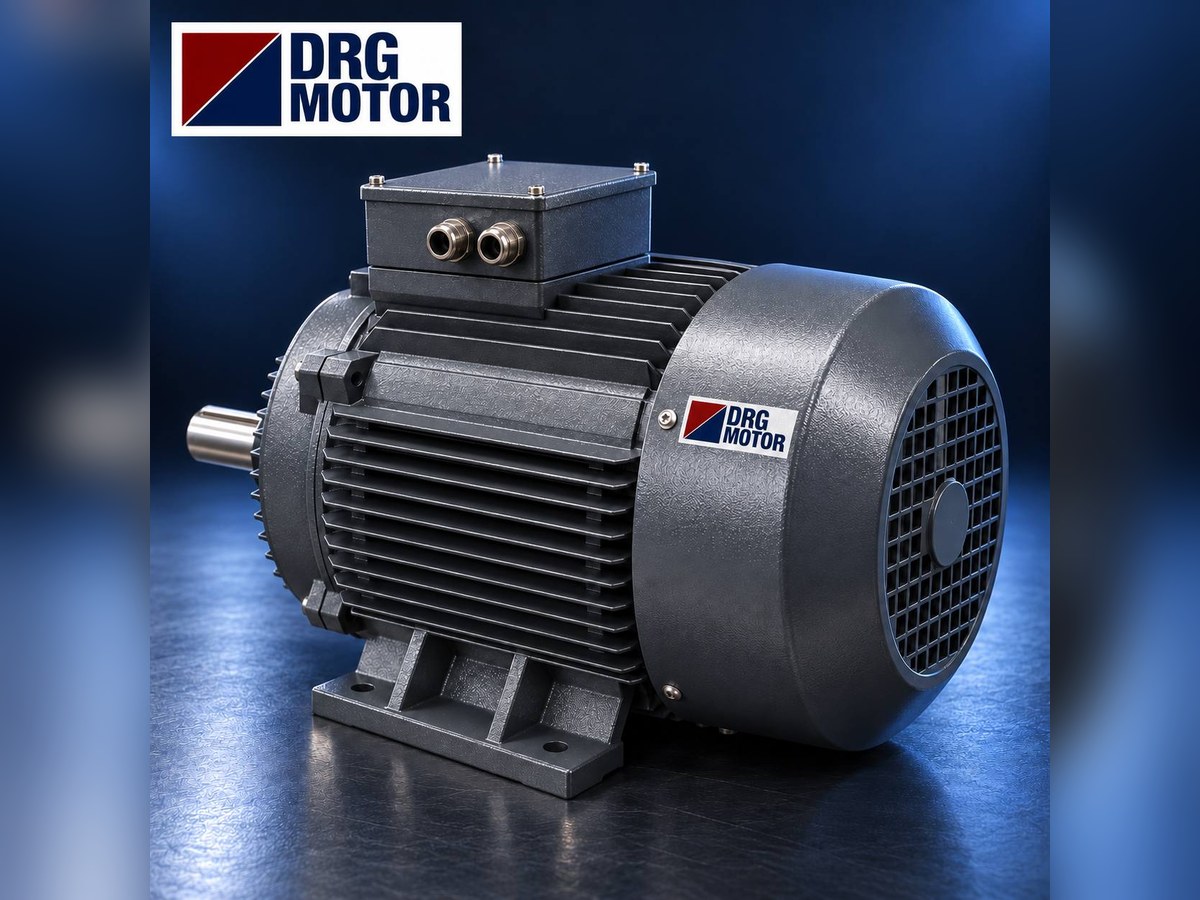
On a plastic crusher, the motor is the three-phase induction machine spinning the granulator's knife rotor. The motor drives the rotor either through V-belts and pulleys or, on small slow machines, through a gear unit; the rotating knives pass the fixed bed knives, cut the plastic, and the pieces stay in the cutting chamber until they are small enough to fall through the screen. In manufacturer catalogues the motor power of these machines starts at around 1.5 kW on small beside-the-press models and reaches 200 kW on heavy-duty granulators; the power needed grows with rotor diameter, rotor width and the wall thickness of the parts being ground.
This page is about the motor in the machine, not the machine itself: DRG Motor does not sell granulators, knives, screens, gearboxes, hydraulic pumps or speed drives; we supply the electric motor your crusher needs. You can filter the frames that suit a granulator by power and speed on the Buy Electric Motors Online page.
How does a granulator work, and what does the motor turn?
The heart of a granulator is a rotor carrying two or more rows of knives. The narrow gap between these rotor knives and the bed knives fixed to the housing works like a pair of scissors. Each pass cuts a slice off the material, and the pieces keep circulating until they reach the hole size of the screen under the rotor. The motor's job is to keep this cutting cycle going under load without losing speed.
Knife rotor and bed knives
Open rotors carry few knives and let air pass through; they are chosen for heat-sensitive film and thin-walled parts. Closed or solid rotors are heavier and absorb impacts from thick injection sprues and pipe sections in their own mass. As the knife gap opens, cutting turns into crushing, the rotor uses more energy and the motor current rises for the same feed. The resharpening interval therefore has a direct effect on motor life.
Screen: the part that sets the grain size
With smaller screen holes the material stays longer in the chamber, the rotor cuts the same piece more often and the regrind becomes more uniform. The price is lower hourly output and more heat per cut. A plant that wants a smaller screen should ask the machine builder how far the capacity will drop before changing the motor; very often the problem is not the motor but material building up in the chamber.
Beside-the-press, central and heavy-duty granulators
Beside-the-press granulators stand next to an injection or blow moulding machine and grind sprues and rejects straight away; they are small, quiet and often slow-running. Central granulators collect scrap from several machines at one point and carry motors in the 22–55 kW range. Heavy-duty granulators sit behind the shredder in a recycling plant and bring pre-shredded material down to granule size.
Granulating and shredding are not the same job
On site, the word "crusher" is used for two different machines, but from the motor's point of view they are clearly apart. A shredder tears large, bulky items, such as crates, drums or bales, into hand-sized pieces with a shaft turning at a few tens of rpm; its motor produces high torque through a high-ratio gearbox. A granulator cuts those pieces, or scrap that is already small, to screen size with a rotor turning at hundreds of rpm; the motor provides speed and cutting energy, and the torque demand is lower. That is why, in a line, the shredder stands in front and the granulator behind it. Shredder motors have their own page, Plastic Shredder Motors; here we only deal with the machine that cuts to granule size.
Which plastic goes to which machine?
Film, thin packaging and bottle bodies can go straight into a granulator. Thick-walled crates, large pipes, purgings and bales should first go through a shredder; otherwise the granulator rotor slows down at every impact, the belts slip and the motor draws overcurrent at short intervals. We compare both machines and describe a simple on-site current check in our article plastic granulator and shredder motor selection.
Drive layout: belt, gear unit or direct coupling
The drive layout of the granulator decides which frame and mounting type the motor needs. Two machines of the same power can require completely different motors because of their drive.
Slow-running beside-the-press machines
In one manufacturer catalogue, the rotors of slow beside-the-press granulators turn at 150–190 rpm. On the smallest series (1.5–3 kW) the rotor is driven directly by a geared motor unit; the 300 mm rotor series (7.5–18.5 kW) is direct-driven as well. In a geared layout the motor is joined to the gearbox input by its flange. Flange size and shaft diameter must exactly match the gearbox input; the gearbox itself is part of the machine builder's supply.
Belt-driven fast granulators
On most central and heavy-duty granulators the motor stands beside or under the machine on a foot-mounted (B3) slide rail and turns the rotor through V-belts. The large rotor pulley also acts as a flywheel. Because belt tension is set on the slide, the foot hole pattern and shaft height must match the old motor. The motor pulley bore is machined to the shaft: on our 4-pole range the shaft is 55×110 mm at 30 kW and grows to 60×140 mm at 37 kW.
A common mistake is to replace a failed 4-pole motor with a 2-pole motor of the same kW. On a machine with a 2.8 pulley ratio, a 30 kW 4-pole motor (1475 rpm) turns the rotor at about 527 rpm; a 2-pole motor of the same power (2960 rpm) raises it to 1057 rpm. On a 450 mm rotor the knife tip speed rises from 12.4 m/s to 24.9 m/s, while the motor torque falls from 194.2 Nm to 96.8 Nm. The rotor and bearings are not designed for that speed; the number of poles must always match the old nameplate.
Click to see current electric motor prices and order nowSEE PRICES →
How many kW should a granulator motor have?
A) Power in manufacturer catalogues
The values below come from granulator manufacturers' data sheets; the table shows the machine group and the motor power found in that group.
| Machine group | Motor power | Single / total | Note |
|---|---|---|---|
| Beside-the-press slow granulator, rotor 150–180 mm | 1.5–4 kW | single motor | manufacturer catalogue, smallest series; rotor 150–190 rpm |
| Beside-the-press / small central, rotor 300 mm | 7.5–18.5 kW | single motor | same catalogue, rotor width 400–1000 mm |
| Central granulator, rotor 450–500 mm | 22–55 kW | single motor | two manufacturer catalogues; standard and optional motors |
| Heavy-duty granulator, rotor 600–800 mm | 75–160 kW | single motor | manufacturer catalogue, medium and large models |
| Widest heavy-duty models | 2 × 160 – 2 × 200 kW | two motors (320–400 kW in total) | manufacturer catalogue, 800 and 1100 mm rotor |
Granulators with a single drive stay roughly between 1.5 kW and 200 kW across these catalogues; the widest heavy-duty models reach 320–400 kW in total with two motors. For the same rotor diameter a catalogue often lists several motor options: users grinding thick parts or seeking higher output choose the next power up.
B) Motors with a match in the DRG range
The whole range in the table lies inside the DRG range: we have a 4-pole cast iron motor at every step from 1.5 kW to 200 kW, and on a two-motor machine each drive can get its own motor. Small beside-the-press machines up to 2.2 kW can also take an aluminium frame. There is no 750 rpm (8-pole) motor in our range; very slow direct drives are solved with a gearbox, and the gearbox is not our product.
Choosing a motor by reading a catalogue: an example
If the old nameplate is unreadable, the rotor diameter and width of the machine are a good starting point for finding the power class in catalogues. Values from two series of the same manufacturer show how power relates to rotor width:
| Rotor diameter × width | Catalogue motor | Per metre of width | Comment |
|---|---|---|---|
| 300 × 400 mm | 7.5 kW | 18.8 kW/m | small rotor, low speed |
| 300 × 800 mm | 18.5 kW | 23.1 kW/m | width doubled, power ×2.5 |
| 500 × 500 mm | 30 kW | 60.0 kW/m | strong infeed for thick parts |
| 500 × 1000 mm | 45 kW | 45.0 kW/m | width doubled, power ×1.5 |
| 500 × 1400 mm | 45 kW | 32.1 kW/m | same motor on a wider rotor |
Why does power not rise in step with width?
On a narrow rotor a thick part loads only a few knives, so the power per metre is kept high. On a wide rotor the load is shared by more knives and the machine usually grinds thin but bulky material. In the 500 mm rotor series of the table, the width grows from 500 mm to 1400 mm while the motor only rises from 30 kW to 45 kW.
Example: 500 mm rotor, 700 mm wide
Take a central granulator with a lost nameplate, a 500 mm rotor and a 700 mm width. The catalogue model with the same rotor size carries a 37 kW motor. The DRG equivalent is DRG-225S-4: 37 kW, 1485 rpm, 66.1 A at 400 V, shaft 60×140 mm, starting torque ratio Ts/Tn 2. If the pulley bore does not fit this shaft, the pulley is re-machined or replaced. If the machine grinds thick parts and the old motor tripped often, the next step of 45 kW is considered, but knife gap and screen loading should be checked first.
Dust, heat and the electrical side
Plastic dust and motor cooling
A granulator produces fine dust, especially with hard and brittle plastics. If this dust sticks to the fan cowl and fan blades, cooling air drops and the motor runs hotter at the same load. DRG motors are IP55; even so, the fan cowl should be cleaned regularly and the motor should not draw its cooling air straight from the discharge of the cutting chamber. If the dust concentration falls into a potentially explosive atmosphere zone, a certified (Ex) motor is required; the DRG standard motor is not sold with that certificate.
Starting and protection
DRG motors from 4 kW upwards are wound for 400/690 V; they run in delta on a 400 V supply and are suitable for star-delta starting. A granulator should always start with an empty chamber, and the infeed conveyor should start only after the rotor is at full speed. With a heavy rotor the run-up time is long, so the thermal relay and the timer are set for that time. You can compare methods on our motor starting and star-delta page.
DRG motors: frames suited to granulators
DRG Motor is a manufacturer, supplier and seller of electric motors. Our range consists of three-phase induction IEC motors: aluminium frames 0.25–11 kW, cast iron frames 0.55–355 kW, speeds 1000/1500/3000 rpm. Mounting types are B3, B5, B14, B34 and B35, with vertical variants depending on frame. Some of our 4-pole cast iron motors most used on granulators:
| Model | Power / speed | Frame · shaft D×E | Current 400 V |
|---|---|---|---|
| DRG-100L2-4 | 3 kW / 1450 rpm | 100L cast iron · 28×60 | 6.02 A |
| DRG-132M-4 | 7.5 kW / 1460 rpm | 132M cast iron · 38×80 | 14.3 A |
| DRG-180L-4 | 22 kW / 1470 rpm | 180L cast iron · 48×110 | 39.7 A |
| DRG-225S-4 | 37 kW / 1485 rpm | 225S cast iron · 60×140 | 66.1 A |
| DRG-250M-4 | 55 kW / 1485 rpm | 250M cast iron · 65×140 | 97.6 A |
| DRG-315L2-4 | 200 kW / 1490 rpm | 315L cast iron · 85×170 | 334 A |
Before saying that a new motor fits your machine, we compare these points with the old nameplate and the granulator maker's documents: power and speed, voltage and connection, frame size and mounting type, shaft diameter and key, and any flange, pulley or gearbox connection. Without this check we do not promise an exact fit.
Live price table
Current prices for our motors in the power steps seen on granulators come straight from the online shop:
| Model | Power / speed | Frame · current 400 V | Price |
|---|---|---|---|
| DRG-90L-42 HP | 1.5 kW · 1500 rpm | Cast iron 90L · 3.3 A | $144.14 (€128.73) Details & buy → |
| DRG-100L2-44 HP | 3 kW · 1500 rpm | Cast iron 100L · 6.02 A | $203.84 (€182.05) Details & buy → |
| DRG-132M-410 HP | 7.5 kW · 1500 rpm | Cast iron 132M · 14.3 A | $394.89 (€352.66) Details & buy → |
| DRG-160M-415 HP | 11 kW · 1500 rpm | Cast iron 160M · 20.4 A | $568.76 (€507.94) Details & buy → |
| DRG-180M-425 HP | 18.5 kW · 1500 rpm | Cast iron 180M · 33.5 A | $873.49 (€780.08) Details & buy → |
| DRG-180L-430 HP | 22 kW · 1500 rpm | Cast iron 180L · 39.7 A | $919.45 (€821.13) Details & buy → |
| DRG-200L-440 HP | 30 kW · 1500 rpm | Cast iron 200L · 53.8 A | $1,235.00 (€1,102.93) Details & buy → |
| DRG-225S-450 HP | 37 kW · 1500 rpm | Cast iron 225S · 66.1 A | $1,527.18 (€1,363.87) Details & buy → |
| DRG-225M-460 HP | 45 kW · 1500 rpm | Cast iron 225M · 80.2 A | $1,688.50 (€1,507.94) Details & buy → |
| DRG-250M-475 HP | 55 kW · 1500 rpm | Cast iron 250M · 97.6 A | $2,065.73 (€1,844.82) Details & buy → |
DRG MOTOR motors are guaranteed against material and manufacturing defects for 2 years from the delivery date (warranty certificate).
Motors in this power range
- DRG-132M-4 – 7.5 kW – 1460 rpm – 132M cast iron
- DRG-180L-4 – 22 kW – 1470 rpm – 180L cast iron
- DRG-200L-4 – 30 kW – 1475 rpm – 200L cast iron
- DRG-225S-4 – 37 kW – 1485 rpm – 225S cast iron
- DRG-250M-4 – 55 kW – 1485 rpm – 250M cast iron
Click to see current prices and order these motors nowSEE PRICES →
Browse the motors, ask for a quote. Send us the nameplate of the motor on your granulator, or its rotor diameter and width, and we will settle the power and frame together. Open the chosen code on the Buy Electric Motors Online page to see its price, drop a photo of the granulator plate into WhatsApp, or dial +90 (542) 666 11 11.
Frequently asked questions
How many kW motor does a plastic crusher need?
The old motor nameplate is the first source. Without it, rotor diameter and width are compared with the catalogue model of the same size: small machines with a 300 mm rotor show 7.5–18.5 kW, central machines with a 450–500 mm rotor 22–55 kW.
Should a granulator motor be 2-pole or 4-pole?
Whatever speed the machine was designed for. Most belt-driven granulators run with a 4-pole (about 1500 rpm) motor; changing the pole count can double or halve the rotor speed.
Why does my crusher motor run so hot?
The usual causes are blunt knives, a widened knife gap, a clogged screen and a fan cowl covered in dust. If the current is still above the nameplate value after these are corrected, the power selection is reviewed.
How do I find the price of a plastic crusher motor?
The price depends on the motor's power, speed and frame type, and is shown in the live table above and on the product pages. The complete machine, knives and screens are not part of this table.
Plastic crusher machine motor questions go to our line +90 (542) 666 11 11, to the mailbox [email protected] or to the contact page.


