 English
 Le français
 Türkçe

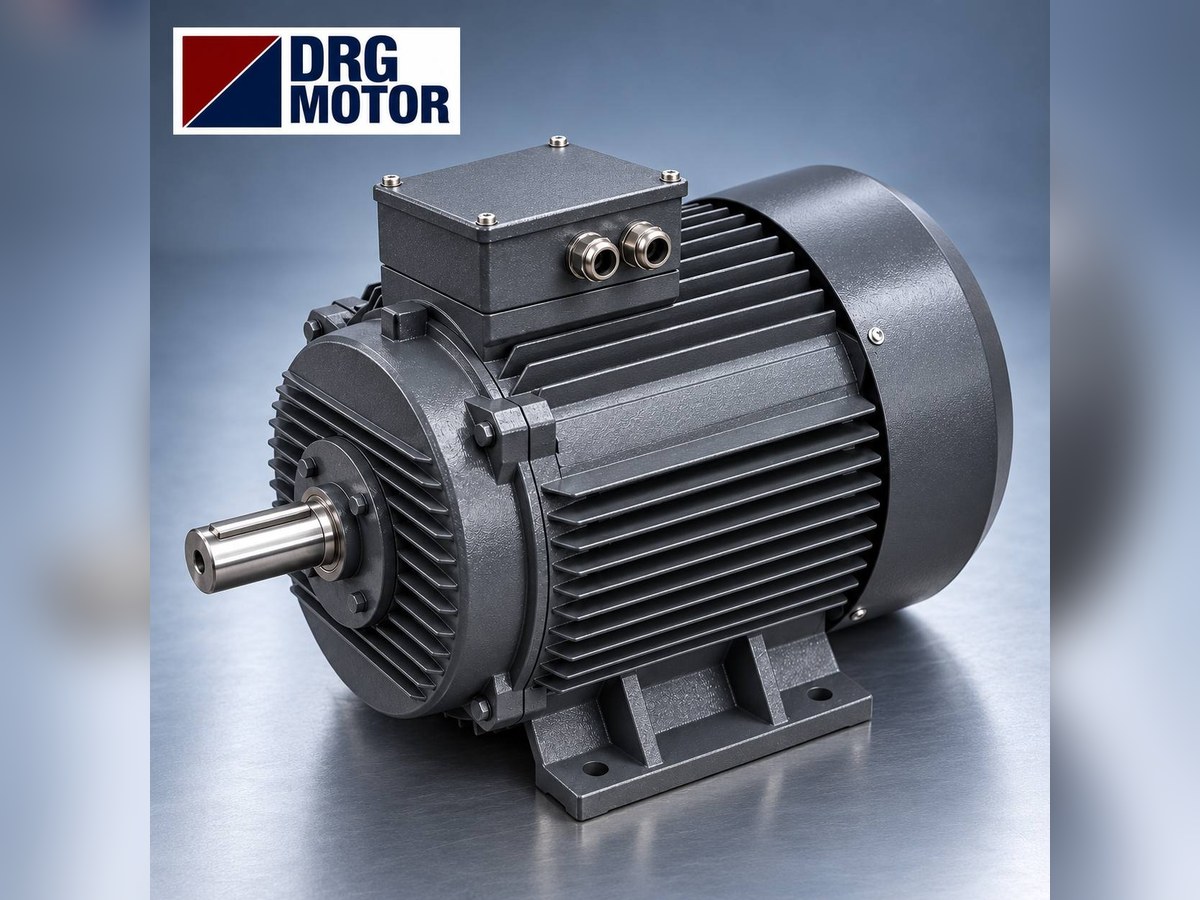
When people say pellet feed machine motor they usually mean the drive motor that turns the ring die; but on a pellet line the feeder, conditioner, cooler fan, cooler discharge and crumbler motors run alongside it. The main motor turns the die through a gearbox or a belt and pulley drive, and manufacturer catalogues show it rising from 22 kW on small 1–2 t/h mills to 315 kW on large 25–40 t/h mills. The auxiliary motors range from 0.75 kW to 30 kW and each is selected separately.
This page maps the motors of a pellet line: the job of the press, feeder and conditioner, cooler and crumbler motors, their power ranges and the matching DRG motors. Main motor sizing from specific energy and the motor replacement steps are in our feed pellet mill main motor article and are not repeated here. Motors for the whole line are listed in our Buy Electric Motors Online store.
Which motors run on a pellet line?
Ring die press and main motor
The heart of the press is the rotating ring die and the fixed-shaft rollers inside it. Conditioned meal enters between die and roller, the roller presses it out through the die holes, and knives outside cut the pellets to length. The main motor turns the die and does all the compression work of the line on its own.
Feeder and conditioner
The feeder screw above the press delivers meal to the conditioner at a set rate. Its motor is usually on an inverter: press output is adjusted by feeder speed. The conditioner is a long trough in which a paddle shaft mixes the meal with steam and, if needed, molasses; its motor runs at fixed speed through a gearbox. One manufacturer states that the conditioner can be supplied fully mounted with a geared motor. Paddle angle and speed set how long the meal stays in the conditioner; motor power depends on that time and on trough length.
Cooler and crumbler
Hot, moist pellets from the press drop into a counterflow cooler. A rotary airlock at the inlet accepts the pellets without letting outside air in; the cooler fan draws ambient air through the pellet bed to a cyclone; a separate motor below opens and closes the discharge grid. For chick and fish feed, cooled pellets pass between a fast and a slow roll and are crumbled. The crumbler rolls are driven by one motor through belts or chains; three-roll types have a separate small motor for the feed roll.
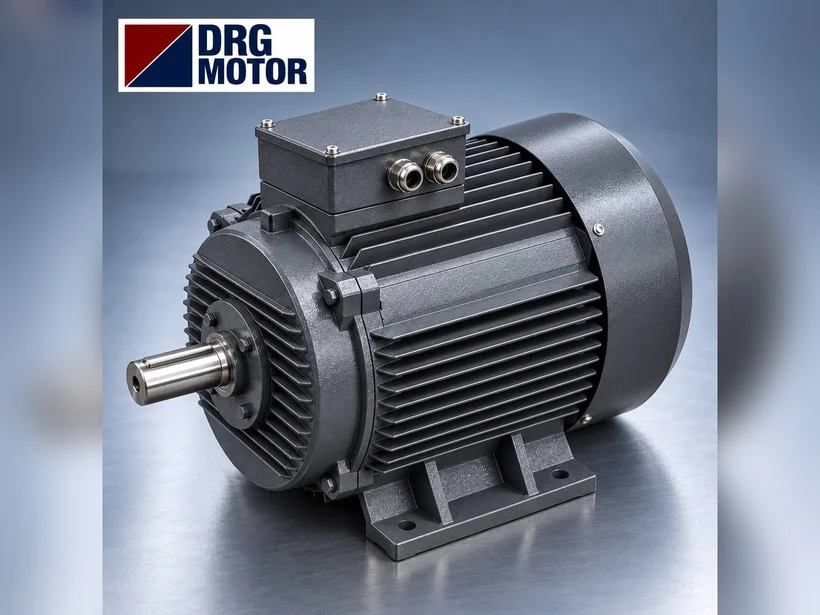
Power range of the main and auxiliary motors
A) Motor powers seen on press models
| Mill / capacity | Motor power | Single or total | Note |
|---|---|---|---|
| 250 mm die, 1–2 t/h | 22 kW | Main motor | Manufacturer catalogue, smallest |
| 320 mm die, 3–4 t/h | 37 kW | Main motor | Same catalogue |
| 420 mm die, 8–12 t/h | 110 kW | Main motor | Same catalogue |
| 768 mm die, 25–40 t/h | 280 / 315 kW | Main motor | Same catalogue, largest |
| 558–768 mm die, 17–35 t/h | 185–315 kW | Main motor | Another manufacturer |
| Mid series, gear-driven | 200–280 kW maximum | Main motor | Manufacturer catalogue, 1500 rpm |
| Feeder screw | 0.75–3 kW | Separate motor | Same catalogue rows |
| Conditioner | 1.5–15 kW | Separate motor | Same catalogue rows |
This machine group shows main motor options of roughly 22–315 kW depending on manufacturer model and capacity. Feeder and conditioner motors are listed separately in the same catalogue rows and should not be overlooked: the total power of a press is the sum of these. Some manufacturers offer two or three main motor ratings for the same die diameter; the choice depends on the formula, pellet diameter and target tonnage.
Cooler and crumbler motors
| Machine | Motor | Catalogue power | Note |
|---|---|---|---|
| Counterflow cooler | Fan | 5.5–30 kW | 1–15 t/h, manufacturer catalogue |
| Counterflow cooler | Airlock (inlet) | 0.75–1.1 kW | Same catalogue |
| Counterflow cooler | Discharge grid | 0.75–5.5 kW | Two manufacturers |
| Two-roll crumbler | Roll drive | 3–11 kW | 1–18 t/h |
| Three-roll crumbler | Rolls + feed | 7.5–22 kW | +1.1 kW feed roll |
B) Where the DRG range fits
DRG Motor is a manufacturer, supplier and seller of electric motors. For a pellet line we offer 4-pole motors up to 355 kW; aluminium housings cover the small auxiliaries and cast iron the rest. The whole 22–315 kW main motor range and the 0.75–30 kW auxiliary range in the catalogues are covered by the DRG range. Motors for very large presses above 315 kW, or for belt layouts that call for a low-speed 750 rpm motor, are outside the DRG range. On press designs that need an integrated drive or a special shaft, dimensions must be confirmed with the press maker.
Click to see current electric motor prices and order nowSEE PRICES →
Belt drive and gear drive
The press main motor is connected to the die in one of two ways. On gear-driven presses the motor is coupled to the gearbox input shaft and a single-stage gear set reduces speed. One manufacturer catalogue gives die speeds of 186 or 210 rpm with a 1500 rpm motor, meaning reduction ratios of about 8 and 7.1. On belt-driven presses a motor, often two motors, turns a large pulley on the die shaft through V-belts. One manufacturer describes its belt-driven press as dual-motor with V-belt drive.
Die peripheral speed and rpm
A pellet mill reference guide gives a die peripheral speed of 9 m/s for easy-running materials producing small-diameter pellets and 6 m/s for hard-running materials. To hold this speed on large dies, a belt-driven press may need a double-reduction pulley arrangement or a low-speed motor. You can check the belt ratio with the pulley and belt calculator.
Shock load, shear pin and belt slip
According to the same guide, a pellet mill is a machine exposed to shock loads and its main drive members are designed with at least a 2:1 safety factor. The gearbox has a shear pin: if foreign material enters the die or the die plugs, the pin breaks and the die, rollers and gears are protected. On a belt drive, if tension is low the belt slips at the moment of plugging and can be destroyed. In both cases the motor escapes undamaged, but only if the overload protection is set correctly, and a broken pin or slipping belt must never be “solved” by fitting a bigger motor.
Heavy starting and overload
The main motor must start unloaded: the feeder stops, the die empties, then the motor starts. The guide names die plugging and starting under load as the main reasons a mill stalls. Forcing the motor to restart with a plugged die makes the starting current last a long time and overheats the winding.
Start sequence
Motors on the line start against the product flow: first the cooler discharge and fan, then the cooler airlock, then the press main motor, the conditioner and the feeder last. Shutdown runs the other way: feeder off, conditioner run empty, and the main drive switched off only after the die has cleared. If this order is broken, hot pellets pile up in the cooler or the main motor has to start full.
Current and starting method
The 110 kW DRG-315S-4 draws 187 A at 400 V and has a starting current ratio of 7.0; on direct-on-line start about 1300 A appears. That is why presses of this size start by star-delta, soft starter or inverter; a 400/690 V winding on DRG motors makes star-delta possible from a 400 V supply. With the die empty at start, the reduced star torque is normally enough, but the star-to-delta changeover time must be set to the die's run-up time. The star-delta starting guide compares the options; leave panel work to a licensed electrician.
Example: motor list for an 8–12 t/h pellet line
Let us combine a 420 mm die press from the catalogues with a matching cooler and crumbler. Power values come from the catalogues and currents from DRG data; a 4-pole motor is assumed for the fan:
| Duty | Catalogue power | Example DRG model | Current 400 V |
|---|---|---|---|
| Main motor | 110 kW | DRG-315S-4 | 187 A |
| Conditioner | 7.5 kW | DRG-132M-4 | 14.3 A |
| Feeder screw | 1.5 kW | DRG-90L-4 | 3.3 A |
| Cooler fan | 22 kW | DRG-180L-4 | 39.7 A |
| Cooler inlet | 1.1 kW | DRG-90S-4 | 2.48 A |
| Cooler discharge | 1.5 kW | DRG-90L-4 | 3.3 A |
| Crumbler | 11 kW | DRG-160M-4 | 20.4 A |
Total installed power on this line is 154.6 kW, of which about 71 percent is the main motor. The total rated current of all motors is about 270 A, with the main motor taking about 69 percent. Cables and switchgear are chosen per motor current; for cross-sections use the motor cable size calculator. Exact values come from the nameplates of the machines selected.
DRG motors for pellet feed machines
Suitable 4-pole models for the main motor, with store values:
| Model | Power / speed | Frame | Current 400 V |
|---|---|---|---|
| DRG-180L-4 | 22 kW / 1470 rpm | 180L cast iron | 39.7 A |
| DRG-225S-4 | 37 kW / 1485 rpm | 225S cast iron | 66.1 A |
| DRG-250M-4 | 55 kW / 1485 rpm | 250M cast iron | 97.6 A |
| DRG-315S-4 | 110 kW / 1488 rpm | 315S cast iron | 187 A |
| DRG-315L1-4 | 160 kW / 1488 rpm | 315L cast iron | 271 A |
| DRG-355M-4 | 250 kW / 1490 rpm | 355M cast iron | 418 A |
| DRG-355L-4 | 315 kW / 1490 rpm | 355L cast iron | 526 A |
At these powers shaft and flange dimensions vary with the press side; for example, the 110 and 160 kW models have an 85 mm shaft and the 250 and 315 kW models a 100 mm shaft. The old motor's shaft size and base holes should be compared with the technical drawing.
Pellet feed motor price list: live table
Current prices for the models chosen for the main motor and for the conditioner, feeder and crumbler:
| Model | Power / speed | Frame · current 400 V | Price |
|---|---|---|---|
| DRG-90L-42 HP | 1.5 kW · 1500 rpm | Cast iron 90L · 3.3 A | $144.14 (€128.73) Details & buy → |
| DRG-132M-410 HP | 7.5 kW · 1500 rpm | Cast iron 132M · 14.3 A | $394.89 (€352.66) Details & buy → |
| DRG-160M-415 HP | 11 kW · 1500 rpm | Cast iron 160M · 20.4 A | $568.76 (€507.94) Details & buy → |
| DRG-180L-430 HP | 22 kW · 1500 rpm | Cast iron 180L · 39.7 A | $919.45 (€821.13) Details & buy → |
| DRG-225S-450 HP | 37 kW · 1500 rpm | Cast iron 225S · 66.1 A | $1,527.18 (€1,363.87) Details & buy → |
| DRG-250M-475 HP | 55 kW · 1500 rpm | Cast iron 250M · 97.6 A | $2,065.73 (€1,844.82) Details & buy → |
| DRG-315S-4150 HP | 110 kW · 1500 rpm | Cast iron 315S · 187 A | $4,863.00 (€4,342.97) Details & buy → |
| DRG-315L1-4200 HP | 160 kW · 1500 rpm | Cast iron 315L · 271 A | $6,135.24 (€5,479.15) Details & buy → |
| DRG-355M-4340 HP | 250 kW · 1500 rpm | Cast iron 355M · 418 A | $9,826.77 (€8,775.92) Details & buy → |
| DRG-355L-4430 HP | 315 kW · 1500 rpm | Cast iron 355L · 526 A | $11,417.31 (€10,196.37) Details & buy → |
DRG MOTOR motors are guaranteed against material and manufacturing defects for 2 years from the delivery date (warranty certificate).
Motors in this power range
- DRG-90L-4 – 1.5 kW – 1445 rpm – 90L cast iron
- DRG-132M-4 – 7.5 kW – 1460 rpm – 132M cast iron
- DRG-160M-4 – 11 kW – 1465 rpm – 160M cast iron
- DRG-225S-4 – 37 kW – 1485 rpm – 225S cast iron
- DRG-315S-4 – 110 kW – 1488 rpm – 315S cast iron
- DRG-355M-4 – 250 kW – 1490 rpm – 355M cast iron
Click to see current prices and order these motors nowSEE PRICES →
Questions about pellet mill motors
How many kW should a pellet mill electric motor be?
It depends on die diameter and capacity: catalogues show a 22 kW main motor on 1–2 t/h mills, 110 kW on 8–12 t/h mills and 280–315 kW on 25–40 t/h mills. Feeder, conditioner, cooler and crumbler motors come on top.
If the shear pin breaks often, should the motor be upsized?
No. The pin breaks to protect the die and gears. Frequent breakage points to plugging, foreign material or wrong feed settings; those causes must be removed first.
How is a pellet cooler fan motor selected?
The fan's airflow and pressure are given by the cooler maker; the motor is chosen for those values and the fan speed. Catalogues show 5.5–30 kW fan motors for 1–15 t/h coolers.
How do I buy a feed pellet mill motor?
Prepare the power, speed and mounting data from the press nameplate, the old motor's shaft size and the starting method. You can order the right model from the store or ask us.
Contact us with the nameplates of the press, cooler and crumbler and we will define all the motors of the line together. Phone +90 (542) 666 11 11, e-mail [email protected], contact page. For all models see Buy Electric Motors Online.


