 English
 Le français
 Türkçe

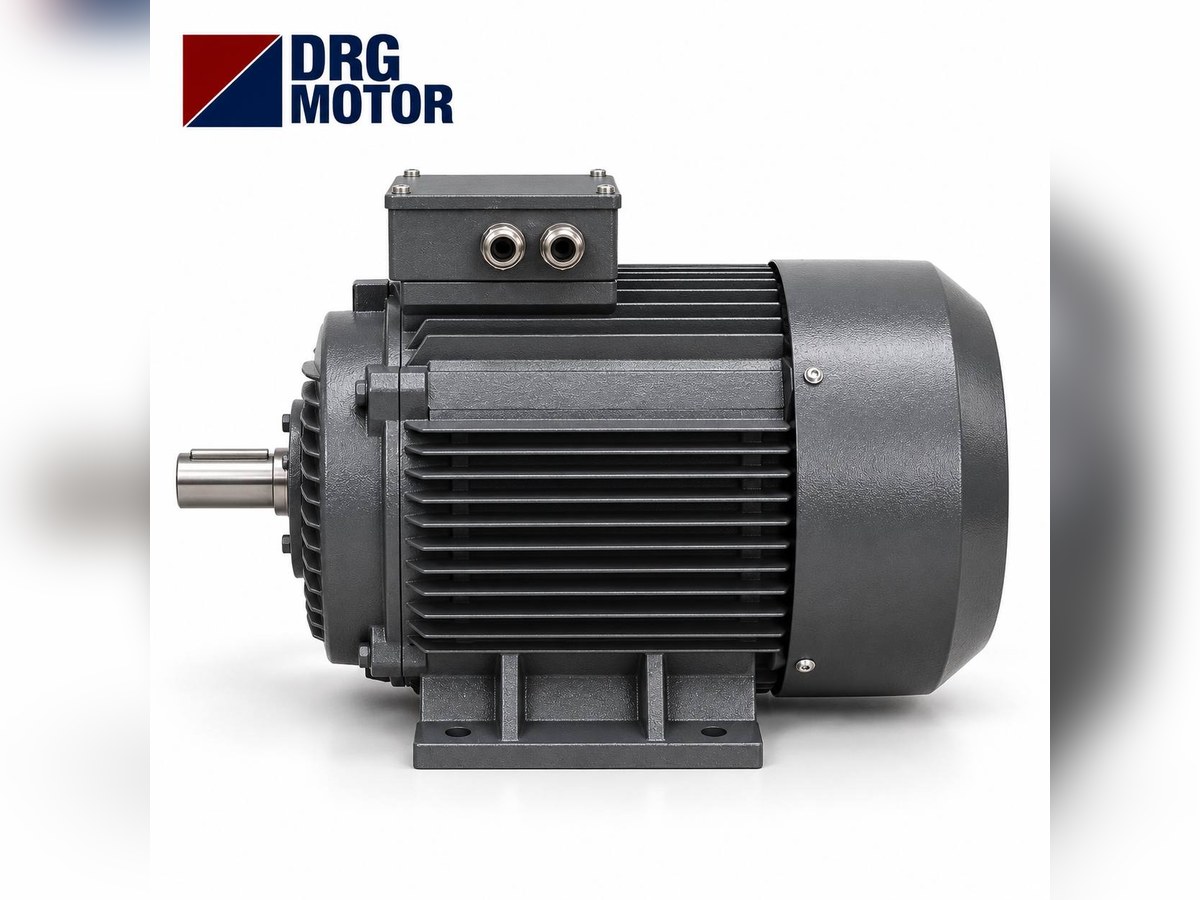
In a flour mill, the grain cleaning machine motor is the motor that drives the separator, destoner, indented cylinder (trieur), scourer, dampening machine and debranner in the cleaning section before wheat goes to grinding. These motors differ widely: in manufacturer catalogues, separators and destoners use 0.25–1.1 kW vibration motors per motor or a 1.1–1.5 kW standard motor, trieurs 0.37–1.5 kW, scourers 7.5–18.5 kW, intensive dampeners 5.5–11 kW and vertical debranners 30–90 kW. In the cleaning section the most power is drawn by the debranner, if there is one, otherwise by the scourer.
This page covers only the mill's own cleaning section: machine sequence, the motor's job on each machine, catalogue power values, a sample motor list and the part DRG's range covers. Standard motors that fit these machines are listed on Buy Electric Motors Online; machines with vibration motors are quoted through the Vibration Motors page.
What is a mill cleaning section and how does it differ from pre-cleaning?
Wheat reaches the rolls after being cleaned twice. The first cleaning happens before the silo; the second is the cleaning section inside the mill. Although both use the same machine names, their purpose and motor loads differ.
Pre-cleaning before the silo
Pre-cleaning at intake and at the silo inlet is a rough removal of straw, soil and dust from raw grain arriving by truck; the aim is safe storage. That post-harvest job is covered by the Grain and Seed Cleaning Machine Electric Motors page of the Agricultural Machinery Electric Motors series. This page deals with the fine cleaning that wheat drawn from the silo passes through before entering the rolls.
First cleaning, tempering and second cleaning
Mill cleaning is typically built in two stages. In first cleaning, wheat is screened by size on the separator, heavy particles are removed on the destoner, weed seeds and broken kernels on the trieur, and the surface is scoured on the scourer. The wheat is then moistened in the dampening machine and rested in tempering bins. Second cleaning includes another scourer and, where needed, a debranner and an optical sorter. The same machine type can therefore appear twice in the section with different capacities; in one manufacturer's catalogue the same scourer is rated 8–12 t/h in first cleaning and 6–9 t/h in second cleaning.
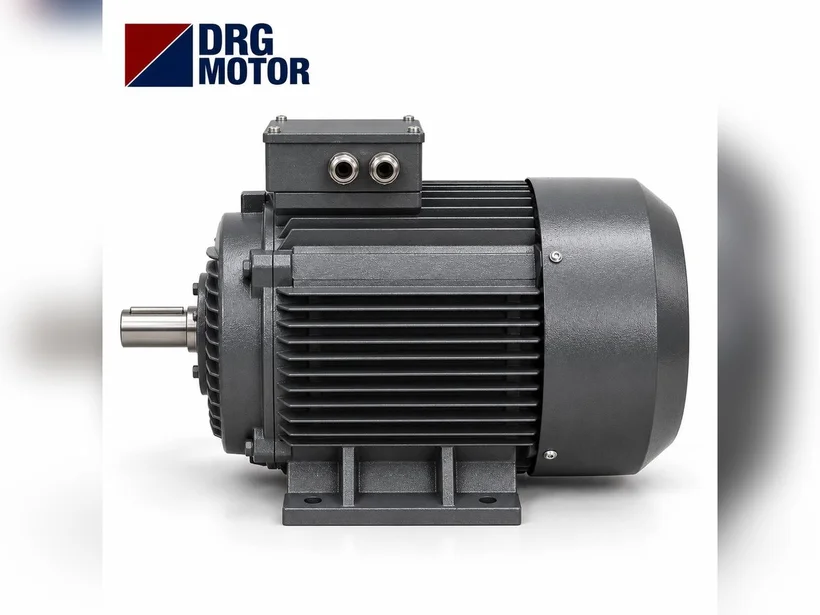
Machines in the cleaning section and what their motors do
Separator and destoner
The separator removes coarse impurities and fine particles with a two- or three-deck sieve box; an air channel usually sits at its outlet. The box is moved either by two vibration motors or by a standard motor and eccentric mechanism. Catalogues show 0.28–0.75 kW per motor on vibratory types and 1.1–1.5 kW at 1500 rpm on one standard-motor separator series. A dry destoner works with an inclined vibrating deck and air blown from below; stones climb to the upper end while wheat flows down. These machines mostly vibrate with a pair of 0.25–1.1 kW vibration motors.
Trieur (indented cylinder)
The trieur is a slowly rotating cylinder with indented pockets inside. Round weed seeds and broken kernels drop into the pockets and are removed while long wheat kernels stay in the cylinder. Because the cylinder turns slowly, the motor is connected through a gearbox; catalogues show 0.37–1.5 kW geared motors and two separate motors on double-cylinder models.
Scourer
In a horizontal scourer, a high-speed rotor rubs wheat against a fixed screen casing to strip dust, beard remnants and loose bran from the kernel surface. The heaviest standard motor of the cleaning section is often here: 7.5–18.5 kW at 1500 rpm in catalogues. Some scourers have an air-recycling aspirator at the outlet; that unit runs a small vibration motor and a geared motor of its own.
Dampening machine
An intensive dampener mixes wheat with a bladed rotor to distribute water evenly over the kernels. Catalogues show 5.5–11 kW motors; one manufacturer specifies this machine at 945 and 960 rpm, that is, with a 6-pole motor. The tempering screw and the tempering bin discharge screws are separate, small conveying motors.
Debranner
A vertical debranner peels the outer bran layers of wheat with abrasive stones before milling. It is used for durum wheat and on lines that need a low microbial load. Catalogues show 30–90 kW motors for 1–10 t/h capacity; one manufacturer states a 250M frame, 4-pole, 1480 rpm motor on its 55 kW model. This machine alone can multiply the total power of the cleaning section.
Optical sorter (colour sorter)
An optical machine that sorts by colour and shape is an integrated device with its own feeder vibration and electronics; one manufacturer's sheet gives its supply as single-phase 200–240 V. There is no standard three-phase motor to replace here. The compressed air needed for ejection comes from a separate compressor; that compressor's motor belongs to the compressor topic.
Click to see current electric motor prices and order nowSEE PRICES →
Cleaning section motor power: what the catalogues say
A) Catalogue power of cleaning machines
| Cleaning machine | Catalogue motor power | Number of motors | Note |
|---|---|---|---|
| Separator, 8–30 t/h | 1.1–1.5 kW, 1500 rpm | Single motor | Manufacturer catalogue, standard motor |
| Separator, vibratory | 2 × 0.28 – 2 × 0.75 kW | Two motors | Manufacturer catalogue |
| Destoner, 4.5–20 t/h | 2 × 0.25 – 2 × 1.1 kW | Two motors | Manufacturer catalogue |
| Trieur, 1–10 t/h | 0.37–1.5 kW | Per cylinder | Geared motor |
| Scourer, 4–20 t/h | 7.5–18.5 kW | Single motor | Two manufacturer catalogues |
| Intensive dampener, 5–45 t/h | 5.5–11 kW | Single motor | Two manufacturer catalogues |
| Vertical debranner, 1–10 t/h | 30–90 kW | Single motor | Manufacturer catalogue, largest load |
In this machine group, depending on the manufacturer's model and capacity, motor options of about 0.25–90 kW are seen; the low end is vibration motors, the high end the debranner main motor. The values are the drive of a single machine. The section's aspiration fans, elevators and screw conveyors are not in this list and are calculated separately.
B) Cleaning section motors covered by DRG
DRG Motor is a manufacturer, supplier and seller of electric motors. Our range covers 0.25–11 kW in aluminium frames and 0.55–355 kW in cast iron frames, 1000/1500/3000 rpm, three-phase 230/400 V or 400/690 V; B3, B5, B14 and B35 mounting is specified with the order note. In the cleaning section this range covers standard-motor separators, the gearbox input motors of trieurs, scourers, dampeners (including 6-pole) and 30–90 kW debranner motors. Separators and destoners running on a pair of vibration motors are not in DRG's store range; quotations for those are made through the Vibration Motors page. An optical sorter with an integrated drive, and explosive dust area motors if the plant requires Ex motors, have no equivalent in DRG's range.
| Model | Power / speed | Frame · current 400 V | Price |
|---|---|---|---|
| DRG-90S-41.5 HP | 1.1 kW · 1500 rpm | Cast iron 90S · 2.48 A | $124.09 (€110.82) Details & buy → |
| DRG-90L-42 HP | 1.5 kW · 1500 rpm | Cast iron 90L · 3.3 A | $144.14 (€128.73) Details & buy → |
| DRG-132M2-67.5 HP | 5.5 kW · 1000 rpm | Cast iron 132M · 12 A | $423.04 (€377.80) Details & buy → |
| DRG-160M-610 HP | 7.5 kW · 1000 rpm | Cast iron 160M · 15.4 A | $579.49 (€517.52) Details & buy → |
| DRG-160M-415 HP | 11 kW · 1500 rpm | Cast iron 160M · 20.4 A | $568.76 (€507.94) Details & buy → |
| DRG-160L-420 HP | 15 kW · 1500 rpm | Cast iron 160L · 27.3 A | $678.13 (€605.61) Details & buy → |
| DRG-180M-425 HP | 18.5 kW · 1500 rpm | Cast iron 180M · 33.5 A | $873.49 (€780.08) Details & buy → |
| DRG-200L-440 HP | 30 kW · 1500 rpm | Cast iron 200L · 53.8 A | $1,235.00 (€1,102.93) Details & buy → |
| DRG-250M-475 HP | 55 kW · 1500 rpm | Cast iron 250M · 97.6 A | $2,065.73 (€1,844.82) Details & buy → |
| DRG-280M-4125 HP | 90 kW · 1500 rpm | Cast iron 280M · 155 A | $3,268.56 (€2,919.03) Details & buy → |
Example: motor list of a 10 t/h cleaning section
Using one manufacturer's catalogue, let us build a first cleaning line handling about 10 t/h of wheat and add up only the machine drives:
- Separator (14 t/h): 1.1 kW, 1500 rpm.
- Destoner (14 t/h): 2 × 0.35 = 0.7 kW.
- Double-cylinder trieur (8–10 t/h): 2 × 1.5 = 3 kW geared.
- Scourer (8–12 t/h): 15 kW, 1500 rpm.
- Intensive dampener (10–18 t/h): 7.5 kW, 960 rpm.
The total is 1.1 + 0.7 + 3 + 15 + 7.5 = 27.3 kW. Of this, 15 kW, more than half, sits in a single scourer. Adding a 90 kW debranner rated 8–10 t/h raises the section's machine power to 117.3 kW; the debranner alone then accounts for about 77%. Per tonne the gap is also clear: the scourer draws 15 kW / 10 t/h = 1.5 kWh/t, the debranner 90 kW / 10 t/h = 9 kWh/t (assuming full load). This calculation also shows which motor should be stocked first in a spare motor plan: if the scourer or debranner motor stops, the cleaning section, and therefore the whole mill, stops.
On the current side, a 15 kW 4-pole motor (DRG-160L-4) draws 27.3 A at 400 V, while the 90 kW DRG-280M-4 draws 155 A. The panel, cable and transformer side of the debranner motor must be handled separately in the plant design.
Speed, drive and starting
Direct or belt drive on scourers and debranners
On scourers and debranners the rotor turns close to motor speed and is mostly driven by a 4-pole motor through a belt or coupling. The pole number must be kept when replacing the motor; fitting a 2-pole motor doubles the rotor peripheral speed and breaks kernels. The rotor is heavy; DRG 4-pole motors have a starting torque ratio Ts/Tn of 2.0–2.2. At these powers DRG motors are wound for 400/690 V and can be started star-delta on a 400 V supply, but if the machine stops full, starting torque in star drops to one third. You can compare methods on the star-delta starting page.
Six poles on the dampener and a gearbox on the trieur
The dampener rotor turns more slowly, which is why a 6-pole motor appears in the catalogue. Fitting a 4-pole motor instead raises rotor speed by about 50% and changes water distribution and the kernel surface. On the trieur, cylinder speed is set by the gearbox ratio; when replacing the motor, check the gearbox input flange (B5 or B14) and shaft diameter. You can verify the ratio with the gearbox output speed calculator.
Checklist for selecting a motor in the cleaning section
- The stage the machine works in (first or second cleaning) and its actual capacity.
- The old motor's nameplate: power, speed (poles), frame, mounting, voltage and connection.
- Drive: belt (pulley diameter and shaft size), coupling or gearbox flange.
- Starting: rotor inertia on scourers and debranners; can the machine be emptied before stopping?
- Moisture and wash water on the dampener: terminal box and cable glands must be sealed. DRG motors are IP55.
- Dust: the cleaning section is the dustiest part of the mill. Clean the cooling fins regularly; if the plant requires an Ex motor, it is not in DRG's range.
- On vibratory machines, both motors must be of the same type and speed.
DRG motor options for the cleaning section
The table shows models selected from the power values seen on scourers, dampeners and debranners:
| Model | Power / speed | Frame | Current 400 V |
|---|---|---|---|
| DRG-90L-4 | 1.5 kW / 1445 rpm | 90L cast iron | 3.3 A |
| DRG-160M-6 | 7.5 kW / 970 rpm | 160M cast iron | 15.4 A |
| DRG-160L-4 | 15 kW / 1465 rpm | 160L cast iron | 27.3 A |
| DRG-180M-4 | 18.5 kW / 1470 rpm | 180M cast iron | 33.5 A |
| DRG-200L-4 | 30 kW / 1475 rpm | 200L cast iron | 53.8 A |
| DRG-250M-4 | 55 kW / 1485 rpm | 250M cast iron | 97.6 A |
| DRG-280M-4 | 90 kW / 1486 rpm | 280M cast iron | 155 A |
DRG MOTOR motors are guaranteed against material and manufacturing defects for 2 years from the delivery date (warranty certificate). For general motor selection on the mill line, read electric motor selection for mills and grinding plants; for the supply plan, see flour mill motor supply.
Motors in this power range
- DRG-90S-4 – 1.1 kW – 1445 rpm – 90S cast iron
- DRG-132M2-6 – 5.5 kW – 968 rpm – 132M cast iron
- DRG-160M-4 – 11 kW – 1465 rpm – 160M cast iron
- DRG-160L-4 – 15 kW – 1465 rpm – 160L cast iron
- DRG-225S-4 – 37 kW – 1485 rpm – 225S cast iron
- DRG-280S-4 – 75 kW – 1486 rpm – 280S cast iron
Click to see current prices and order these motors nowSEE PRICES →
Wheat cleaning motor: frequently asked questions
Which is the largest motor in a flour mill cleaning section?
If there is a debranner, its main motor (30–90 kW in catalogues). Otherwise the scourer (7.5–18.5 kW) or the dampener (5.5–11 kW).
What speed should a scourer motor have?
Catalogues show the 1500 rpm class, i.e. a 4-pole motor. Rotor speed is part of the machine design; keep the same pole number as the old motor.
Can a standard motor replace a separator's vibration motor?
No. A vibration motor is a separate product bolted to the box and fitted with eccentric weights. Unless the machine was built with an eccentric mechanism, it will not run on a standard motor.
Can a 4-pole motor replace the 6-pole motor of a dampener?
It is not recommended. Rotor speed rises by about half, dampening and the kernel surface change and the motor is more heavily loaded. Choose a motor with the same pole number.
Send us the machine list of your cleaning section and the old motor nameplates; we will work out together which motors our range can cover. Phone +90 (542) 666 11 11, e-mail [email protected], contact page. Compare suitable powers and live prices for your cleaning section on Buy Electric Motors Online.


