 English
 Le français
 Türkçe

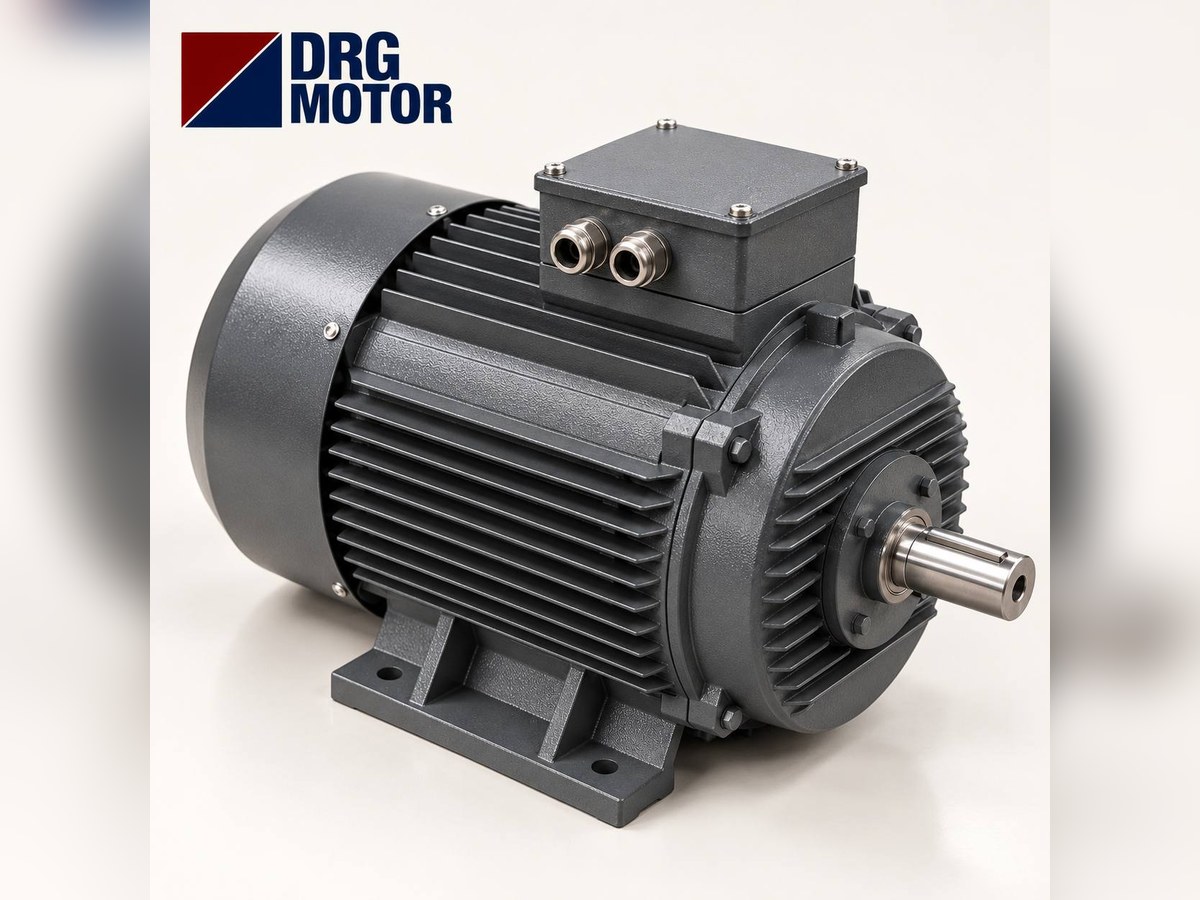
A grain screening and grader machine motor drives the screen box, indented cylinder or oscillating deck of the machines that separate pre-cleaned kernels by size, length and specific weight. The motors here are small: in manufacturer catalogues screen and cylinder drives are 0.37–5.5 kW and gravity table fans 1.5–15 kW. Speed matters more than power; because separation quality depends on screen oscillation, cylinder speed and deck air, the motors are often run on an inverter.
What is being separated is no longer straw or stone but the good kernel itself: broken kernels, weed seeds, shrivelled and empty kernels. These machines are the heart of seed preparation. Coarse removal of straw, dust and stones is covered on the Grain and Seed Cleaning Machine Electric Motors page, and the cleaning section of a flour mill is treated separately in the flour mill series. The motors on this page are shown with prices under Buy Electric Motors Online.
Where the grader sits in a seed processing line
In a seed plant the product typically moves in this order:
- Pre-cleaned raw seed is fed at a metered rate from a buffer bin.
- The air-screen grader separates kernels by thickness and width; air channels at inlet and outlet take out shrivelled kernels.
- The indented cylinder (trieur) separates kernels of equal thickness by length: it removes short broken pieces and round weed seeds, or long oat kernels.
- The gravity table separates kernels of the same size but different weight: insect-damaged, empty and light kernels are removed.
- Sizing, where needed, forms calibre fractions suited to the planter; this step is common for maize seed.
- Seed treatment and bagging follow.
Each step uses a different physical property, so the machines cannot replace each other and each has its own motor needs. Some of the same machines are used for milling wheat, but in seed the purity and germination target lowers capacity: the same machine is fed more slowly with seed.
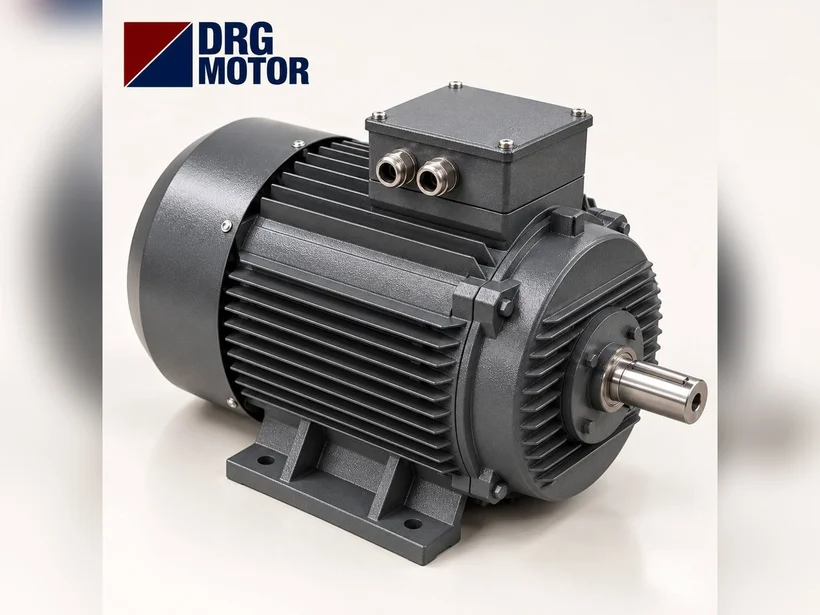
Machine types and motor duties
Air-screen grader (flat screen cleaner)
Stacked, slightly inclined screens oscillate back and forth inside a box. The box is driven from a standard motor by an eccentric shaft and belt; counterweights or a second box balance the motion. In one manufacturer's sheet the screen shaft of an air-screen machine built for grass seed turns at 300 rpm and runs on a 2.2–3 kW motor. At the inlet there may be a separate small belt or shaker feeder motor, and under the box an auger motor. The screens are cleaned by rubber balls or brushes, which take their energy from the box motion.
Indented cylinder (trieur)
A cylinder lined inside with small pockets turns slowly. Short kernels settle in the pockets, are lifted and drop into the inner trough; long kernels slip out of the pockets and stay at the bottom of the cylinder. The motor turns the cylinder at around 30–40 rpm through a gearbox or belt and pulley. The auger in the trough turns from the same drive or from a separate motor. In one manufacturer's sheet, as cylinder diameter grows from 600 mm to 1,200 mm, speed falls from 39 to 29 rpm and the motor rises from 1.1 kW to 5.5 kW.
Gravity table
A perforated deck, inclined in two directions, receives air from a fan below and makes fast, small-amplitude strokes from an eccentric drive. The air turns the kernels into a fluid bed; heavy kernels touch the deck and are carried uphill by the stroke, light ones float on the air and flow downhill. There are two motors here: the deck fan and the reciprocating drive. The fan motor is larger and takes most of the power. On small laboratory tables both fan and stroke speed are adjusted steplessly by frequency converter.
Sizing (calibration) machines
Sets of round- or slotted-hole screens, or rotary cylindrical screens, sort seed into calibre groups. The motor duty is similar to an air-screen grader or a drum: oscillating a box or turning a cylinder. Power depends on machine size; rather than quoting a sourced range, going by the value on the machine nameplate is correct.
Optical sorter
Optical sorters, which detect colour and shape defects with cameras and reject kernels with air ejectors, have no standard drive motor. The vibrating feeder, cameras, lighting and valve system run on the machine's own integrated electronics; the main external need is compressed air, and the compressor is a separate topic. That is why the optical sorter is outside the motor selection scope of this page.
Click to see current electric motor prices and order nowSEE PRICES →
How many kW is a grader motor?
A) Values in manufacturer catalogues
| Machine / capacity | Motor power | Single or total | Note |
|---|---|---|---|
| Air-screen grader, 3.8–5.8 t/h | 1.1–1.5 kW | Screen box motor | Wheat, 3 models |
| Grass seed air-screen machine, 9 m² | 2.2 kW + 0.37 kW | Screens and feeder separate | Screen shaft 300 rpm |
| Large grass seed air-screen machine | 3 + 1.1 + 0.37 kW | Screens, auger, feeder | Three separate motors |
| Trieur, 600 mm, 4–6 t/h | 1.1 kW | Single motor | Cylinder 39 rpm |
| Trieur, 1,200 mm, 20–25 t/h | 5.5 kW | Single motor | Cylinder 29 rpm |
| Trieur, 1.5–5 t/h (local maker) | 0.75–2.2 kW | Double deck 2 × 1.5 kW | Geared motor + belt |
| Gravity table, 2 t/h | 3 kW fan + 0.55 kW | Fan and stroke separate | Small model |
| Gravity table, 15 t/h | 15 kW fan + 1.1 kW | Fan and stroke separate | Large model |
According to manufacturer catalogues, individual motors on grading machines vary from about 0.37 to 15 kW; only large table fans come close to 15 kW. Screen and cylinder drives stay at or below 5.5 kW. Power rises with capacity, but the relation depends on the crop: the same table handles 15 t/h of wheat and 5 t/h of clover with the same motor. The total installed power of a seed line is the sum of these machines and the elevators between them; it must not be confused with the power of a single machine.
B) The match in the DRG range
DRG Motor is a manufacturer, supplier and seller of electric motors. Our range covers 0.25–11 kW in aluminium frames and 0.55–355 kW in cast iron frames, 1000/1500/3000 rpm, 3-phase 230/400 V or 400/690 V; B3, B5, B14 and B35 mounting is specified with the order note. The whole 0.37–15 kW band of grader, trieur and table motors is in this range; at small ratings an aluminium frame saves weight. The integrated drive of an optical sorter and the gearbox part of a geared motor are not in our range; we supply the motor that fits onto the gearbox.
| Model | Power / speed | Frame · current 400 V | Price |
|---|---|---|---|
| DRG-712-40.5 HP | 0.37 kW · 1500 rpm | Aluminium 71 · 0.92 A | $76.76 (€68.55) Details & buy → |
| DRG-801-40.75 HP | 0.55 kW · 1500 rpm | Cast iron 80 · 1.31 A | $91.72 (€81.91) Details & buy → |
| DRG-802-41 HP | 0.75 kW · 1500 rpm | Cast iron 80 · 1.75 A | $101.93 (€91.03) Details & buy → |
| DRG-90S-41.5 HP | 1.1 kW · 1500 rpm | Cast iron 90S · 2.48 A | $124.09 (€110.82) Details & buy → |
| DRG-90L-42 HP | 1.5 kW · 1500 rpm | Cast iron 90L · 3.3 A | $144.14 (€128.73) Details & buy → |
| DRG-100L1-43 HP | 2.2 kW · 1500 rpm | Cast iron 100L · 4.52 A | $188.32 (€168.18) Details & buy → |
| DRG-100L2-44 HP | 3 kW · 1500 rpm | Cast iron 100L · 6.02 A | $203.84 (€182.05) Details & buy → |
| DRG-112M-25.5 HP | 4 kW · 3000 rpm | Cast iron 112M · 7.45 A | $225.65 (€201.52) Details & buy → |
| DRG-160M1-215 HP | 11 kW · 3000 rpm | Cast iron 160M · 19.6 A | $527.95 (€471.49) Details & buy → |
| DRG-160M2-220 HP | 15 kW · 3000 rpm | Cast iron 160M · 26.5 A | $570.23 (€509.25) Details & buy → |
Why speed matters more than power: inverter adjustment
If a trieur cylinder turns too fast, long kernels are also held in the pockets by centrifugal effect and mix into the short fraction; too slow and capacity drops. Catalogue speeds show this balance.
Critical speed and working speed
The critical speed at which a kernel inside the cylinder sticks to the wall instead of falling is about nc = 42.3 / √D (D in metres). For the four catalogue sizes the working speed is 0.71–0.75 times this critical speed:
- 600 mm: critical ≈ 54.6 rpm, working 39 rpm (0.71).
- 900 mm: critical ≈ 44.6 rpm, working 33 rpm (0.74).
- 1,200 mm: critical ≈ 38.6 rpm, working 29 rpm (0.75).
Example: inverter setting on a 900 mm trieur
A 900 mm trieur is driven by a 4-pole motor. With the motor at 1,450 rpm, the overall reduction for 33 rpm is 1,450 / 33 ≈ 44. With the same ratio, lowering the inverter to 45 Hz gives ≈ 29.7 rpm at the cylinder, raising it to 55 Hz gives ≈ 36.3 rpm. So a ±5 Hz adjustment moves the cylinder between about 0.67 and 0.81 of critical speed; that is how the setting is found for paddy, barley or oats. Above 50 Hz the motor enters the constant-power region and its torque falls; since cylinder load is low a small overshoot is no problem, but check the gearbox and motor nameplate. You can find the ratio for your own values with the gearbox output speed calculator.
Two separate inverters on the table
On a gravity table, fan speed and stroke frequency are also set separately by inverter; too much air throws kernels off, too little mixes the heavy and light fractions. Two separate inverters are needed for the fan motor and the stroke motor.
Checklist for choosing a grader motor
- Nameplate power and speed: The screen box and table stroke are calculated with the belt ratio; a motor of different speed changes stroke frequency and spoils separation.
- Inverter operation: On small motors running long at low frequency, their own fan slows down; watch motor temperature and raise the lower frequency limit if needed.
- Vibration load: The screen box puts a constant oscillating load on the motor bearings; the foot base and bolts must be tight.
- Direction of rotation: The trieur cylinder's direction depends on pocket geometry; in reverse there is no separation.
- Dust: Graders and tables work in an enclosed hall; even with aspiration connected, dust collects on the motor cover. Weekly cleaning is enough.
- Continuous feed: In a seed line the machines run all day without stopping, so the motor should be loaded somewhat below, not at, its nameplate power.
Mounting depends on the machine: for screen boxes and table strokes a foot-mounted (B3) motor with a belt is usual, for a trieur a motor flanged (B5 or B14) to the gearbox. The exact type is taken from the machine maker's drawing.
DRG motors for seed and grain screening
Options for the small ratings common on graders and trieurs, and for table fans:
| Model | Power / speed | Frame | Current 400 V |
|---|---|---|---|
| DRG-801-4 | 0.55 kW / 1400 rpm | 80 cast iron | 1.31 A |
| DRG-90S-4 | 1.1 kW / 1445 rpm | 90S cast iron | 2.48 A |
| DRG-90L-4 | 1.5 kW / 1445 rpm | 90L cast iron | 3.3 A |
| DRG-100L1-4 | 2.2 kW / 1450 rpm | 100L cast iron | 4.52 A |
| DRG-112M-2 | 4 kW / 2905 rpm | 112M cast iron | 7.45 A |
| DRG-160M2-2 | 15 kW / 2945 rpm | 160M cast iron | 26.5 A |
Motors in this power range:
- DRG-712-4 – 0.37 kW – 1340 rpm – 71 aluminium
- DRG-802-4 – 0.75 kW – 1420 rpm – 80 cast iron
- DRG-90L-4 – 1.5 kW – 1445 rpm – 90L cast iron
- DRG-100L2-4 – 3 kW – 1450 rpm – 100L cast iron
- DRG-160M1-2 – 11 kW – 2945 rpm – 160M cast iron
- DRG-160M2-2 – 15 kW – 2945 rpm – 160M cast iron
Click to see current prices and order these motors nowSEE PRICES →
DRG MOTOR motors are guaranteed against material and manufacturing defects for 2 years from the delivery date (warranty certificate). For the air side of the table fan see the Fan Motors category, and to size power from your own fan values use the fan motor power calculator.
Grader and screening motor: frequently asked questions
What kW motor is used on a grader?
On air-screen graders the screen box motor is 1.1–3 kW in catalogues; large machines also have 0.37–1.1 kW motors for the feeder and auger. A gravity table fan can be 3–15 kW.
Can a trieur motor run without an inverter?
Yes; the machine may be sold with a fixed-speed drive. An inverter lets you adjust cylinder speed for different crops without changing belts or gears.
Can a motor be bought for an optical sorter?
No: there is nothing in these machines to replace with an IEC motor. In case of a fault, contact the machine maker's service.
Can a seed screening machine motor be single-phase?
On laboratory and small farm machines, yes. Plant-scale graders, trieurs and tables use three-phase motors; the DRG range is three-phase only.
The machine type, nameplate values and whether you use an inverter are all we need. Phone +90 (542) 666 11 11, e-mail [email protected], contact page. Motor options: Buy Electric Motors Online.


