 English
 Le français
 Türkçe

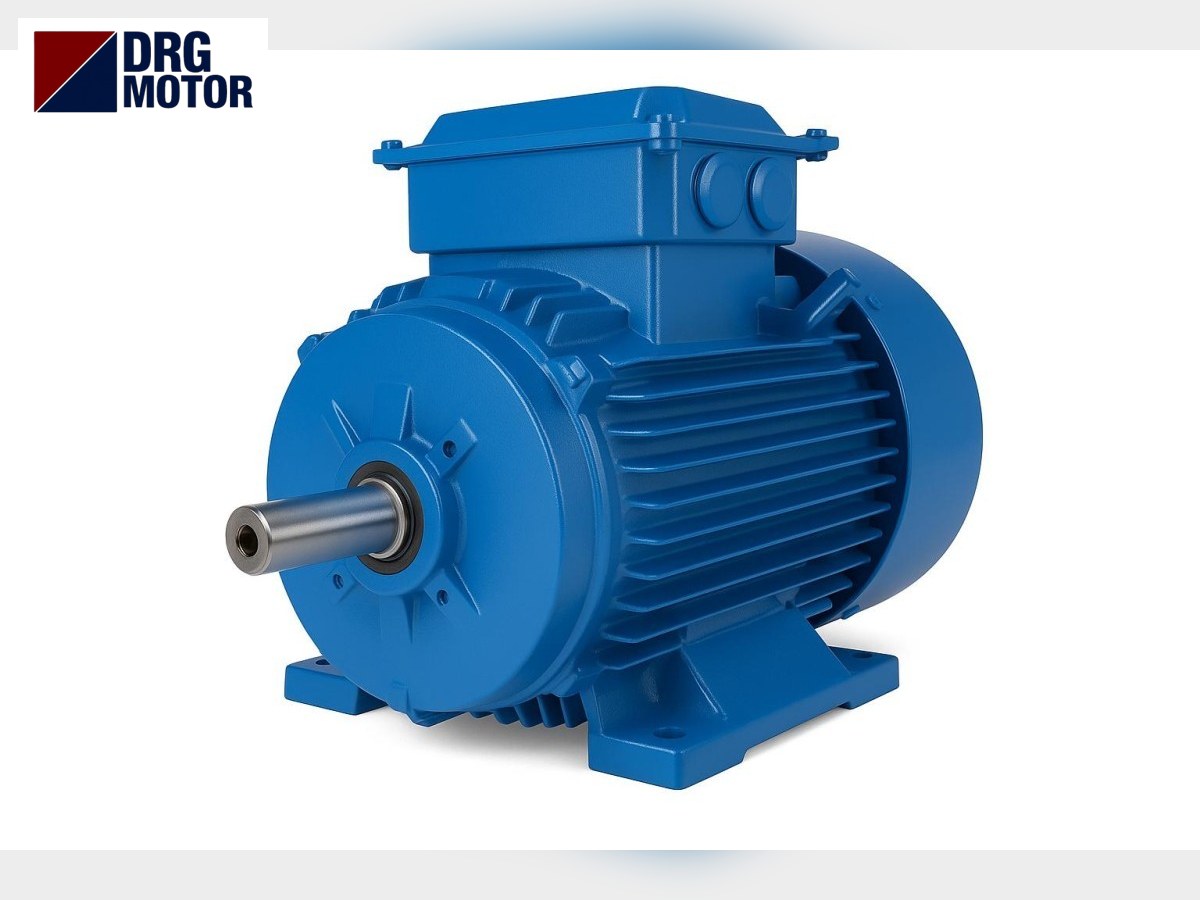
In a brick and roof-tile line the rotary screen takes the clay coming from the crusher through a rotating perforated drum, or through a vertical circular screen body, and removes stones, roots and dried lumps. The electric motor drives the drum or disc through a gearbox at only a few to a few dozen revolutions per minute. Maker catalogues list 4–37 kW for drum screens and 11–18.5 kW main motors for the roller sieves used in brick plants; disc screen feeders go up to 22–90 kW on the main drive and carry two small motors of 1.5–5.5 kW beside it.
DRG Motor is a manufacturer, supplier and seller of electric motors. We do not sell the screen itself, the screen plate or mesh, the gearbox, the chain or the girth gear; hydraulic packs, inverters, fan wheels, dies and grinding media are likewise absent from our list. From us you get only the three-phase induction motor at the drum or disc drive; the models are on the Buy Electric Motors Online page. For quarry trommels screening sand and aggregate see the trommel page of our stone crushing series; this page deals only with clay, shale and brick earth.
What does a rotary screen do in a brick plant?
Clay from the pit contains limestone grains, plant roots and lumps hardened in the sun. They wear the auger of the de-airing extruder, block the bridges of the die and can cause lime popping in the fired product. The rotary screen removes this foreign matter behind the crusher: the oversize returns to the crusher or is rejected, the clay that passes goes on to the mixer. The electrical side is simple; the difficulty lies in starting a heavy, slow body under load.
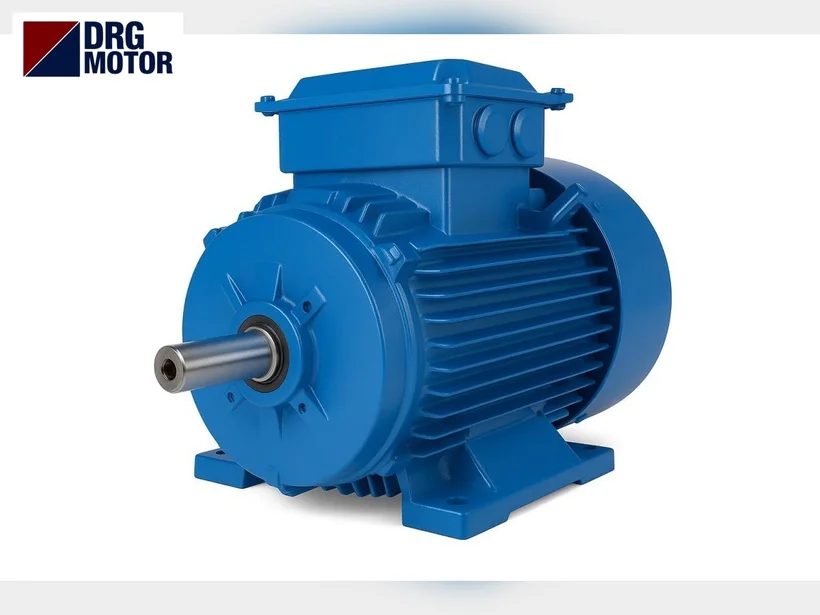
Drum screen (trommel)
A slightly inclined cylinder; catalogues give a slope of 2–2.5°. The clay is lifted and dropped as the drum turns and walks to the outlet thanks to the slope. The larger the drum, the slower it turns: in the catalogue we studied a 1,200 mm drum runs at 17 rpm and a 2,400 mm drum at 9 rpm. The drive train is motor, gearbox and coupling; the drum either rests on support rollers or is turned through a girth gear.
Round roller sieve and shaftless roller screen
In this brick-plant type the drum is not fixed to a central shaft but rests on rollers from outside. With no shaft inside, wet clay cannot wind around it and the screen stays open. One sheet shows the drum at 16 rpm, an 18.5 kW main motor and a 2.2 kW second motor beside it; another series is listed at 11+3 and 15+3 kW. The second motor’s duty is not stated, so record its nameplate separately.
Disc screen feeder (circular screen feeder)
It works on a vertical axis: a horizontally rotating disc presses the clay through a cylindrical screen body, and the screened material leaves from a lower tray in a steady stream towards the mixer. The same machine screens and feeds, and can add water or steam if required. The catalogue gives an adjustable disc speed of 2–15 rpm and screen holes of 3–10 mm. The disc is turned by the main motor; the two smaller motors serve auxiliary parts.
How it differs from a vibrating screen: vibration motors are a separate group
Dry, ground material such as grog, dry clay powder or ceramic granulate is usually handled on a vibrating screen. Most of these screens run on two vibration motors bolted to the screen body. With unbalanced masses on each shaft end, the vibration motor is its own product family, and none of the standard motors in our shop can stand in for it. For that product group see our Vibration Motors article. On vibrating screens with an eccentric shaft, a standard motor turns the shaft through belts, and the power and starting notes on this page still apply.
How many kW does a rotary screen motor need? Catalogue values
A) Ratings printed by builders of rotary clay and brick-earth screens:
| Machine / size | Motor power | Single / total | Note |
|---|---|---|---|
| Drum screen Ø1,200×3,500 mm, 17 rpm | 4 kW | single motor | first maker, smallest model |
| Drum screen Ø1,500×5,000 mm, 14 rpm | 7.5 kW | single motor | first maker |
| Drum screen Ø1,800×6,000 mm, 12 rpm | 18.5 kW | single motor | first maker |
| Drum screen Ø2,200×6,000 mm, 10.5 rpm | 30 kW | single motor | first maker |
| Drum screen Ø2,400×8,000 mm, 9 rpm | 37 kW | single motor | first maker, largest model |
| Round roller sieve Ø2,000×6,000 mm | 11 kW | single motor | second maker, brick line |
| Shaftless roller screen, 16 rpm | 18.5 + 2.2 kW | two motors, total 20.7 kW | third maker’s data sheet |
| Shaftless roller screen, two larger sizes | 11 + 3 kW / 15 + 3 kW | two motors, total 14 / 18 kW | fourth maker |
| Disc screen feeder, Ø1,000 mm screen body | 22 + 3 + 1.5 kW | three motors, total 26.5 kW | fifth maker |
| Disc screen feeder, Ø1,500 mm | 45 + 4 + 1.5 kW | three motors, total 50.5 kW | fifth maker |
| Disc screen feeder, Ø1,900 mm | 90 + 5.5 + 3 kW | three motors, total 98.5 kW | fifth maker, largest model |
In short, rotary machines screening clay use a 4–37 kW main motor on drum and roller types and 22–90 kW on the disc type; roller and disc versions add 1.5–5.5 kW auxiliaries. As the drum gets longer and throughput rises, the main motor grows while the drum speed falls. The totals in the table are the installed power of one machine; do not confuse them with the plant total that adds screen, crusher and belts together.
B) Overlap with the DRG range: for the 4–37 kW main drives our 4-pole cast iron sizes run from 112M to 225S, with 225M for 45 kW and 280M for 90 kW; for 1.5–5.5 kW auxiliaries there are frames 90L–132S. The whole span lies inside our range.
Click to see current electric motor prices and order nowSEE PRICES →
Worked example: drum speed, critical speed and gear ratio
Calculation for the catalogue drum of 2,000 mm diameter running at 11.5 rpm with a 22 kW motor; D is in metres in the critical-speed formula:
| Step | Operation | Result | Comment |
|---|---|---|---|
| Critical drum speed | 42.3 / √2.0 | about 29.9 rpm | material sticks to the shell and rotates with it |
| Running ratio | 11.5 / 29.9 | about 0.38 | roughly one third of critical speed |
| Overall ratio, DRG-180L-4 | 1,470 / 11.5 | about 128 | gearbox × girth gear or roller ratio |
| Drum shaft torque | 22 × 9,550 / 11.5 | about 18,270 Nm | losses ignored, at rated power |
At the motor shaft the rated torque of the DRG-180L-4 is 142.9 Nm; a 128-fold reduction multiplies it at the drum shaft. You can try how to split the ratio between gearbox and girth gear or rollers with our gearbox output speed calculator. Keeping the drum well below critical speed is what makes screening work, and going above it makes the material cling to the shell; so driving the same drum with a faster motor and an unchanged gear ratio does not give the right result.
Starting with a loaded drum
When the line stops suddenly, clay stays in the drum and the motor has to lift that load on the next start. On the DRG-180L-4, starting torque equals twice the rated figure. On the current side, 39.7 A × 7.8 gives about 310 A on direct-on-line start; star-delta brings the current down to one third, about 103 A, but the torque also drops to one third and may not turn a full drum. A soft starter or an inverter is then the better choice. The healthiest habit is to stop the feed and empty the drum before stopping. You can compare methods in our starting methods tool.
Selection checklist: mounting, environment and speed control
Drive layout and flange dimensions
The main motor usually sits foot-mounted (B3) on the base frame and is coupled to the gearbox input. On machines with a hollow-shaft gearbox the motor is fitted directly with a B5 flange; shaft diameter, shaft length and spigot diameter must then match exactly. B5 values of frequently used frames, mm:
| Frame | Shaft D×E | Flange P / M / N | Hole S |
|---|---|---|---|
| 112M | 28×60 | 250 / 215 / 180 | 14.5 |
| 132S/132M | 38×80 | 300 / 265 / 230 | 14.5 |
| 160M/160L | 42×110 | 350 / 300 / 250 | 18.5 |
| 180M/180L | 48×110 | 350 / 300 / 250 | 18.5 |
For foot hole and shaft height dimensions see the technical drawings page, and for flange choice our article on flange motors for gearboxes.
Clay dust, mud and IP55
The screen house is often half open: dust in dry weather, mud splashes in wet weather. Our motors are IP55; still, place the motor beside rather than under the oversize discharge and keep the fan cover free of clay deposits. Clay caked on the cover raises winding temperature for the same load.
Adjusting drum speed with an inverter
Because clay moisture changes with the season, some plants adjust drum or disc speed with an inverter. We do not sell drives. The motor’s own fan is weak at low speed, so long periods at low speed may call for a separate forced-ventilation fan. For long shift operation, check motor power against the real drum load rather than against the nameplate alone.
What is outside our range
Should the drum need a brake motor, that too sits outside our range, like single-phase and servo types. Rotary screens never approach the 355 kW limit, so medium voltage does not come up. Where a closed silo or dust filter collecting dry clay powder is classified as an explosive atmosphere, the motor there needs Ex certification, which we cannot supply.
Rotary screens with DRG motors
Our 4-pole models suited to drum, roller and disc drives (current at 400 V):
| Model | Power / speed | Frame · shaft D×E | Current 400 V |
|---|---|---|---|
| DRG-90L-4 | 1.5 kW / 1445 rpm | 90L cast iron · 24×50 | 3.3 A |
| DRG-112M-4 | 4 kW / 1450 rpm | 112M cast iron · 28×60 | 7.95 A |
| DRG-132M-4 | 7.5 kW / 1460 rpm | 132M cast iron · 38×80 | 14.3 A |
| DRG-160M-4 | 11 kW / 1465 rpm | 160M cast iron · 42×110 | 20.4 A |
| DRG-180M-4 | 18.5 kW / 1470 rpm | 180M cast iron · 48×110 | 33.5 A |
| DRG-180L-4 | 22 kW / 1470 rpm | 180L cast iron · 48×110 | 39.7 A |
| DRG-225S-4 | 37 kW / 1485 rpm | 225S cast iron · 60×140 | 66.1 A |
| DRG-280M-4 | 90 kW / 1486 rpm | 280M cast iron · 75×140 | 155 A |
When replacing, note the power, speed, voltage and star/delta connection from the old nameplate, together with shaft diameter, key, foot or flange size and the coupling side. Set against the screen builder’s papers, these details let us confirm the swap with you; without them we give no assurance.
Live price table
Prices of our models in the main and auxiliary power classes of rotary screens come live from the shop:
| Model | Power / speed | Frame · current 400 V | Price |
|---|---|---|---|
| DRG-112M-45.5 HP | 4 kW · 1500 rpm | Cast iron 112M · 7.95 A | $254.38 (€227.18) Details & buy → |
| DRG-132M-410 HP | 7.5 kW · 1500 rpm | Cast iron 132M · 14.3 A | $394.89 (€352.66) Details & buy → |
| DRG-160M-415 HP | 11 kW · 1500 rpm | Cast iron 160M · 20.4 A | $568.76 (€507.94) Details & buy → |
| DRG-180M-425 HP | 18.5 kW · 1500 rpm | Cast iron 180M · 33.5 A | $873.49 (€780.08) Details & buy → |
| DRG-180L-430 HP | 22 kW · 1500 rpm | Cast iron 180L · 39.7 A | $919.45 (€821.13) Details & buy → |
| DRG-200L-440 HP | 30 kW · 1500 rpm | Cast iron 200L · 53.8 A | $1,235.00 (€1,102.93) Details & buy → |
| DRG-225S-450 HP | 37 kW · 1500 rpm | Cast iron 225S · 66.1 A | $1,527.18 (€1,363.87) Details & buy → |
| DRG-225M-460 HP | 45 kW · 1500 rpm | Cast iron 225M · 80.2 A | $1,688.50 (€1,507.94) Details & buy → |
DRG MOTOR motors are guaranteed against material and manufacturing defects for 2 years from the delivery date (warranty certificate).
Motors in this power class
- DRG-100L2-4 – 3 kW – 1450 rpm – 100L cast iron
- DRG-132S-4 – 5.5 kW – 1460 rpm – 132S cast iron
- DRG-160M-4 – 11 kW – 1465 rpm – 160M cast iron
- DRG-180L-4 – 22 kW – 1470 rpm – 180L cast iron
- DRG-200L-4 – 30 kW – 1475 rpm – 200L cast iron
- DRG-225M-4 – 45 kW – 1485 rpm – 225M cast iron
Click to see current prices and order these motors nowSEE PRICES →
Browse the products, ask for a quote: motors for your screen are on the Buy Electric Motors Online page. Message us the old nameplate and a picture of the gearbox end on WhatsApp, or call +90 (542) 666 11 11 and start by telling us the drum diameter and speed.
Frequently asked questions
Can a 6-pole motor replace a 4-pole one on a rotary screen?
It can, but motor speed drops by about one third, so the gear ratio must change to keep the drum speed. Fitted with the old ratio, the screen slows down and loses capacity.
Do all three motors of a disc screen feeder have to be replaced?
No. Choosing the same power and speed as on the failed motor’s nameplate is enough; the main motor and the auxiliaries are assessed separately.
What does the price of a rotary screen motor depend on?
Mainly on kW, pole count and frame material; the live table above follows the shop.
Questions: +90 (542) 666 11 11 · info@drgmotor.com · contact. For motor choice in ceramic plants in general, see our ceramic plant article.


