 English
 Le français
 Türkçe

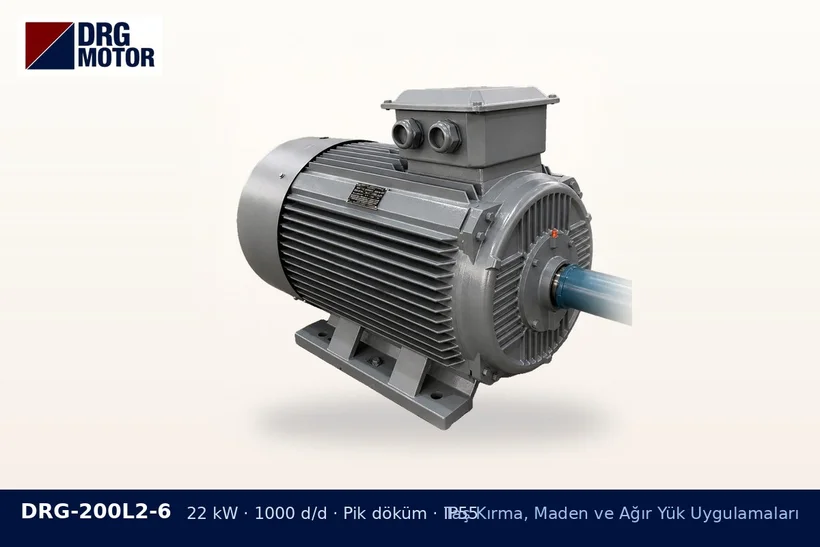
On an inclined conveyor, motor power is the sum of three components: the power needed to lift the material, the friction of the belt and material along the horizontal path, and the drive losses. To work it out you need at least the capacity, lift height, conveyor length, belt speed and width, and the material density.
Data to collect
- Capacity to be conveyed (t/h) and its peak value
- Height difference between the feed point and the discharge point (m)
- Centre-to-centre conveyor length and angle of inclination
- Belt speed, belt width, pulley diameter
- Bulk density, moisture and particle size of the material
- Additional resistances such as carrying idler spacing, scrapers and skirt rubber
How do you see the lift share?
The power needed for lifting alone is approximately P (kW) ≈ Q (t/h) × H (m) / 367. For example, on a conveyor raising 200 t/h of material by 15 m, this value is about 8.2 kW. The total power is calculated by adding to this the friction resistance along the full length of the belt, the additional resistances and the gearbox and belt losses; friction coefficients are taken from the conveyor design standard and the builder's data. On long, gently inclined conveyors the friction share dominates; on short, steep ones the lift share dominates.
Two issues specific to inclined conveyors
Starting under full load: After a fault or power cut, the conveyor starts under load; the motor's starting torque must overcome both the lift and the static friction. Rollback: When power is lost, the loaded belt tries to run backwards. This is prevented by a backstop in the gearbox or on the pulley shaft; the motor alone does not provide this. DRG's standard range does not include brake motors or gearboxes; these elements are selected separately when designing the drive unit.
Once the power is determined
A suitable margin is added to the calculated value and the next standard power step up is chosen; an oversized motor, on the other hand, runs at low load. You can check gearbox output speed and torque with the gearbox output speed and torque calculation tool.
For stockpile applications, see the stacker and stockpile conveyor motors page, and review power ratings in the three-phase motor store.