 English
 Le français
 Türkçe

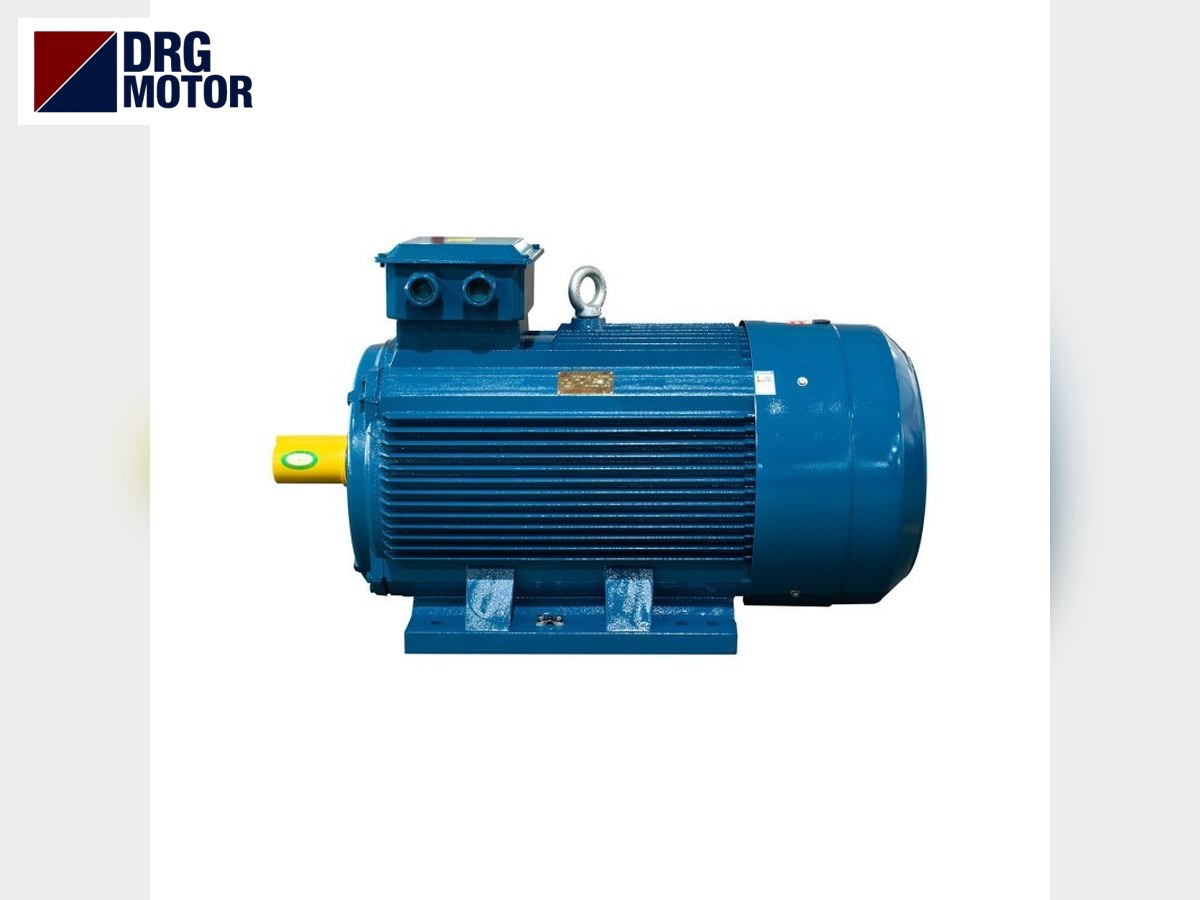
A brick and roof-tile wire cutting machine first cuts the clay column coming continuously out of the de-airing extruder into set lengths, then divides these pieces into individual bricks or tile slabs with tensioned steel wires. Several small electric motors usually work on the machine: the drive that carries the column and makes the cutter travel with it, the crank or screw drive that moves the wire frame, and the belts that take the cut product away. Maker catalogues show single motors of 0.55–11 kW and 3–20 kW of installed power per machine.
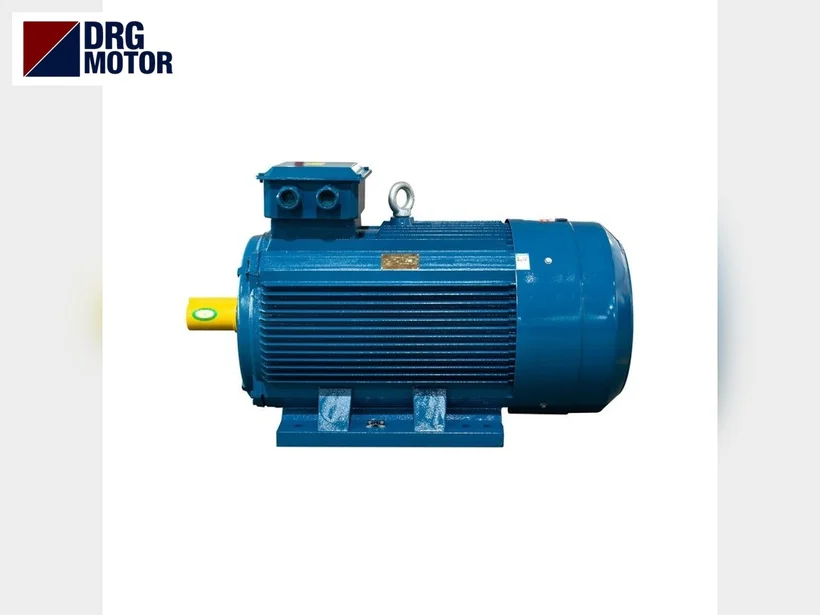
DRG Motor is a manufacturer, supplier and seller of electric motors. We do not sell the cutting machine, the wires, the frame, the screw shafts, the gearbox or the pneumatic parts; servo motors and their drives, inverters, hydraulic units and dies are not ours either. Our piece of the cutter is the set of three-phase induction motors on its mechanical drives and belts; the models are on the Buy Electric Motors Online page. Machines that set green bricks onto kiln cars, unload fired bricks or pack them are not covered here; this page deals only with the station where the column is cut.
From column cutter to multi-wire cutter: how the cutting line works
The column leaving the die runs onto a roller or belt table. Because the column never stops, the cut must either travel at column speed or happen in a very short moment; otherwise the column is crushed. The cutting line therefore works in two stages.
Column (pre-)cutter
It splits the column into pieces of 1–2 metres. The cutter travels a short way with the column, the wire cuts and the carriage returns. Catalogues give column lengths of 1,500–2,100 mm and about 20 cuts per minute. The travel movement is made by a motor, gearbox and chain or by a servo drive; on some semi-automatic machines the wire is moved by a pneumatic cylinder.
Multi-wire (piece) cutter
It divides the column piece into bricks by passing it through many wires stretched side by side. In one type a pusher plate drives the piece through a fixed wire frame; in another the frame descends on two synchronised screw shafts. In the screw type all wires move at the same speed and position, and if one wire breaks the others keep working. Catalogues give 15–45 cuts/min for this type, adjusted by inverter.
What changes for roof tiles
On a roof-tile line the column is a thin strip, and the cutter divides it into slabs for the tile press. The wire stroke is short and the cutting rate high; the motors stay smaller than on a brick cutter. The belts taking slabs to the press also run in the same small power class.
Synchronous motion: standard motor, servo and pneumatics
On a cutting machine, the type of movement decides the motor more than the power does. Three different drives can sit side by side on the same machine.
Crank drive: standard motor and gearbox
On classic cutters a standard motor turns a crankshaft continuously through a gearbox and chain; the wire frame goes down and up once per revolution. The motor never stops during cutting, so there is no frequent-start problem. Cutting rate is set by changing motor speed with an inverter. In this layout a standard IEC motor is exactly right and is covered by our range.
Servo synchronous cutter: outside our range
On high-output lines the cutter is driven by servo motors reading column speed through an encoder; cutting position and speed are recalculated every cycle. Servo motors and servo drives are not in our range, and a standard induction motor is not used on these axes. The belt and auxiliary drives on the same machine, however, are often still standard motors.
Pneumatic cutters
On semi-automatic cutters the wire frame or pusher plate is moved by an air cylinder; catalogues mention a working pressure of 0.6–0.8 MPa. No electric motor is needed for that movement; the plant’s compressor motor is a separate subject, covered on our Compressor Motors page.
How many kW does a wire cutting machine motor need? Catalogue values
A) Motor and installed power values from cutter makers’ data sheets and catalogues:
| Cutter type | Motor power | Single / total | Note |
|---|---|---|---|
| Downward-pressing cutter, 20–30 cuts/min | 3–5 kW | single motor | first maker |
| Double wire-frame block cutter, 12–16 cuts/min | 3 kW | installed power | first maker |
| Twin-screw wire frame, 15–45 cuts/min | 11 kW | installed power, with inverter | first maker |
| Chamfering brick cutter, 15–45 cuts/min | 11 kW | installed power | first maker |
| Vertical cutter, 7–8 cuts/min | 8.7 kW | installed power | first maker |
| Continuous (column + multi-wire) cutter, 25–35 cuts/min | 7.5–15 kW | installed power, chain or servo | first maker |
| Servo synchronous cutter, 50 cuts/min | 5–11.1 kW | installed power | first maker |
| Column and wire cutter set, 20 cuts/min | 7.5 + 0.55 kW | two motors | second maker |
| Column + piece cutting system, 45,000 pcs/h | 18.8 kW | installed power, several motors | third maker |
| Cutter group total | 20 kW | installed power | fourth maker |
| Column cutter / multi-wire cutter / double frame | 2.2–5.5 / 3–7.5 / 2.2–5.5 kW | range per machine | fifth maker |
As the table shows, a single motor on brick and roof-tile cutters ranges from 0.55 to 11 kW, and the installed power of one machine from 3 to 20 kW. The installed power figures are not one motor; they add cutting, travel and belt motors together. On the servo synchronous cutter part of the power belongs to the servo axes. For each motor on your own machine, only its nameplate gives the real value.
B) Overlap with the DRG range: 0.55–11 kW induction motors on crank, screw and belt drives are covered by our 4-pole frames 80–160M, with an aluminium frame option at these powers too. Servo axes and pneumatic movements are outside our range.
Click to see current electric motor prices and order nowSEE PRICES →
Worked example: 20 cuts a minute, should the motor stop or keep turning?
With the catalogue figure of 20 cuts/min, calculation for a 4 kW crank drive using the DRG-112M-4 (rated current 7.95 A, Is/In 7.8):
| Step | Operation | Result | Comment |
|---|---|---|---|
| One cutting cycle | 60 / 20 | 3 seconds | at 20 cuts/min |
| Starts per hour (if the motor stopped every cut) | 20 × 60 | 1,200 starts/h | far too many for a standard motor |
| Starting current, DRG-112M-4 | 7.95 × 7.8 | about 62 A | heats the winding at every start |
| Crankshaft speed (motor running continuously) | 20 cuts/min | 20 rpm | one cut per revolution |
| Overall ratio | 1,450 / 20 | about 72.5 | gearbox + chain |
The table shows why most cutters run without stopping the motor: a standard motor starting and stopping on every cut would draw starting current hundreds of times an hour and soon overheat. So either the motor turns continuously and the movement is interrupted by a crank, clutch or brake arrangement, or the axis that needs frequent stop-start is driven by a servo motor. You can try the gear ratio with our gearbox output speed tool; the chain sprocket ratio is part of the calculation as well.
Motor selection notes specific to cutters
Gearbox-mounted motor and flange dimensions
On cutters the motor is usually fitted directly to a gearbox. DRG does not sell gearboxes; we supply the motor, and the gearbox stays from the existing machine or is sourced separately. On a B5 or B14 joint the gearbox dictates the shaft size, its length and the spigot; all three have to be identical. B5 values of commonly used frames, mm:
| Frame | Shaft D×E | Flange P / M / N | Hole S |
|---|---|---|---|
| 80 | 19×40 | 200 / 165 / 130 | 12 |
| 90S/90L | 24×50 | 200 / 165 / 130 | 12 |
| 100L/112M | 28×60 | 250 / 215 / 180 | 14.5 |
| 132S/132M | 38×80 | 300 / 265 / 230 | 14.5 |
For flange choice see our B5/B14 flange motor guide.
Inverter, brake and mud
Cutting rate is set by inverter to match column speed; we do not sell drives. If the motor must lock immediately on stopping, a brake motor is needed; since we have no brake motors, quick stops rely on the machine’s own brake or on the drive’s braking. The cutting table carries wet clay and wire-cleaning water; place our IP55 motors beside the table rather than under it, and turn the terminal box entry downwards.
What is outside our range
Servo units, brake motors and single-phase motors: none of these is offered by us. Large powers such as 355 kW never arise on cutting machines. No explosive atmosphere is expected at the cutting station; if your plant has a zone classification, an Ex-rated motor is required and our standard motor is not supplied with that rating.
Brick and roof-tile cutters with DRG motors
Our 4-pole models suited to crank, screw and belt drives (current at 400 V):
| Model | Power / speed | Frame · shaft D×E | Current 400 V |
|---|---|---|---|
| DRG-801-4 | 0.55 kW / 1400 rpm | 80 cast iron · 19×40 | 1.31 A |
| DRG-90L-4 | 1.5 kW / 1445 rpm | 90L cast iron · 24×50 | 3.3 A |
| DRG-100L1-4 | 2.2 kW / 1450 rpm | 100L cast iron · 28×60 | 4.52 A |
| DRG-100L2-4 | 3 kW / 1450 rpm | 100L cast iron · 28×60 | 6.02 A |
| DRG-112M-4 | 4 kW / 1450 rpm | 112M cast iron · 28×60 | 7.95 A |
| DRG-132S-4 | 5.5 kW / 1460 rpm | 132S cast iron · 38×80 | 10.7 A |
| DRG-132M-4 | 7.5 kW / 1460 rpm | 132M cast iron · 38×80 | 14.3 A |
| DRG-160M-4 | 11 kW / 1465 rpm | 160M cast iron · 42×110 | 20.4 A |
Before swapping, copy kW, rpm, voltage and connection from the plate and measure shaft, key, flange type and bolt holes. For gearbox-mounted motors the gearbox input bore is also needed. Checked against the cutter maker’s sheet and our drawings, the swap is agreed with you; we never promise a fit blind.
Live price table
Cutter drive and belt sizes, priced automatically from the shop:
| Model | Power / speed | Frame · current 400 V | Price |
|---|---|---|---|
| DRG-801-40.75 HP | 0.55 kW · 1500 rpm | Cast iron 80 · 1.31 A | $91.72 (€81.91) Details & buy → |
| DRG-90S-41.5 HP | 1.1 kW · 1500 rpm | Cast iron 90S · 2.48 A | $124.09 (€110.82) Details & buy → |
| DRG-90L-42 HP | 1.5 kW · 1500 rpm | Cast iron 90L · 3.3 A | $144.14 (€128.73) Details & buy → |
| DRG-100L1-43 HP | 2.2 kW · 1500 rpm | Cast iron 100L · 4.52 A | $188.32 (€168.18) Details & buy → |
| DRG-100L2-44 HP | 3 kW · 1500 rpm | Cast iron 100L · 6.02 A | $203.84 (€182.05) Details & buy → |
| DRG-112M-45.5 HP | 4 kW · 1500 rpm | Cast iron 112M · 7.95 A | $254.38 (€227.18) Details & buy → |
| DRG-132S-47.5 HP | 5.5 kW · 1500 rpm | Cast iron 132S · 10.7 A | $342.01 (€305.44) Details & buy → |
| DRG-132M-410 HP | 7.5 kW · 1500 rpm | Cast iron 132M · 14.3 A | $394.89 (€352.66) Details & buy → |
DRG MOTOR motors are guaranteed against material and manufacturing defects for 2 years from the delivery date (warranty certificate).
Motors in this power class
- DRG-90S-4 – 1.1 kW – 1445 rpm – 90S cast iron
- DRG-100L1-4 – 2.2 kW – 1450 rpm – 100L cast iron
- DRG-112M-4 – 4 kW – 1450 rpm – 112M cast iron
- DRG-132S-4 – 5.5 kW – 1460 rpm – 132S cast iron
- DRG-132M-4 – 7.5 kW – 1460 rpm – 132M cast iron
Click to see current prices and order these motors nowSEE PRICES →
Browse the products, ask for a quote: motors for your cutter are on the Buy Electric Motors Online page. A WhatsApp shot of plate and gearbox joint gets things moving; on +90 (542) 666 11 11 just quote cuts per minute first.
Frequently asked questions
Can a standard motor be used on a servo synchronous cutter?
Not on the servo axis; position and speed control is the servo system’s job. The belt and auxiliary motors of the same machine can be replaced with standard motors.
Why does the motor overheat on a wire cutting machine?
The most common reason is the motor stopping and starting on every cut. If the machine was designed for a continuously turning crank, check its settings; if not, review the drive method with the machine builder.
Aluminium or cast iron: how does it affect a cutter motor price?
Both frames exist at small powers and are priced differently; the live table shows the cast iron version, see the product page for aluminium.
Questions: +90 (542) 666 11 11 · info@drgmotor.com · contact.


