 English
 Le français
 Türkçe

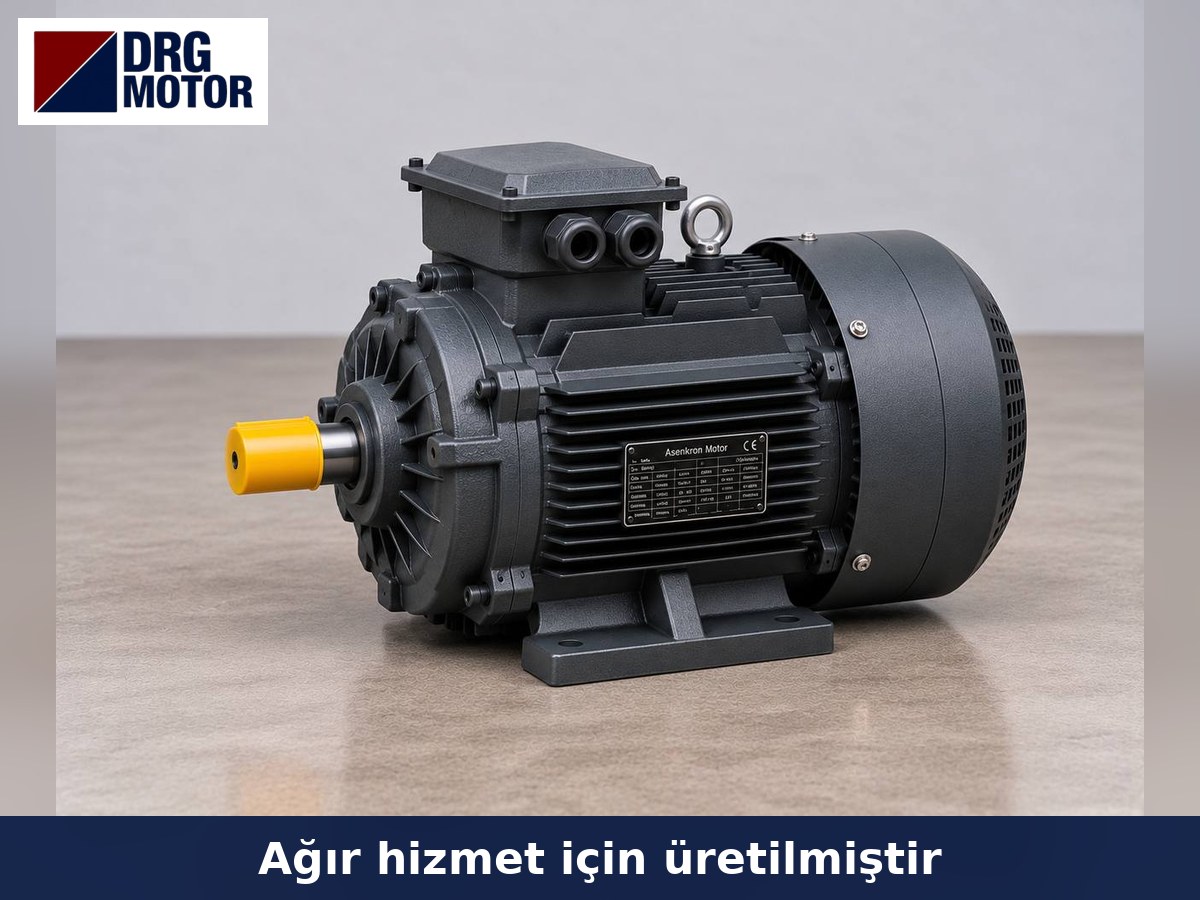
“Glass processing machine” is the common name for the machines that cut flat glass from large float sheets to size, grind and polish its edges, drill it, temper it or laminate it. In these machines the electric motor is not the tool that shapes the glass; it turns the grinding wheel, the drill, the conveyor, the air-float fan or the quench blower of the tempering furnace. According to makers’ catalogues, edging machines use 1.5–3 kW per head, drilling machines 2.2–3.4 kW in total, the air-float system of a cutting table 4 kW and a tempering furnace blower 250 kW and more. Lines that crush waste glass into cullet are not covered here; see our glass crushing and recycling plant motors page, and for melting furnaces and float lines our article on electric motors in glass manufacturing.
DRG Motor is a manufacturer, supplier and seller of electric motors. We do not sell edging machines, diamond or resin wheels, drill bits, the servo system of a cutting table, tempering furnaces, blower housings, gearboxes or drives; DRG’s share is the three-phase induction motor that powers them. Suitable models are listed on the Buy Electric Motors Online page.
Where do motors work on a flat glass processing line?
In a processing shop the glass moves from the cutting table to the edger, then to drilling and washing, and finally to tempering or lamination. Each station loads its motor differently: a fan blowing air through the table, a wheel turning at fixed speed on the edger, and hundreds of kilowatts of cooling air at the furnace.
Cutting table: air-float fan and servo axes
On an automatic cutting table the X and Y travel of the cutting head is done by servo motors; these axis motors and their drives are outside our range. The standard motor’s place on the table is the air float: the fan that blows air through the surface so one person can slide a large sheet is listed at 4 kW in two makers’ sheets. Break-out bars and tilting frames mostly work pneumatically or hydraulically.
Edging: every wheel has its own motor
On a straight-line edger the glass edge passes a row of wheels: diamond wheels rough-grind, resin wheels refine and polishing wheels finish. On one maker’s 11-head machine each wheel has its own motor; the first head is 3 kW, eight heads are 2.2 kW, one polishing head is 1.5 kW, and the roughing motors run at 2850 rpm. A double edger works both edges at once; in one catalogue the machine total rises from 13 kW to 30 kW as the head count goes from 6 to 18. The belt that carries the glass past the wheels has a separate motor fed by a frequency converter.
Drilling, tempering and lamination
A glass drill centres two opposed bits on both faces of the sheet; one sheet gives drill speeds of 850, 1400 and 3000 rpm. In a tempering furnace heating is electric, and motors drive the ceramic rollers, the hot-air convection fans and the blowers that quench the glass. A laminating line uses motors in the washer, the pre-press rollers and the autoclave fan; their ratings depend on line width and are chosen from application data.
How many kW is a glass processing machine motor? Catalogue values
A) What glass machinery catalogues state for motor power:
| Machine / drive | Motor power | Single / total | Note |
|---|---|---|---|
| Straight-line edger, 11 heads | 1.5–3 kW (eight heads at 2.2 kW) | separate motor per head | first maker’s sheet; roughing heads at 2850 rpm |
| Straight-line edgers | 30–40 kW | installed machine power | second maker’s catalogue, five models |
| Double edger, 6 / 18 heads | 13 kW / 30 kW | machine total | third maker |
| Double edger conveyor drive | 2.2 kW | single motor, frequency controlled | fourth maker |
| Glass drill, two opposed heads | 2.2 kW / 3.4 kW | machine total | fifth and sixth makers |
| Cutting table air-float fan | 4 kW | single motor | seventh and eighth makers; axes are servo |
| Tempering furnace quench blower | 250 kW | blower power incl. converter | ninth maker; heating fans 3×4 kW |
| Bent-glass tempering blower | 2×312 kW | two blowers, frequency controlled | tenth maker |
On these catalogues, glass processing machines show head motors of roughly 1.5–3 kW, conveyor and drilling drives around 2.2 kW, air-float fans of 4 kW and tempering furnace blower motors of 250–312 kW. Machine total and single-motor power must not be mixed up: a 30–40 kW edger is the sum of a dozen or so motors around 2.2 kW, not one large motor.
B) Overlap with the DRG range: the 1.5–3 kW head motors match our 2-pole models in 90S, 90L and 100L frames, the 4 kW fan a 112M frame, and 250 kW and 315 kW blower motors the 355M and 355L frames. Outside our range are the servo axis motors of cutting tables and shape edgers, high-speed spindles of CNC work centres, blower motors above 355 kW and medium voltage. If a wheel is carried on the motor shaft itself, the shaft end and flange matter as much as power.
Click to see current electric motor prices and order nowSEE PRICES →
Shaft, flange and water on an edging head motor
When the wheel mounts directly on the motor shaft
On many edgers the wheel is fixed to the end of the motor shaft and the motor sits on the head slide by its flange. So a head motor must match the old one not only in kW and speed but also in shaft diameter and length, key, flange diameter and bolt circle. Dimensions of our standard IEC B5 flange motors are below. If the head needs a long shaft, a threaded shaft end or a non-standard flange, that type is not in our range; send us the dimensions and we will compare.
| Frame | Shaft D×E | Flange P / M / N | Hole S |
|---|---|---|---|
| 90S/90L | 24×50 | 200 / 165 / 130 | 12 |
| 100L/112M | 28×60 | 250 / 215 / 180 | 14.5 |
Head motors usually run horizontally; on vertical heads with the wheel facing up or down, the motor must be ordered for vertical mounting and the axial load confirmed by the machine maker. A small B14 flange option also exists, but its dimensions are checked against the catalogue separately.
Cooling water and glass sludge
The wheels are water-cooled and the water turns glass dust into fine sludge. Our motors are IP55: dust-protected and safe against splashes from all sides, yet not made for jet washing or for standing in water. Keep head cover seals sound, do not let sludge dry on the motor frame and keep the fan cover clear; once glass sludge hardens between the fins, heat cannot escape from the frame.
Worked example: current budget of an 11-head straight-line edger
Using the 11-head edger from the sheet, each head gets its nearest DRG model; we assume a 4-pole 2.2 kW motor drives the belt. At 3 kW and under, all of these are wound for 230/400 V, so they run in star on 400 V mains:
| Drive | DRG equivalent | Current 400 V | Peak at direct start |
|---|---|---|---|
| Head 1, 3 kW | DRG-100L-2 | 5.71 A | 44.5 A |
| Heads 2–9 and 11, 2.2 kW (9 off) | DRG-90L-2 | 4.35 A × 9 | 33.1 A × 9 |
| Head 10, 1.5 kW | DRG-90S-2 | 3.06 A | 23.3 A |
| Conveyor belt, 2.2 kW | DRG-100L1-4 | 4.52 A | 34.4 A |
| All running | — | 52.44 A | 400 A |
At full load the machine draws about 52.44 A. If every head were started direct-on-line at the same moment, the combined starting peak would be about 400 A, forcing a much larger main fuse and cable.
Why start the heads one after another?
With heads switched on a second apart, the worst moment is the 3 kW first head starting while the rest run: about 91.2 A. Most edger controls already work in this order. After swapping a head motor, the overload relay follows the new plate current, not the old setting; you can check values with our overload, fuse and contactor selection tool.
Tempering furnace blowers: the top of the range
In tempering the glass is heated close to its softening point, then cooled in a few seconds by pressurised air from upper and lower nozzles. The blowers that supply this air are the furnace’s largest motors: 250 kW at one maker, two of 312 kW on a bent-glass furnace. The blower motor stands outside the furnace body, often in a separate room, not in the hot zone. Thin glass needs higher air pressure than thick glass, so these motors run on frequency converters.
Our range includes 250 kW and 315 kW cast iron motors; a 312 kW blower corresponds to the 315 kW model. At this size the starting method, transformer capacity and drive are settled together with the furnace maker. Where larger furnaces use motors above 355 kW or medium voltage, these are outside our range. Roller drives, heating fans and loading and unloading conveyors use small motors. For an overview of fan and blower motors see our Fan Motors category.
DRG motors for glass processing machines
Models matching the power steps in a glass processing shop, from edging head to blower:
| Model | Power / speed | Frame · shaft D×E | Current 400 V |
|---|---|---|---|
| DRG-90S-2 | 1.5 kW / 2895 rpm | 90S cast iron · 24×50 | 3.06 A |
| DRG-90L-2 | 2.2 kW / 2895 rpm | 90L cast iron · 24×50 | 4.35 A |
| DRG-100L-2 | 3 kW / 2895 rpm | 100L cast iron · 28×60 | 5.71 A |
| DRG-100L1-4 | 2.2 kW / 1450 rpm | 100L cast iron · 28×60 | 4.52 A |
| DRG-112M-2 | 4 kW / 2905 rpm | 112M cast iron · 28×60 | 7.45 A |
| DRG-112M-4 | 4 kW / 1450 rpm | 112M cast iron · 28×60 | 7.95 A |
| DRG-355M-4 | 250 kW / 1490 rpm | 355M cast iron · 100×170 | 418 A |
| DRG-355L-4 | 315 kW / 1490 rpm | 355L cast iron · 100×170 | 526 A |
Head motors are commonly 2-pole (3000 rpm class), belt and table drives 4-pole; when swapping, match the pole count printed on the old plate. Aluminium frames up to 11 kW suit light head motors, cast iron frames up to 355 kW suit fan and blower motors. Mounting options: B3 feet, B5 or B14 flange, or B35 with both. Small portable versions of cutting tables and edgers may come with a single-phase motor; we do not propose single-phase motors for these machines. A brake motor for tilting or lifting devices that need braking is also not in our range.
Live price table
Prices of models matching edging, drilling, table and furnace drives are read live from the store:
| Model | Power / speed | Frame · current 400 V | Price |
|---|---|---|---|
| DRG-90S-22 HP | 1.5 kW · 3000 rpm | Cast iron 90S · 3.06 A | $119.41 (€106.64) Details & buy → |
| DRG-100L1-43 HP | 2.2 kW · 1500 rpm | Cast iron 100L · 4.52 A | $188.32 (€168.18) Details & buy → |
| DRG-90L-23 HP | 2.2 kW · 3000 rpm | Cast iron 90L · 4.35 A | $154.45 (€137.93) Details & buy → |
| DRG-100L-24 HP | 3 kW · 3000 rpm | Cast iron 100L · 5.71 A | $177.89 (€158.87) Details & buy → |
| DRG-112M-45.5 HP | 4 kW · 1500 rpm | Cast iron 112M · 7.95 A | $254.38 (€227.18) Details & buy → |
| DRG-112M-25.5 HP | 4 kW · 3000 rpm | Cast iron 112M · 7.45 A | $225.65 (€201.52) Details & buy → |
| DRG-355M-4340 HP | 250 kW · 1500 rpm | Cast iron 355M · 418 A | $9,826.77 (€8,775.92) Details & buy → |
| DRG-355L-4430 HP | 315 kW · 1500 rpm | Cast iron 355L · 526 A | $11,417.31 (€10,196.37) Details & buy → |
DRG MOTOR motors are guaranteed against material and manufacturing defects for 2 years from the delivery date (warranty certificate).
Motors in this power range
- DRG-90S-2 – 1.5 kW – 2895 rpm – 90S cast iron
- DRG-90L-2 – 2.2 kW – 2895 rpm – 90L cast iron
- DRG-100L-2 – 3 kW – 2895 rpm – 100L cast iron
- DRG-112M-4 – 4 kW – 1450 rpm – 112M cast iron
- DRG-355M-4 – 250 kW – 1490 rpm – 355M cast iron
Click to see current prices and order these motors nowSEE PRICES →
Browse the products, ask for a quote: suitable models for an edging head or fan motor are on the Buy Electric Motors Online page. Side photos of the old head motor’s plate, shaft end and flange can go straight to our WhatsApp line; you can also call +90 (542) 666 11 11.
Frequently asked questions
What speed should an edging head motor have?
One sheet lists roughing heads at 2850 rpm, which is the 2-pole class. Wheel surface speed is set for the machine, so keep the old motor’s speed.
Can I buy the cutting table motor from you?
Yes for the air-float fan motor and any separate belt drive. The servo motors that move the cutting head are not in our range.
One edging head motor burned out; must all be replaced?
No. Each head has its own motor; only the failed one is replaced with the same kW, speed, shaft and flange.
For questions: +90 (542) 666 11 11 · info@drgmotor.com · contact.


