 English
 Le français
 Türkçe

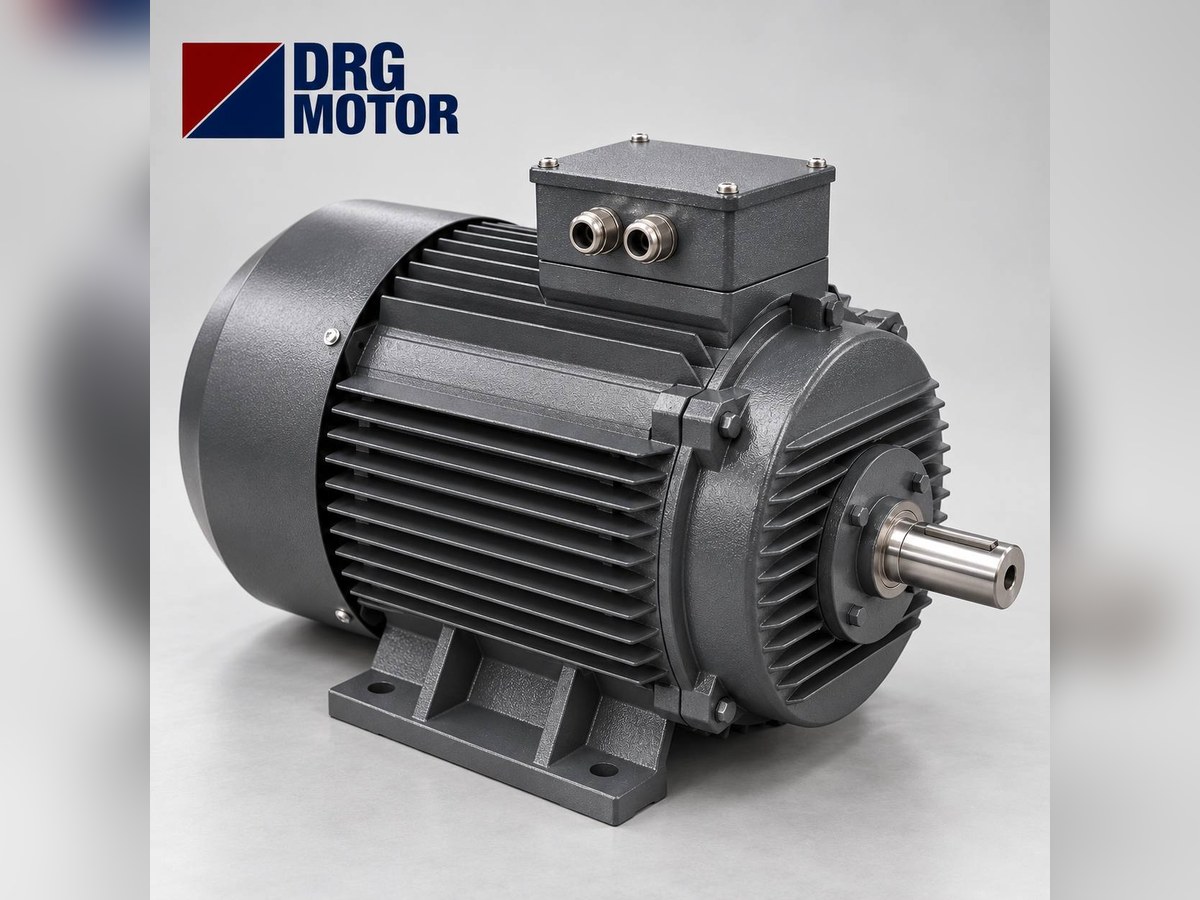
A flour mill elevator motor is the motor that turns, through a gearbox, the head shaft of the bucket elevator lifting wheat, intermediate stock, flour and bran vertically inside the mill. Manufacturer catalogues show 0.55–45 kW for mill elevators and up to 132 kW for large grain elevators at the silo and wheat intake; these motors are mostly 4-pole. The same elevator body carries noticeably fewer tonnes of flour than of wheat, so the motor is selected for the elevator's heaviest duty, which is wheat.
This page covers elevator points in the mill, how flour behaves in the bucket, where pneumatic conveying replaces the elevator, how safety devices such as the slip sensor and backstop relate to the motor, and the part covered by DRG's range. You can filter motors that suit the elevator by power and frame on Buy Electric Motors Online.
Where do elevators work in a flour mill?
In a mill the product goes down and up between floors many times. In mechanically conveyed plants, most of this vertical movement is done by bucket elevators; each carries a different product and therefore a different load.
Wheat elevators
Lines from wheat intake to the silos, from the silos to the cleaning section and from the tempering bins to the first break are wheat elevators. Flow is continuous and tonnage is high; the strongest elevator motors in the plant are in this group. Intake and silo-feeding elevators can carry hundreds of tonnes per hour and rise 45–70 m.
Intermediate stock and flour elevators
In a mechanical mill, break stock from the rolls, plansifter intermediates, semolina, flour and bran are also lifted by elevators. These elevators are small but numerous; when one passage stops, the roll and sifter behind it stop too. Flour elevators carry a load of their own: the product is fine, sticky and dusty.
Finished flour and bran elevators
Elevators going to the flour silos and bran bin at the mill outlet are the last link of the line. Their capacity is chosen according to the mill's flour extraction. Hygiene comes first here: product that builds up in an elevator feeding the flour silo spoils and mixes with fresh flour.
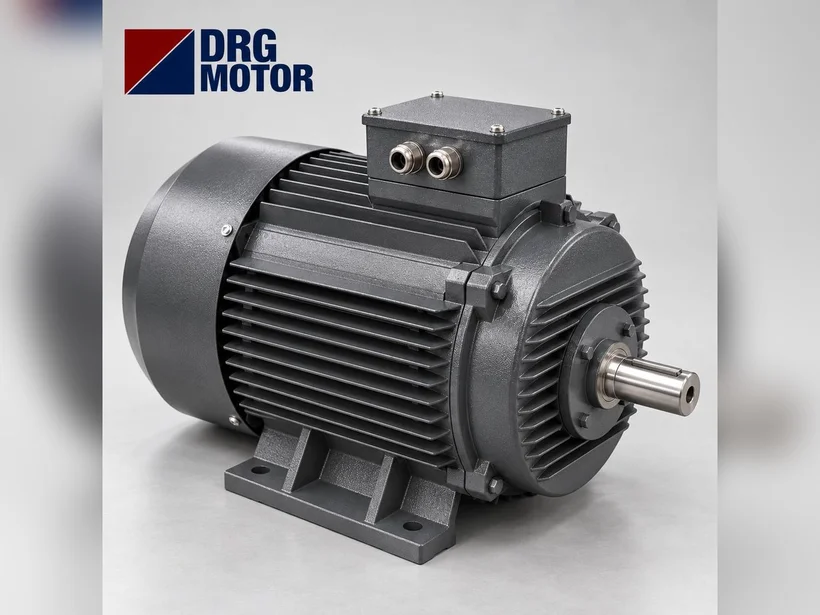
How do flour and semolina behave in the bucket?
Elevator catalogues give separate wheat, flour and bran capacities for the same model. This distinction directly affects motor selection.
Same body, different tonnage
Comparing catalogues, the flour capacity of the same elevator is about 60–90% of its wheat capacity, and its bran capacity between one third and one half. For example, in one manufacturer's table a model carries 100 t/h of wheat, 65 t/h of flour and 35 t/h of bran; another manufacturer gives 35, 30 and 14 t/h for one model. Flour and bran have a lower bulk density than wheat and cannot fill the bucket to the same degree. The result: on an elevator carrying flour the motor runs comfortably; an elevator converted from a wheat line to flour carries fewer tonnes, but the motor stays the same.
Sticking, boot build-up and hygiene
Flour and fine semolina can stick to the bottom of the bucket and fail to discharge fully; product also builds up in the elevator boot. Accumulated product absorbs moisture and spoils, and it resists the buckets at the next start. Flour elevators therefore use cleaning doors, easily opened boot and head covers and self-emptying boot designs. For the motor this means that a flour elevator with product built up in the boot sees a heavier load than expected at the morning start. For loaded starting and star-delta details, see our article on bucket elevator motor selection and power sizing; we do not repeat that calculation here.
Where does pneumatic conveying replace the elevator?
In modern mills most intermediate stock on the grinding floor is moved by air rather than by bucket elevators. One source states that this application was first installed in mills in 1949, replacing bucket elevators. In a pneumatic system the product of each roll passage is sucked through a pipe, separated from the air in a cyclone and drops through an airlock (rotary valve) into the next machine.
Mechanical versus pneumatic conveying
The motor picture of the two methods is entirely different. A mechanical mill has dozens of small elevator motors. In a pneumatic mill they are replaced by a single large high-pressure fan and small airlock motors under each cyclone. One manufacturer's article states that in a large mill the high-pressure fan runs on a motor of 150 kW or more and accounts for 23–28% of the total energy of the milling section. Pneumatic conveying is hygienic and flexible; no product stays in the pipe and dust is kept inside. Its energy consumption, however, is high.
Where does the elevator remain?
On high-tonnage, single-product lines such as wheat intake, silo feeding, the cleaning section and flour silo feeding, the bucket elevator has the energy advantage. In a comparison at a feed mill, a pneumatic conveyor carrying 8.5 t/h of ground corn drew 27.5 kW and 4.77 kWh per tonne, while the bucket elevator that replaced it ran on 4.7 kW and 0.88 kWh per tonne; the elevator used about 5.4 times less energy. In practice many mills run a mix: mechanical on the wheat side, pneumatic on the grinding floor, and mechanical or pneumatic again for finished flour. The pneumatic conveying fan motor belongs to the Fan Motors category; for fan types see the Fan Motors page.
Click to see current electric motor prices and order nowSEE PRICES →
How many kW is an elevator motor? Catalogue values
A) Motors listed in elevator catalogues
| Elevator model | Catalogue motor | Product / height | Note |
|---|---|---|---|
| Small, 0.5–1.5 t/h flour | 0.55–0.75 kW | Flour, 12 m | Manufacturer catalogue, smallest model |
| 5 t/h wheat, 4 t/h flour | 0.75–2.2 kW | Wheat/flour, 30 m | Manufacturer catalogue |
| 35 t/h wheat, 30 t/h flour | 3–7.5 kW | Wheat/flour, 30 m | Same catalogue |
| 65 t/h wheat, 40 t/h flour | 4–11 kW | Wheat/flour, 30 m | Same catalogue, large model |
| 20–30 t/h flour | 7.5–22 kW | Flour, 45 m | Manufacturer catalogue |
| 160–200 t/h wheat | 22–45 kW | Wheat, 45 m | Same catalogue, largest model |
| Grain, 37–420 t/h | 7.5–132 kW (max.) | Grain, 45–70 m | Manufacturer data sheet, silo type |
In this machine group, depending on the manufacturer's model and capacity, motor options of about 0.55–45 kW are seen; for large grain elevators on the silo and intake side the value reaches 132 kW. Catalogues give a range rather than a single value for each model: in the same body, the motor grows as height and capacity increase. The table does not show the plant's total elevator power; each row is the drive of a single elevator.
B) DRG's range for elevator motors
DRG Motor is a manufacturer, supplier and seller of electric motors. Our range covers 0.25–11 kW in aluminium frames and 0.55–355 kW in cast iron frames, 1000/1500/3000 rpm, three-phase 230/400 V or 400/690 V; B3, B5, B14 and B35 mounting is specified with the order note. The 0.55–45 kW motors of mill elevators and those up to 132 kW on large grain elevators fall within this range; aluminium-frame models can also be used on small flour elevators. What the range does not cover: if an Ex motor is required in an explosive dust zone, such motors are not in DRG's range; gearboxes, backstops, slip sensors and integrated gearmotor units are not part of the motor range on this page either.
| Model | Power / speed | Frame · current 400 V | Price |
|---|---|---|---|
| DRG-802-41 HP | 0.75 kW · 1500 rpm | Cast iron 80 · 1.75 A | $101.93 (€91.03) Details & buy → |
| DRG-90L-42 HP | 1.5 kW · 1500 rpm | Cast iron 90L · 3.3 A | $144.14 (€128.73) Details & buy → |
| DRG-100L2-44 HP | 3 kW · 1500 rpm | Cast iron 100L · 6.02 A | $203.84 (€182.05) Details & buy → |
| DRG-112M-45.5 HP | 4 kW · 1500 rpm | Cast iron 112M · 7.95 A | $254.38 (€227.18) Details & buy → |
| DRG-132M-410 HP | 7.5 kW · 1500 rpm | Cast iron 132M · 14.3 A | $394.89 (€352.66) Details & buy → |
| DRG-160M-415 HP | 11 kW · 1500 rpm | Cast iron 160M · 20.4 A | $568.76 (€507.94) Details & buy → |
| DRG-160L-420 HP | 15 kW · 1500 rpm | Cast iron 160L · 27.3 A | $678.13 (€605.61) Details & buy → |
| DRG-180L-430 HP | 22 kW · 1500 rpm | Cast iron 180L · 39.7 A | $919.45 (€821.13) Details & buy → |
| DRG-225M-460 HP | 45 kW · 1500 rpm | Cast iron 225M · 80.2 A | $1,688.50 (€1,507.94) Details & buy → |
One elevator, three products: a lifting power example
In one manufacturer's catalogue, an elevator model rated up to 30 m carries 35 t/h of wheat, 30 t/h of flour and 14 t/h of bran and is supplied with a 3–7.5 kW motor. Let us calculate the net lifting power with P = Q·H / 367 (Q: t/h, H: m, P: kW) for 30 m:
- Wheat: 35 × 30 / 367 ≈ 2.86 kW.
- Flour: 30 × 30 / 367 ≈ 2.45 kW.
- Bran: 14 × 30 / 367 ≈ 1.14 kW.
The upper catalogue value of 7.5 kW is about 2.6 times the net lifting power for wheat. The difference goes to the buckets scooping product in the boot, belt and bearing friction, gearbox losses and the margin for loaded starting. Two conclusions follow. First, the motor is selected for wheat; on the same elevator carrying flour, motor load falls noticeably. Second, net lifting power alone is not motor power; the elevator's catalogue value or the old motor's nameplate is the reference. A 7.5 kW 4-pole motor (DRG-132M-4) draws 14.3 A at 400 V and turns at 1460 rpm.
Slip sensor, backstop and shaft-mounted gearbox
Slip (speed) sensor
If the belt slips on the head pulley, friction produces heat; an elevator safety document states that this can ignite the dust cloud inside the elevator. The safeguard is a speed sensor on the boot shaft: it raises an alarm on slip or underspeed and stops the elevator. This sensor is outside the motor but affects motor replacement: if the new motor runs at a different speed from the old one, the sensor setting must be checked again.
Backstop and direction of rotation
The elevator is designed to run in one direction only; one manufacturer's catalogue states that reverse movement is not permitted and that a direction control switch is fitted. The backstop is in the gearbox or on the head shaft, not in the motor. After replacing the motor, check the direction of rotation with the coupling or belt disconnected before the first run; only a qualified electrician should wire the new motor.
Shaft-mounted gearbox and motor connection
On mill elevators the motor is either flanged directly to the gearbox or the gearbox is driven by belt or chain; catalogues state that the gearbox is selected according to capacity and height. With a shaft-mounted gearbox, the housing slides onto the head shaft and the motor sits on a base above the gearbox. When replacing the motor, shaft diameter, key, pulley and base holes must match the old ones. Use the gearbox output speed calculator to check the ratio.
Checklist for selecting a flour mill elevator motor
- The heaviest product the elevator carries (usually wheat), capacity and head height.
- The old motor's nameplate: power, speed, frame, mounting, voltage and connection (230/400 V or 400/690 V).
- Gearbox type and input connection: flange, belt or chain.
- Panel logic for the slip sensor and misalignment switches; resetting if motor speed changes.
- Boot build-up: cleaning arrangement on flour elevators and emptying before starting.
- Explosive dust zone classification: if an Ex motor is required, it is not in DRG's range. DRG motors are IP55.
- The head motor is usually on the roof floor or outdoors: terminal box orientation and cable glands for rain and temperature.
DRG motor options for elevators
The table shows 4-pole models selected from the power values seen on mill elevators:
| Model | Power / speed | Frame | Current 400 V |
|---|---|---|---|
| DRG-90S-4 | 1.1 kW / 1445 rpm | 90S cast iron | 2.48 A |
| DRG-100L1-4 | 2.2 kW / 1450 rpm | 100L cast iron | 4.52 A |
| DRG-132S-4 | 5.5 kW / 1460 rpm | 132S cast iron | 10.7 A |
| DRG-160M-4 | 11 kW / 1465 rpm | 160M cast iron | 20.4 A |
| DRG-180L-4 | 22 kW / 1470 rpm | 180L cast iron | 39.7 A |
| DRG-225M-4 | 45 kW / 1485 rpm | 225M cast iron | 80.2 A |
DRG MOTOR motors are guaranteed against material and manufacturing defects for 2 years from the delivery date (warranty certificate). For the screw conveyors working alongside the elevator, read our auger motor selection article; for general mill supply, see flour mill motor supply.
Motors in this power range
- DRG-802-4 – 0.75 kW – 1420 rpm – 80 cast iron
- DRG-112M-4 – 4 kW – 1450 rpm – 112M cast iron
- DRG-132M-4 – 7.5 kW – 1460 rpm – 132M cast iron
- DRG-160L-4 – 15 kW – 1465 rpm – 160L cast iron
- DRG-200L-4 – 30 kW – 1475 rpm – 200L cast iron
Click to see current prices and order these motors nowSEE PRICES →
Flour elevator motor: frequently asked questions
How many kW should a flour elevator motor be?
It depends on capacity and height. Catalogues show 0.55–45 kW for elevators inside the mill; below 1 kW is common on small flour elevators and 7.5–22 kW on main wheat elevators.
Does the motor change if a wheat elevator is converted to flour?
Usually not. The same body carries fewer tonnes of flour and lifting power falls. The real points to watch are flour build-up and cleaning.
Why is a slip sensor essential on an elevator?
A slipping belt produces heat on the head pulley; in a dusty elevator that is an ignition source. The sensor detects slip or standstill and stops the elevator.
Which uses less energy, pneumatic conveying or an elevator?
On high-tonnage single-product lines, the elevator. In one comparison the elevator used 0.88 kWh per tonne and the pneumatic conveyor 4.77 kWh. Pneumatic conveying is preferred on the grinding floor for hygiene and flexibility.
Send us the elevator's capacity, height and the old motor's nameplate; we will identify the right motor together. Phone +90 (542) 666 11 11, e-mail [email protected], contact page. Current prices for elevator motors are shown on Buy Electric Motors Online.


