 English
 Le français
 Türkçe

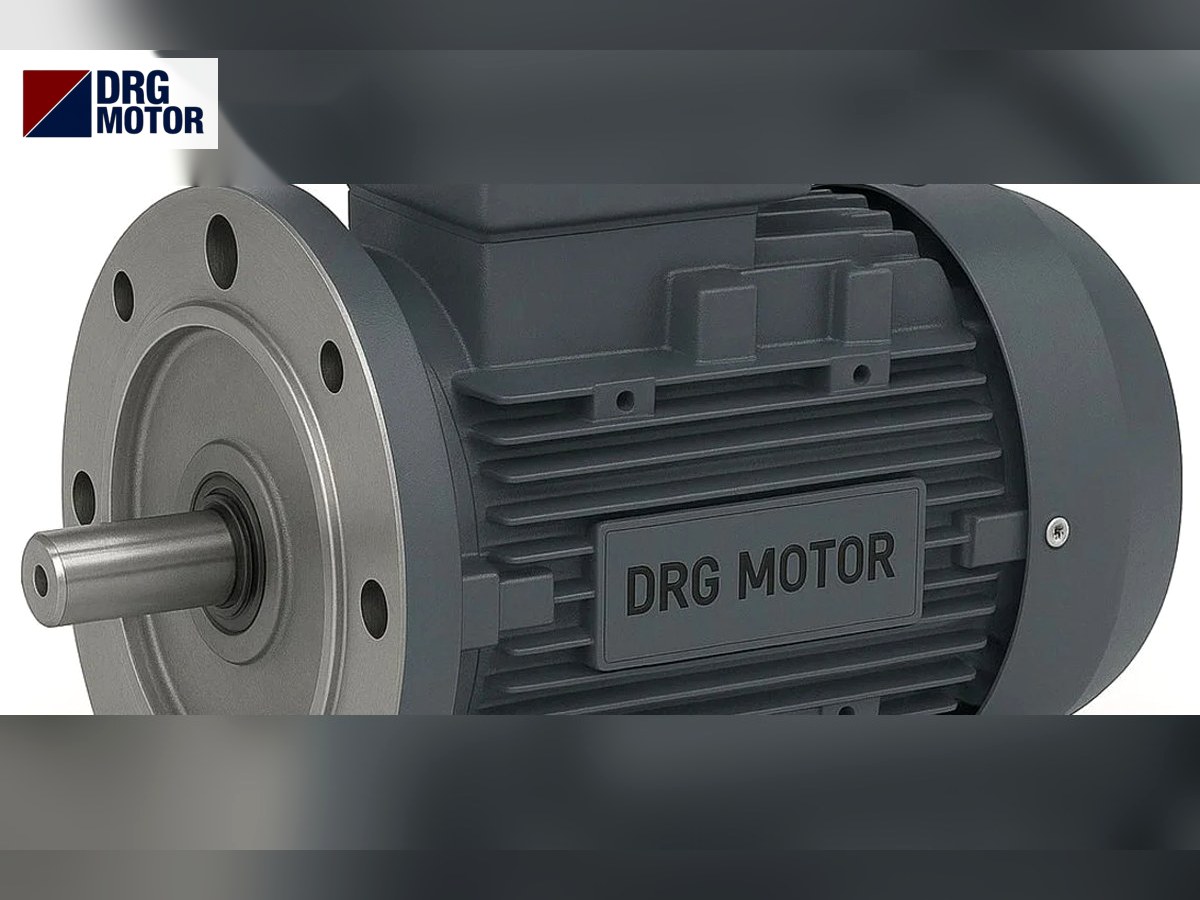
Which electric motor goes on a planetary gearbox depends first on which world the gearbox belongs to. Industrial planetary gearboxes used for heavy duties such as mixers, crushers, winches and drums have an IEC motor flange or coupled input; a standard three-phase induction motor is fitted to them and chosen according to output torque, ratio and input speed limit. Precision (servo) planetary gearboxes on machine tools, robots and precision positioning axes are built for servo motors; an induction motor is not suitable for them.
DRG Motor does not sell gearboxes; it supplies the electric motor to be connected to your planetary gearbox. This page explains how to select an induction motor for industrial planetary gearboxes. Servo motors are not in the DRG range; if you have a servo planetary gearbox, read the section that separates the two below. Our induction motors are all listed in the Buy Electric Motors Online shop.
Two different planetary gearboxes: which one needs a motor?
The same name, "planetary", is given to two product families that look similar in construction but have completely different purposes. Before selecting a motor, establish which one you have.
| Feature | Industrial planetary | Precision (servo) planetary | For the motor |
|---|---|---|---|
| Typical duty | Mixer, crusher, winch, drum | Robot, machine axis, rotary table | Different load type |
| Input connection | IEC flange, coupling, hydraulic motor | Servo motor adapter plate | Different flange standard |
| Input speed | Mostly based on 1500 rpm | Several thousand rpm | Sets the pole number |
| DRG motor | Suitable (induction) | Not suitable | No servo in our range |
Heavy industrial planetary gearboxes
These are large, cast-housing, oil-bath gearboxes. In one manufacturer's catalogue the output torque of this family runs from 34,000 Nm to 530,000 Nm; ratios are given from 3.4 to 3000 in the in-line (coaxial) arrangement and from 10 to 3000 in the right-angle arrangement. On the input side there are adapters for IEC motor frames 80 to 250, as well as hydraulic motor connections. Another manufacturer's planetary drive catalogue states that, because the load is shared among several planet gears, power density is significantly higher and dimensions smaller than with helical and bevel helical gearboxes.
Precision (servo) planetary gearboxes: not in the DRG range
These gearboxes are small and light, their backlash is kept very low in arc-minutes, and they are designed for the high speed of a servo motor. In one manufacturer's economy series, backlash in a single stage is 6–8 arcmin, nominal input speed is 2,500–4,500 rpm depending on size and maximum input speed is 3,600–8,000 rpm; the same catalogue explicitly presents the product as a "servo planetary gearbox". In another, more precise series backlash is below 3 arcmin and maximum input speed rises to 8,000 rpm. The input adapter of these gearboxes is made to suit the flange and shaft of the servo motor, and positioning accuracy is achieved together with the servo drive. DRG Motor neither makes nor sells servo motors. If you have a gearbox of this class, fitting an induction motor to it is not the right solution; talk to your servo motor supplier.
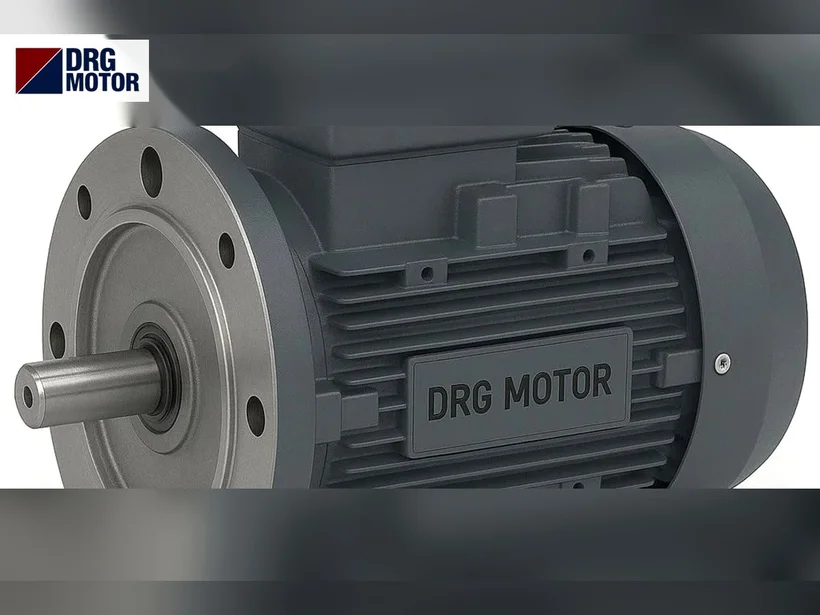
Where industrial planetary gearboxes are used
Planetary gearboxes stand out in heavy duties that need very high torque at low output speed in a confined space. Some of the applications named in catalogues:
- Agitators and mixers: One catalogue places agitators for semi-liquids and non-homogeneous liquids in the "moderate shock" load group. Concrete and mortar mixers and chemical tank agitators are in this group.
- Rotary drums and dryers: One planetary drive catalogue names drying processes in the building materials industry, filling processes in the cement industry and slow-running machines such as rotary filters as its main application areas.
- Winch drums and winches: Compact planetary gearboxes placed inside or beside the hoisting drum. The brake and safety chain are designed separately here.
- Crushers and mills: Catalogues show shock loads such as sugar cane crushers in a separate load group; the service factor rises accordingly.
How is the motor connected to the gearbox?
Direct input with IEC adapter
On medium-size industrial planetary gearboxes an adapter named after the IEC frame number lets the motor bolt straight onto the gearbox with its B5 flange. In one catalogue separate dimensions are given for adapters for IEC frames 80–90, 100–112, 132, 160, 180, 200, 225 and 250; not every gearbox size accepts every adapter. Where gearbox input and motor share a frame size for flange and shaft, the two generally fit together; even so, hold the gearbox drawing against the motor dimensions.
Input through a primary stage (helical or bevel pre-stage)
For very high ratios a helical or bevel helical primary stage is added in front of the planetary gearbox, and the motor connects to this primary stage. One manufacturer defines this layout as the combination of a planetary final stage, a flange-mounted helical or bevel primary gear unit and a motor-coupling-adapter group; IEC/NEMA motor adapters, servo adapters and adapters with a hydraulic coupling are listed as options for the primary stage. With a bevel primary stage the motor stands perpendicular to the output shaft.
Coupled or belt-driven input
On large housings the motor stands on its own baseplate, on its feet (B3), and is connected to the gearbox input shaft by a coupling. On some crusher and drum drives there is also a belt and pulley stage in between; the input speed seen by the gearbox is then not the motor speed but the speed reduced by the pulley ratio.
Click to see current electric motor prices and order nowSEE PRICES →
Input speed limit and number of poles
On industrial planetary gearboxes the value that limits motor selection most is the input speed. In one catalogue the thermal power of the gearbox is given for an input speed of 1500 rpm; the short-term maximum input speed is listed in the tables as 2,000–3,000 rpm depending on size and ratio. The same catalogue states that the gearbox may remain at this maximum speed for no more than one minute, followed by a cooling period, and asks that the manufacturer be consulted for longer periods.
- 4-pole (1500 rpm) motor: The speed on which catalogue values are based; this is the first choice.
- 6-pole (1000 rpm) motor: Easier in terms of thermal load. For the same output speed the ratio is about one third smaller; sometimes one fewer planetary stage is enough.
- 2-pole (3000 rpm) motor: Exceeds the continuous input speed of many industrial planetary gearboxes. If your catalogue gives no continuous value for this speed, do not use it.
- 8-pole (750 rpm) motor: Not in the DRG range. If this speed is required, the ratio must be reselected for a 6-pole motor.
Example: motor selection for a rotary drum
Suppose a rotary drum needs 60,000 Nm of torque at 5 rpm on its output shaft. The drum starts loaded a few times a day.
- Output power: 60,000 × 5 / 9550 ≈ 31.4 kW.
- Gearbox losses: One catalogue gives approximate dynamic efficiency for planetary gearboxes as 0.98 (one), 0.96 (two), 0.94 (three) and 0.92 (four stages). With three stages, 31.4 / 0.94 ≈ 33.4 kW is needed at the motor shaft; the next standard rating is 37 kW.
- Ratio: With a 4-pole 37 kW motor (DRG-225S-4, 1485 rpm) the ratio is 1485 / 5 = 297.
- Service factor: In the same catalogue the factor for an electric motor drive with moderate shock load and up to 16 starts per hour is 1.10. The gearbox is selected for at least 60,000 × 1.10 = 66,000 Nm output torque.
- Motor-side check: The rated torque of the DRG-225S-4 is 237.9 Nm; with ratio 297 and efficiency 0.94 this is about 66,400 Nm at the output.
A 6-pole 37 kW motor (DRG-250M-6, 985 rpm, rated torque 358.7 Nm) does the same job with a ratio of about 197. Which one to choose depends on the number of gearbox stages and its torque capacity at that ratio. The starting torque ratio of both motors is 2.0; on a drum that starts loaded, compare this value with the starting torque requirement. To repeat the calculation, open the gearbox output speed and torque calculator; the meaning of the service factor is explained in the article on torque, ratio and service factor.
Mounting, starting and braking
Mounting position
Planetary gearboxes can run horizontally or vertically; on agitators the gearbox is usually vertical with the motor on top and its shaft pointing down. Such a layout requires the V1 (vertical, shaft down) variant of the motor. Our catalogue lists B3, B5, B14, B34 and B35 as standard mountings, with V1, V3, V5, V6 and V15 vertical versions depending on the frame. In a vertical layout the top of the fan cover is exposed to rain and dust; consider this separately outdoors.
Heavy starting
Drums, crushers and loaded mixers start with high inertia. Our 400/690 V windings begin at 4 kW, so from that size star-delta starting on 400 V is an option; the catch is that star connection leaves only about a third of the starting torque. For a loaded start this may not be enough; a soft starter, inverter or fluid coupling is then considered. The star-delta starting page sets the options side by side.
Brake and hoisting
Winch and hoist drums need a brake that holds the load; in catalogues this brake is often a multi-disc brake mounted on the gearbox input. A brake motor is not a verified product in the DRG range; do not order until it is clear whether the brake will be on the gearbox or the motor, and consult us first.
B5 flange dimensions: before moving to large frames
The smallest IEC adapters of industrial planetary gearboxes cover frames 80–160. B5 dimensions in the DRG catalogue for this range:
| Frame | Shaft D×E (mm) | Flange P / M / N (mm) | Hole S (mm) |
|---|---|---|---|
| 80 | 19 × 40 | 200 / 165 / 130 | 12 |
| 90S / 90L | 24 × 50 | 200 / 165 / 130 | 12 |
| 100L / 112M | 28 × 60 | 250 / 215 / 180 | 14.5 |
| 132S / 132M | 38 × 80 | 300 / 265 / 230 | 14.5 |
| 160M / 160L | 42 × 110 | 350 / 300 / 250 | 18.5 |
Dimensions for frames 180 and above are on the technical drawings page. A B14 small flange is available too; since B14 measurements are absent from our catalogue, we leave them out here and verify the flange against your gearbox input once the order comes in. Flange and shaft compatibility is covered in the article on flange motors matched to gearboxes (B5 and B14).
DRG induction motors suitable for planetary gearboxes
DRG Motor is a manufacturer, supplier and seller of electric motors. Our range consists of three-phase induction motors: 1000, 1500 and 3000 rpm synchronous speed, 0.25–11 kW in aluminium frames and 0.55–355 kW in cast iron frames; 230/400 V or 400/690 V windings, with the mounting type specified in the order note. Servo motors, brake motors and 750 rpm motors are not in our range. Selected models from the medium and large ratings often seen on industrial planetary gearboxes:
| Model | Power / speed | Frame | Current 400 V |
|---|---|---|---|
| DRG-132M-4 | 7.5 kW / 1460 rpm | 132M cast iron | 14.3 A |
| DRG-160L-4 | 15 kW / 1465 rpm | 160L cast iron | 27.3 A |
| DRG-180L-4 | 22 kW / 1470 rpm | 180L cast iron | 39.7 A |
| DRG-200L-4 | 30 kW / 1475 rpm | 200L cast iron | 53.8 A |
| DRG-225S-4 | 37 kW / 1485 rpm | 225S cast iron | 66.1 A |
| DRG-225M-4 | 45 kW / 1485 rpm | 225M cast iron | 80.2 A |
| DRG-250M-4 | 55 kW / 1485 rpm | 250M cast iron | 97.6 A |
| DRG-250M-6 | 37 kW / 985 rpm | 250M cast iron | 68.1 A |
Current shop prices for these motors:
| Model | Power / speed | Frame · current 400 V | Price |
|---|---|---|---|
| DRG-132M-410 HP | 7.5 kW · 1500 rpm | Cast iron 132M · 14.3 A | $394.89 (€352.66) Details & buy → |
| DRG-160M-415 HP | 11 kW · 1500 rpm | Cast iron 160M · 20.4 A | $568.76 (€507.94) Details & buy → |
| DRG-160L-420 HP | 15 kW · 1500 rpm | Cast iron 160L · 27.3 A | $678.13 (€605.61) Details & buy → |
| DRG-200L1-625 HP | 18.5 kW · 1000 rpm | Cast iron 200L · 35.9 A | $1,133.87 (€1,012.62) Details & buy → |
| DRG-180L-430 HP | 22 kW · 1500 rpm | Cast iron 180L · 39.7 A | $919.45 (€821.13) Details & buy → |
| DRG-200L-440 HP | 30 kW · 1500 rpm | Cast iron 200L · 53.8 A | $1,235.00 (€1,102.93) Details & buy → |
| DRG-250M-650 HP | 37 kW · 1000 rpm | Cast iron 250M · 68.1 A | $2,056.71 (€1,836.77) Details & buy → |
| DRG-225S-450 HP | 37 kW · 1500 rpm | Cast iron 225S · 66.1 A | $1,527.18 (€1,363.87) Details & buy → |
| DRG-225M-460 HP | 45 kW · 1500 rpm | Cast iron 225M · 80.2 A | $1,688.50 (€1,507.94) Details & buy → |
| DRG-250M-475 HP | 55 kW · 1500 rpm | Cast iron 250M · 97.6 A | $2,065.73 (€1,844.82) Details & buy → |
DRG MOTOR motors are guaranteed against material and manufacturing defects for 2 years from the date of delivery (warranty certificate). If you are keeping the existing gearbox and renewing only the motor, the steps in the article on replacing just the motor on a healthy gearbox also apply to planetary gearboxes.
Motors in this power range
- DRG-160M-4 – 11 kW – 1465 rpm – 160M cast iron
- DRG-180M-4 – 18.5 kW – 1470 rpm – 180M cast iron
- DRG-200L-4 – 30 kW – 1475 rpm – 200L cast iron
- DRG-225S-4 – 37 kW – 1485 rpm – 225S cast iron
- DRG-250M-6 – 37 kW – 985 rpm – 250M cast iron
Click to see current prices and order these motors nowSEE PRICES →
Planetary gearbox motor: frequently asked questions
Can an induction motor be fitted to a servo planetary gearbox?
It is not recommended. The adapter of a precision planetary gearbox is made for a servo motor flange, and positioning accuracy comes from the servo drive. An induction motor cannot meet this need, and servo motors are not in the DRG range.
Can a 2-pole motor be fitted to a planetary gearbox?
On most industrial planetary gearboxes, no. Catalogues give ratings for 1500 rpm input, while maximum speeds are for short-term use. If the gearbox catalogue has no continuous value for 3000 rpm, choose a 4-pole or 6-pole motor.
How many kW is a planetary gearbox motor?
The machine, not the gearbox, sets the power: output torque × output speed / 9550, plus gearbox losses. Industrial applications use motors from a few kilowatts to hundreds of kilowatts; the DRG range goes up to 355 kW.
How many amps does a 37 kW planetary gearbox motor draw?
The 4-pole DRG-225S-4 draws 66.1 A at 400 V, and the 6-pole DRG-250M-6 68.1 A. Protection settings: see overload relay, fuse and contactor selection.
Send us the planetary gearbox nameplate, the input adapter size and how the machine operates; we will choose the right induction motor together. Phone +90 (542) 666 11 11, email [email protected], contact page. The price list of motors suited to planetary gearboxes is in the Buy Electric Motors Online section.


