 English
 Le français
 Türkçe

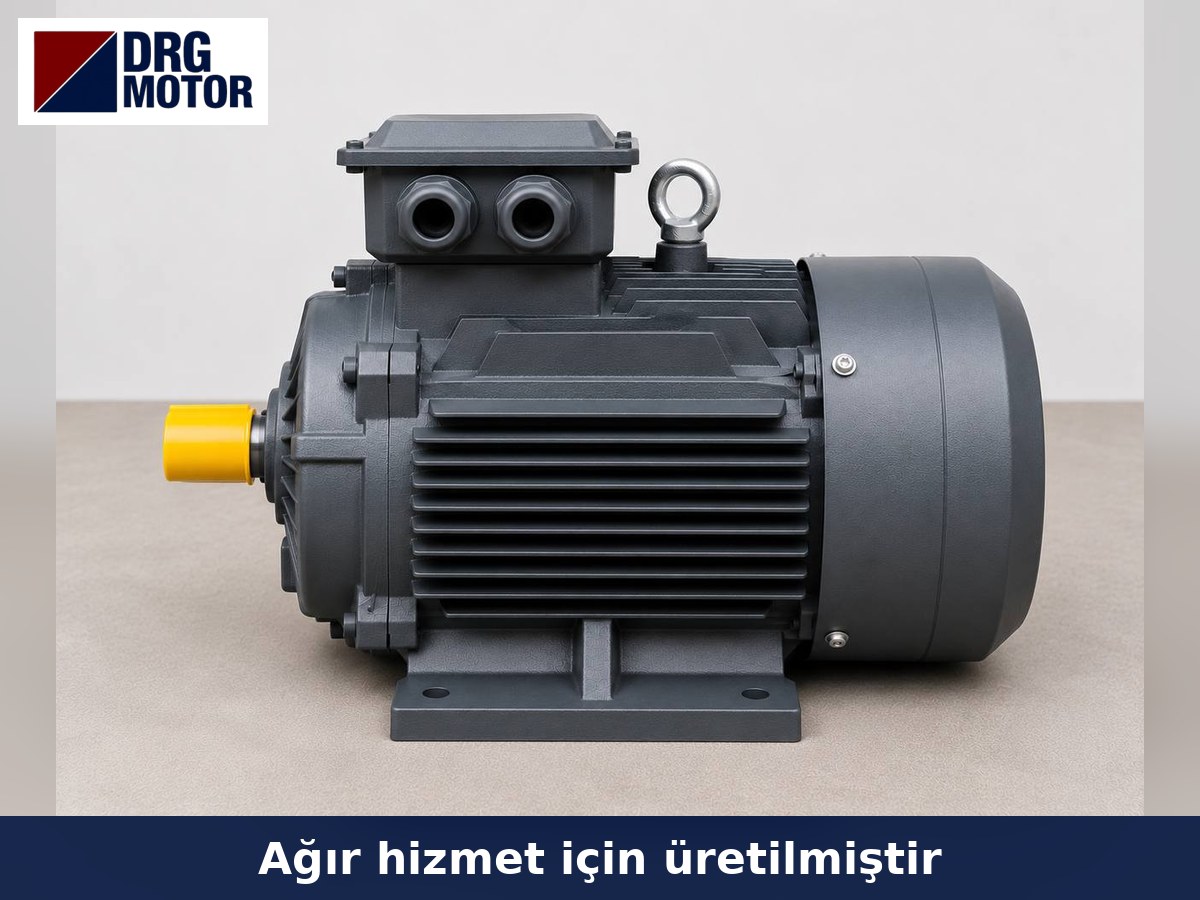
On a fruit juice line the electric motor first turns the mill (crusher) that breaks the fruit, then drives the press belt, screw or hydraulic pump. Its job depends on the press type: on a belt press it runs the belts and the brush, on a screw press it turns the screw, and on a hydraulic pack press it only turns the hydraulic pump while the cylinder does the pressing. Maker catalogues list 1.5–10.92 kW for mills, 0.55–3.4 kW for belt presses, 2.2–7.5 kW for screw presses and 58 kW for a large piston press.
DRG Motor is a manufacturer, supplier and seller of electric motors. We do not sell the press itself, mill blades, cloths and screens, the hydraulic unit or its pump, gearboxes or inverters. What we cover is the three-phase IEC motor turning the mill, belt, screw or hydraulic pump. Models are listed on Buy Electric Motors Online.
Which machines on a juice line carry a motor?
Apples, pears, quince or grapes are washed first, then turned into mash in the mill. The mash goes to the press, the juice drains off and the pomace is separated. Citrus skips the mill; each fruit enters the extractor on its own. With tomatoes, apricots and peaches, seeds and skins are removed by a pulper-finisher.
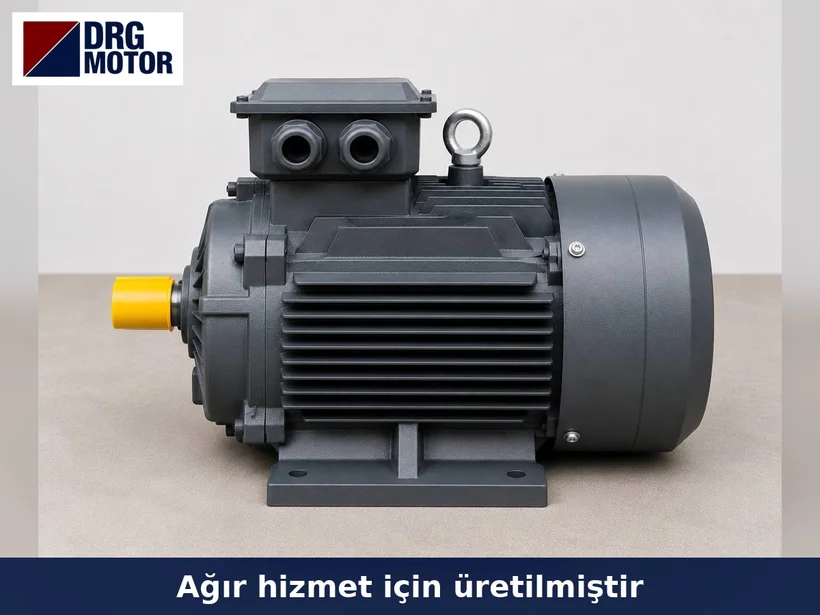
Fruit mill
In a centrifugal mill a spinning rotor throws the fruit against a cutting screen; the screen hole sets how fine the mash is. In the first maker’s series, the 1.5, 2.2 and 5.5 kW models handle 650, 1,000 and 4,200 kg per hour; the large model with feed elevator is 10.92 kW. These machines often couple the motor straight to the rotor and run on 400 V three-phase.
Auxiliary motors
Ahead of the mill sit a bin tipper, a wash tank and an elevator; a pump carries the mash to the press. Each of these has its own small motor. For mash and product pumps, see the Pump Motors category.
Press types and the motor’s role
The press type decides what load the motor carries. Before replacing, know which group the machine belongs to.
Belt press
Mash is spread between two cloth belts that are squeezed as they pass between rollers. The drive motor turns slowly and is set by inverter; a rotating brush cleaning the cloths has its own motor. On the first maker’s belt press the drive is 0.75 kW and the brush 0.37 kW; the third maker lists a 1.5 kW brush and a 0.55 kW drive. In the second maker’s series installed power runs from 0.8 to 3.4 kW.
Screw press
Mash is pushed forward and squeezed by a screw turning inside a screen cage. The screw turns very slowly; in the sixth maker’s series screw speed is 30, 20 and 16 rpm and motor power from 2.2/3 to 7.5 kW. Such low speed needs a high-ratio gearbox between motor and screw.
Hydraulic and pneumatic press
In a hydraulic pack press the mash is wrapped in cloth packs stacked in layers, and a hydraulic cylinder squeezes them. Here the electric motor drives nothing but the oil pump; on the first maker’s 180-series pack press the motor is 2.2 kW and pressure 320 bar. In a pneumatic press a membrane inflating inside the tank does the pressing; across the fourth maker’s 22–80 hL series, total rated power runs from 5 to 17.1 kW. That figure does not belong to a single motor. For kW sizing of a hydraulic pump motor, see our hydraulic pump motor selection article.
Pulper-finishers and citrus extractors
A pulper-finisher pushes cooked or crushed product through a screen with rotating paddles; the purée passes, skins and seeds stay behind. The seventh maker’s straining motors run from 0.75 to 11 kW. In citrus extractors the fruit is squeezed between cups or cut in half and pressed; the eighth maker lists 5.5 kW electrical consumption, the ninth a 7.5 kW electric motor. Cam or crank mechanisms in these machines make the motor load pulsing; when replacing, ask the machine maker about the starting duty of the mechanism.
How many kW is a fruit press motor? Catalogue values
A) Ratings seen in maker catalogues for fruit mills and presses:
| Machine | Motor power | Single / total | Note |
|---|---|---|---|
| Centrifugal fruit mill, 650–4,200 kg/h | 1.5 / 2.2 / 5.5 kW | single motor | first maker |
| Mill with elevator, 8,000 kg/h | 10.92 kW | motor rating | first maker |
| Belt press, 2,400 kg/h | 0.75 kW drive + 0.37 kW brush | two motors | first maker |
| Hydraulic pack press, 1,200 kg/h | 2.2 kW, 320 bar | pump motor | first maker |
| Belt press series, 500–4,000 kg/h | 0.8–3.4 kW | installed power | second maker |
| Belt press 10/15/20 | 1.5 kW brush + 0.55 kW adjustable drive | two motors | third maker |
| Pneumatic press, 22–80 hL tank | 5–17.1 kW | rated power, total | fourth maker |
| Horizontal piston press, 13–18 t/h apples | 58 kW | machine power | fifth maker |
| Screw press, screw 30–16 rpm | 2.2/3 – 7.5 kW | single motor | sixth maker |
| Pulper-finisher | 0.75–11 kW | straining motor | seventh maker |
| Citrus juice extractor | 5.5 / 7.5 kW | machine or motor | eighth and ninth maker |
By model and hourly capacity, this group shows about 1.5–10.92 kW on mills, 0.55–3.4 kW on belt presses, 2.2–7.5 kW on screw presses and 0.75–11 kW on pulper-finishers. The 5–58 kW given for pneumatic and large piston presses is the sum of all consumers on the machine.
B) Where DRG fits: mill, belt, screw, brush and straining motors of 0.37–11 kW are covered by our models in frames 71 to 160; a 100L frame suits the 2.2 kW pack press pump motor. The 58 kW of the large piston press is made up of several drives; those with IEC dimensions are chosen one by one from their plates. Hydraulic pump and unit, the compressor of a pneumatic press and vacuum pump bodies are outside our range.
Click to see current electric motor prices and order nowSEE PRICES →
Worked example: energy per tonne and pump flow
Dividing catalogue power by capacity gives a rough comparison between machines. Turning the formula P = p · Q / 600 around (kW, bar, L/min) also tells us roughly how much oil a pack press pump moves for its motor size:
| Calculation | Operation | Result | Comment |
|---|---|---|---|
| Mill 1.5 kW, 650 kg/h | 1.5 / 0.65 | about 2.3 kWh/t | small model |
| Mill 5.5 kW, 4,200 kg/h | 5.5 / 4.2 | about 1.3 kWh/t | large model |
| Belt press 0.8 kW, 500 kg/h | 0.8 / 0.5 | about 1.6 kWh/t | on installed power |
| Belt press 3.4 kW, 4,000 kg/h | 3.4 / 4.0 | about 0.85 kWh/t | on installed power |
| Pack press pump, 2.2 kW · 320 bar | 2.2 × 600 × 0.85 / 320 | about 3.5 L/min | pump η = 0.85 assumed |
The large mill uses less energy per tonne than the small one, though the ratio moves with fruit hardness and screen hole. On the pack press a 2.2 kW motor can deliver only a few litres per minute at 320 bar, which is why the cylinder creeps as pressure builds. A bigger motor raises flow, but pump and valves must suit it. Try pressure, flow and motor relations in our pump motor power calculator.
Acidic, wet surroundings, single-phase and items outside our range
Fruit juice is acidic and the line is washed often. On these machines the motor sits outside the product-contact zone, usually under the frame or in a side compartment; juice and wash water must not reach it directly. During pressure washing the motor is shielded and the jet kept off it. Juice rooms that insist on stainless-bodied motors need a product DRG does not make; raise it with us before ordering.
Small single-phase mills
Some hobby and small-business mills are single-phase; one maker’s 1,000–1,200 kg/h mill comes with a 220 V, 2.2 kW single-phase motor. Single-phase motors are not part of what we offer; where three-phase supply exists, a change to a three-phase motor goes together with a panel change.
Brake motor
Mill rotors keep turning for a while after switch-off. DRG makes no brake motors; cover interlocks and the wait for the rotor to stop are designed into the mill itself.
DRG motors for fruit presses and mills
Our 4-pole models for mill, belt, screw and pump drives (current at 400 V):
| Model | Power / speed | Frame · shaft D×E | Current 400 V |
|---|---|---|---|
| DRG-712-4 | 0.37 kW / 1340 rpm | 71 aluminium · 14×30 | 0.92 A |
| DRG-802-4 | 0.75 kW / 1420 rpm | 80 cast iron · 19×40 | 1.75 A |
| DRG-90L-4 | 1.5 kW / 1445 rpm | 90L cast iron · 24×50 | 3.3 A |
| DRG-100L1-4 | 2.2 kW / 1450 rpm | 100L cast iron · 28×60 | 4.52 A |
| DRG-112M-4 | 4 kW / 1450 rpm | 112M cast iron · 28×60 | 7.95 A |
| DRG-132S-4 | 5.5 kW / 1460 rpm | 132S cast iron · 38×80 | 10.7 A |
| DRG-160M-4 | 11 kW / 1465 rpm | 160M cast iron · 42×110 | 20.4 A |
| DRG-250M-4 | 55 kW / 1485 rpm | 250M cast iron · 65×140 | 97.6 A |
DRG motors are three-phase induction motors with IEC dimensions. Aluminium bodies give 0.25–11 kW and cast iron 0.55–355 kW; pole count 2, 4 or 6, protection IP55. Before changing a press or mill motor, write down plate power, speed, voltage and connection; shaft diameter and key; foot, flange or gearbox-seated mounting; and the pulley, coupling or rotor connection. A model is proposed once these are compared with the machine documents; we give no firm fit without dimensions.
B5 dimensions for gearbox and pump connection
B5 values of the frames flanged to belt and screw gearboxes or a pump lantern, mm:
| Frame | Shaft D×E | Flange P / M / N | Hole S |
|---|---|---|---|
| 71 | 14×30 | 160 / 130 / 110 | 10 |
| 80 | 19×40 | 200 / 165 / 130 | 12 |
| 100L/112M | 28×60 | 250 / 215 / 180 | 14.5 |
On a pump lantern and gearbox input, D, E and N must stay as before. Foot-mounted dimensions are on the technical drawing page.
Live price table
Prices of our models in fruit mill and press ratings update live from the shop:
| Model | Power / speed | Frame · current 400 V | Price |
|---|---|---|---|
| DRG-712-40.5 HP | 0.37 kW · 1500 rpm | Aluminium 71 · 0.92 A | $76.76 (€68.55) Details & buy → |
| DRG-802-41 HP | 0.75 kW · 1500 rpm | Cast iron 80 · 1.75 A | $101.93 (€91.03) Details & buy → |
| DRG-90L-42 HP | 1.5 kW · 1500 rpm | Cast iron 90L · 3.3 A | $144.14 (€128.73) Details & buy → |
| DRG-100L1-43 HP | 2.2 kW · 1500 rpm | Cast iron 100L · 4.52 A | $188.32 (€168.18) Details & buy → |
| DRG-112M-45.5 HP | 4 kW · 1500 rpm | Cast iron 112M · 7.95 A | $254.38 (€227.18) Details & buy → |
| DRG-132S-47.5 HP | 5.5 kW · 1500 rpm | Cast iron 132S · 10.7 A | $342.01 (€305.44) Details & buy → |
| DRG-132M-410 HP | 7.5 kW · 1500 rpm | Cast iron 132M · 14.3 A | $394.89 (€352.66) Details & buy → |
| DRG-160M-415 HP | 11 kW · 1500 rpm | Cast iron 160M · 20.4 A | $568.76 (€507.94) Details & buy → |
| DRG-250M-475 HP | 55 kW · 1500 rpm | Cast iron 250M · 97.6 A | $2,065.73 (€1,844.82) Details & buy → |
DRG MOTOR motors are guaranteed against material and manufacturing defects for 2 years from the delivery date (warranty certificate).
Motors in this power range
- DRG-802-4 – 0.75 kW – 1420 rpm – 80 cast iron
- DRG-100L1-4 – 2.2 kW – 1450 rpm – 100L cast iron
- DRG-132S-4 – 5.5 kW – 1460 rpm – 132S cast iron
- DRG-132M-4 – 7.5 kW – 1460 rpm – 132M cast iron
- DRG-160M-4 – 11 kW – 1465 rpm – 160M cast iron
Click to see current prices and order these motors nowSEE PRICES →
Browse the products, ask for a quote: motors for your fruit press or mill are on Buy Electric Motors Online. Share the motor plate and coupling side via WhatsApp, or ask for a quote on +90 (542) 666 11 11 giving the press type and hourly capacity.
Frequently asked questions
What does motor power decide on a hydraulic fruit press?
It decides the flow the pump can deliver and so the cylinder speed; peak pressure is limited by the pump and relief valve.
Can a faster motor be fitted to a fruit mill?
Rotor speed affects mash fineness and rotor strength; a speed change should be approved by the machine maker.
What does a fruit press motor price depend on?
Rating, pole count and frame type; the current value is in the table above.
Questions: +90 (542) 666 11 11 · info@drgmotor.com · contact.


