 English
 Le français
 Türkçe

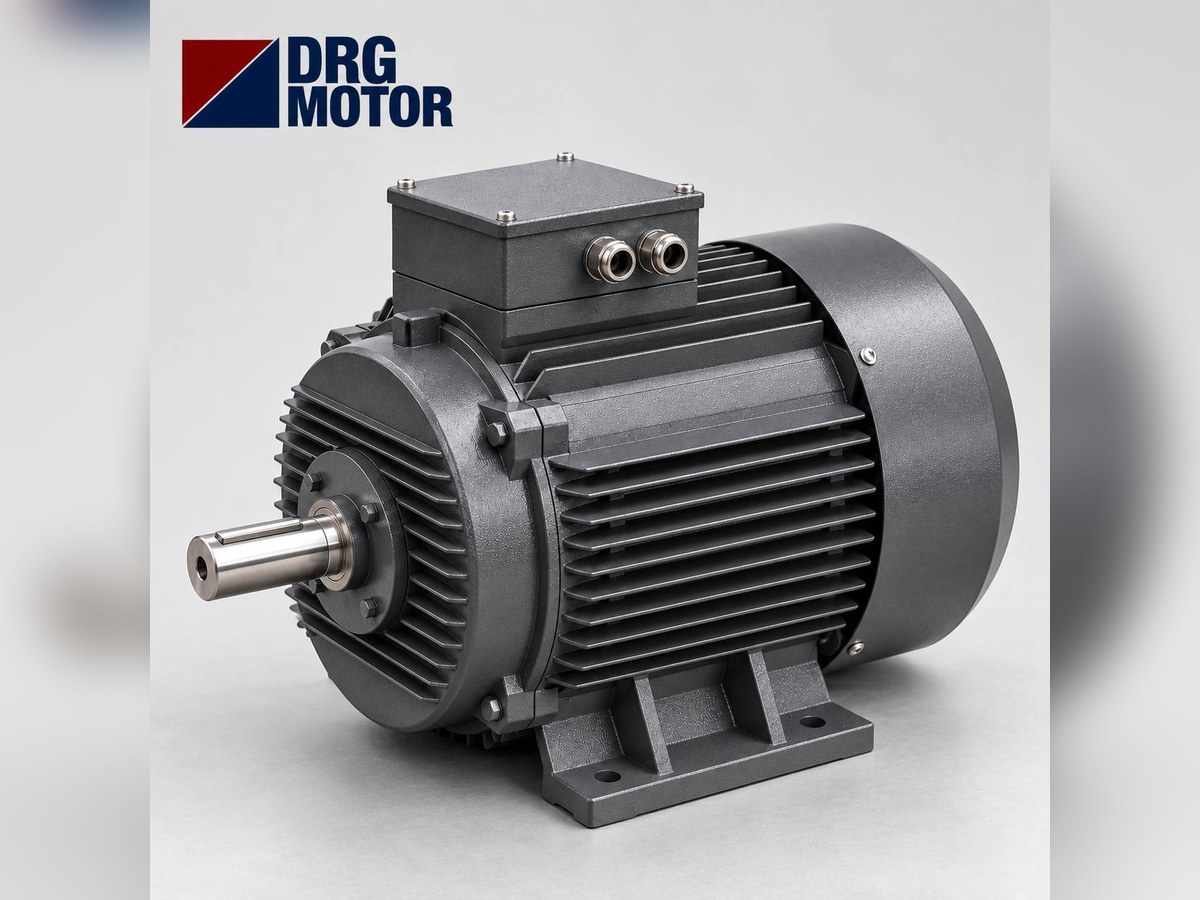
A flour mill auger or conveyor motor is a standard three-phase induction motor that turns a screw conveyor or chain conveyor through a gearbox, moving wheat, tempered wheat, bran and flour horizontally or on a slight incline between machines. In milling machinery catalogues, flour and wheat screw conveyors use 0.75–18.5 kW motors and chain conveyors up to 22 kW. In the same screw, flour loads the motor more than wheat even though it is conveyed at a lower tonnage; this page explains why and what it means for motor selection.
Tonnage, length, speed and product decide the motor; the conveyor itself is the machine builder's design. You can see suitable motors on the Buy Electric Motors Online page. General motor selection for heating and grain augers is covered in our article auger motor: how many kW and what speed, and motor supply for the whole milling line in high-torque motor supply for flour mills.
Where is mechanical conveying used in the mill flow?
In a flour mill the product changes place dozens of times between wheat intake and packing. Some of these moves are made by bucket elevators, some by pneumatic lines and the rest by screw and chain conveyors. Mechanical conveying motors are found most often at these points:
- Silo discharge and intake: collecting from under the wheat silos and carrying from the intake pit to the elevator; usually a chain conveyor.
- Tempering: the tempering screw or high-speed intensive dampener where water is added and mixed into the wheat, followed by screws distributing to the tempering bins.
- Under the plansifters: the flour collecting screw with many inlet flaps that gathers flour from the sieve passages into one line.
- Flour silos: silo discharge, the blending line and feeding the packing section.
Bag filling feed screws belong to the Flour Packing and Dosing Machine Electric Motors page, and vertical lifting to the Flour Mill Elevator Electric Motors page.
Mechanical or pneumatic conveying?
In modern mills, intermediate products between roller passages is mostly moved by air.
Jobs taken over by pneumatics
Break and reduction products leaving the roller mills is sucked through pipes to cyclones on the upper floor. The motor that does the work here is not an auger motor but the motor of the high-pressure pneumatic fan. These motors are covered on the Flour Mill Aspiration and Fan Electric Motors page.
Jobs that stay with screws and conveyors
Horizontal collecting, distribution and silo discharge stay mechanical, because conveying by air would use far more energy and raise more dust in these jobs. The flour collecting screw under the plansifters is a typical case: it joins flour from many inlets into one outlet and hands it to the flour pneumatic line or an elevator.
Flour screw, tempering screw and chain conveyor: the difference
Flour and bran screw conveyor
A covered screw in a U-trough or tube casing. A Turkish milling machinery builder lists it in 150–380 mm diameters, up to 20 m long, with 0.75–18.5 kW motors. The same catalogue gives the 380 mm model a capacity of 86 t/h for wheat, 60 t/h for flour and 38 t/h for bran: the finer and lighter the product, the less the same screw carries. The motor and gearbox are attached to the side of the conveyor with a motor stand.
Tempering screw and intensive dampener
In a tempering machine the screw mixes more than it conveys: the water sprayed onto the wheat must reach every kernel within a short distance. That is why tempering machines carry a clearly larger motor than a plain screw moving the same tonnage. Catalogues show 2.2–4 kW for 6–25 t/h intensive dampeners, 7.5–11 kW for 8–14 t/h intensive dampeners of another builder and 11–22 kW feed motors on inclined tempering screws.
Chain (en-masse) conveyor
Inside a closed casing, a chain with flights drags the product along as a block. Over long distances and at high tonnage it uses less energy than a screw and leaves no broken kernels. One manufacturer's sanitation line data sheet gives 19–208 t/h for grain with a bulk density of 0.75 t/m³ and a maximum motor power of 3.0–22 kW; the same manufacturer's model designed for flour collection uses a casing of folded sheet without bolts and a chain with plastic flights.
Click to see current electric motor prices and order nowSEE PRICES →
How many kW is a flour mill auger motor?
A) Motor powers seen in catalogues
| Machine / capacity | Motor power | Single or total | Note |
|---|---|---|---|
| Screw, 150 mm, flour 3 t/h | 0.75–1.5 kW | Single motor | Maker catalogue, small model |
| Screw, 380 mm, flour 60 t/h | 2.2–18.5 kW | Single motor | Same catalogue, by length |
| Intensive dampener, 6–25 t/h | 2.2–4 kW | Single motor | Maker catalogue |
| Intensive dampener, 8–14 t/h | 7.5–11 kW | Single motor | Turkish maker catalogue |
| Inclined tempering, 10–30 t/h | 11–22 kW | Feed motor | Turkish maker catalogue |
| Chain conveyor, 19–208 t/h | 3.0–22 kW | Single motor, maximum | Maker data sheet, up to 60 m |
According to manufacturer catalogues, motor power for in-mill conveying units ranges from about 0.75 to 22 kW. These values are the single drive motor of one machine. A flour mill has dozens of such units, so adding them up gives the plant's conveying load, not the rating of any single screw.
B) What the DRG range covers
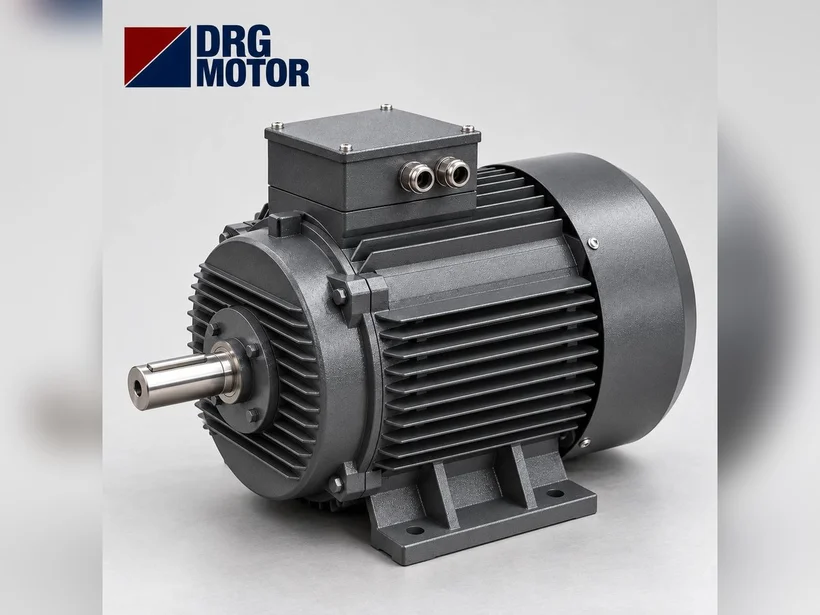
DRG Motor is an electric motor manufacturer, supplier and seller. Our range is 0.25–11 kW in aluminium frames and 0.55–355 kW in cast iron, 1000/1500/3000 rpm, 3-phase 230/400 V or 400/690 V; B3, B5, B14 and B35 mounting is specified on the order. The whole 0.75–22 kW range above lies within it. What the range does not cover: gear motor units built as one body with the gearbox (in that case a flange motor suited to the gearbox is supplied; the unit itself is not replaced), Ex motors for explosive dust atmospheres and machine motors with an integrated drive.
| Model | Power / speed | Frame · current 400 V | Price |
|---|---|---|---|
| DRG-90S-41.5 HP | 1.1 kW · 1500 rpm | Cast iron 90S · 2.48 A | $124.09 (€110.82) Details & buy → |
| DRG-90L-42 HP | 1.5 kW · 1500 rpm | Cast iron 90L · 3.3 A | $144.14 (€128.73) Details & buy → |
| DRG-100L1-43 HP | 2.2 kW · 1500 rpm | Cast iron 100L · 4.52 A | $188.32 (€168.18) Details & buy → |
| DRG-100L2-44 HP | 3 kW · 1500 rpm | Cast iron 100L · 6.02 A | $203.84 (€182.05) Details & buy → |
| DRG-112M-45.5 HP | 4 kW · 1500 rpm | Cast iron 112M · 7.95 A | $254.38 (€227.18) Details & buy → |
| DRG-132S-47.5 HP | 5.5 kW · 1500 rpm | Cast iron 132S · 10.7 A | $342.01 (€305.44) Details & buy → |
| DRG-132M-410 HP | 7.5 kW · 1500 rpm | Cast iron 132M · 14.3 A | $394.89 (€352.66) Details & buy → |
| DRG-160M-415 HP | 11 kW · 1500 rpm | Cast iron 160M · 20.4 A | $568.76 (€507.94) Details & buy → |
| DRG-160L-420 HP | 15 kW · 1500 rpm | Cast iron 160L · 27.3 A | $678.13 (€605.61) Details & buy → |
| DRG-180M-425 HP | 18.5 kW · 1500 rpm | Cast iron 180M · 33.5 A | $873.49 (€780.08) Details & buy → |
Why does flour need more power than wheat? A worked example
The engineering guide of a screw conveyor manufacturer splits the power into two parts: friction power to turn the empty screw and hanger bearings, and material power to push the product along the length. The total is divided by a drive factor of 0.88 that covers gearbox and belt losses. Converted to metric units, the formula reads:
- Friction power (kW) ≈ 2.45 × 10⁻⁶ × L × n × DF × HBF
- Material power (kW) ≈ 0.00539 × Q × L × MF
- L: length (m), n: screw speed (rpm), Q: capacity (t/h), DF: diameter factor (106 for a 16 in ≈ 400 mm screw), HBF: hanger bearing factor (2.0 for plastic bearings).
In the guide's material table the material factor is MF = 0.4 for wheat, 0.5 for wheat bran and 0.6 for wheat flour. Although flour has roughly two thirds of the bulk density of wheat, it rubs harder against the trough and flights, tends to pack and has a lower recommended trough loading.
Example: take a 400 mm screw, 30 m long, turning at 50 rpm, with plastic hanger bearings.
- Wheat, 60 t/h: friction 0.78 kW + material 3.88 kW = 4.66 kW; divided by 0.88, about 5.3 kW at the motor shaft.
- Flour, 42 t/h (the flour capacity of the same screw, using the catalogue's wheat-to-flour ratio): friction 0.78 kW + material 4.08 kW = 4.86 kW; about 5.5 kW at the motor shaft.
Flour is conveyed at 30% less tonnage than wheat, yet the screw draws more power. Either way the motor rounds up to 7.5 kW; the DRG-132M-4, turning at 1460 rpm and drawing 14.3 A, does the job. For a screw speed of 50 rpm the gearbox ratio is 1460 / 50 ≈ 29; the gearbox output speed and torque calculator confirms it. This is a preliminary sizing; the final power comes from the conveyor manufacturer's design.
Hygiene, cleanability and motor position
Cleanable screw and conveyor design
Flour left in dead corners absorbs moisture and forms lumps, so screws and conveyors on the flour line should have self-emptying end plates, removable covers, casings with few inner corners and an inspection door at each inlet. These features belong to the machine; they do not change the motor selection directly, but they affect where the motor sits. Prefer a motor and gearbox layout that does not block the cleaning door or overhang the side it opens towards.
Flour dust and the motor
The motor is cooled by air passing over the fins on its frame. When flour dust fills the gaps between the fins, the motor runs hot, the overload relay trips or the winding ages. DRG cast iron motors have IP55 protection. Flour dust is combustible: where the plant's risk assessment classifies an area as an explosive dust zone, an Ex-marked motor is mandatory, and such motors are not in the DRG range. Standard motors are used only outside classified areas.
Checklist for choosing an auger or conveyor motor
- Product conveyed: wheat, tempered wheat, bran, semolina or flour.
- Capacity (t/h), length, incline and screw speed; the old motor's nameplate and the gearbox label.
- Gearbox type and connection: shaft-mounted reducer with belt, flanged gearbox (B5 or B14) or separate base and coupling. The exact mounting comes from the machine builder's drawing.
- Loaded start: packed material in a flour screw raises the starting torque; our data sheets give DRG 4-pole motors a Ts/Tn of 2.0 to 2.4.
- Starting: DRG motors from 4 kW up are wound for 400/690 V, so on a 400 V network they accept a star-delta starter. On a long screw starting full, the reduced torque in star may not be enough; see the star-delta starting page for a comparison.
DRG motor options for flour mill screws
Gearboxes on mill screws and chain conveyors are mostly chosen for a 1500 rpm input speed, so the table shows 4-pole cast iron motors.
| Model | Power / speed | Frame | Current 400 V |
|---|---|---|---|
| DRG-90L-4 | 1.5 kW / 1445 rpm | 90L cast iron | 3.3 A |
| DRG-100L2-4 | 3 kW / 1450 rpm | 100L cast iron | 6.02 A |
| DRG-112M-4 | 4 kW / 1450 rpm | 112M cast iron | 7.95 A |
| DRG-132M-4 | 7.5 kW / 1460 rpm | 132M cast iron | 14.3 A |
| DRG-160M-4 | 11 kW / 1465 rpm | 160M cast iron | 20.4 A |
| DRG-160L-4 | 15 kW / 1465 rpm | 160L cast iron | 27.3 A |
DRG MOTOR motors are guaranteed against material and manufacturing defects for 2 years from the date of delivery (warranty certificate). To compare motor dimensions with the gearbox flange, see the technical drawings page.
Motors in this power range
- DRG-100L1-4 – 2.2 kW – 1450 rpm – 100L cast iron
- DRG-112M-4 – 4 kW – 1450 rpm – 112M cast iron
- DRG-132S-4 – 5.5 kW – 1460 rpm – 132S cast iron
- DRG-132M-4 – 7.5 kW – 1460 rpm – 132M cast iron
- DRG-160L-4 – 15 kW – 1465 rpm – 160L cast iron
Click to see current prices and order these motors nowSEE PRICES →
Flour mill auger and conveyor motor: frequently asked questions
How many kW is a flour screw motor?
It depends on diameter, length and tonnage. Milling machinery catalogues show 0.75–18.5 kW for flour and bran screws.
Can a wheat screw motor be used on a flour screw?
It may fit dimensionally, but the power may not be enough. In the same screw, flour draws more power than wheat even at a lower tonnage. If the old motor was sized for wheat, redo the calculation for flour.
Is a chain conveyor motor different from an auger motor?
The motor itself is the same type of standard induction motor. The differences are in the gearbox ratio, the resistance of the chain on a loaded start and the connection to the drive sprocket. Catalogues show motors up to 22 kW on chain conveyors.
What current does a 7.5 kW auger motor draw?
At full load on 400 V the 7.5 kW DRG-132M-4 (4-pole) takes 14.3 A. Set the overload relay to the nameplate current; you can use the overload relay, fuse and contactor selection tool.
Tell us the screw or conveyor dimensions, which product it moves and what the old motor's plate says; we will work out the matching motor with you. Phone +90 (542) 666 11 11, e-mail [email protected], contact page. For all models and current prices, visit Buy Electric Motors Online.


