 English
 Le français
 Türkçe

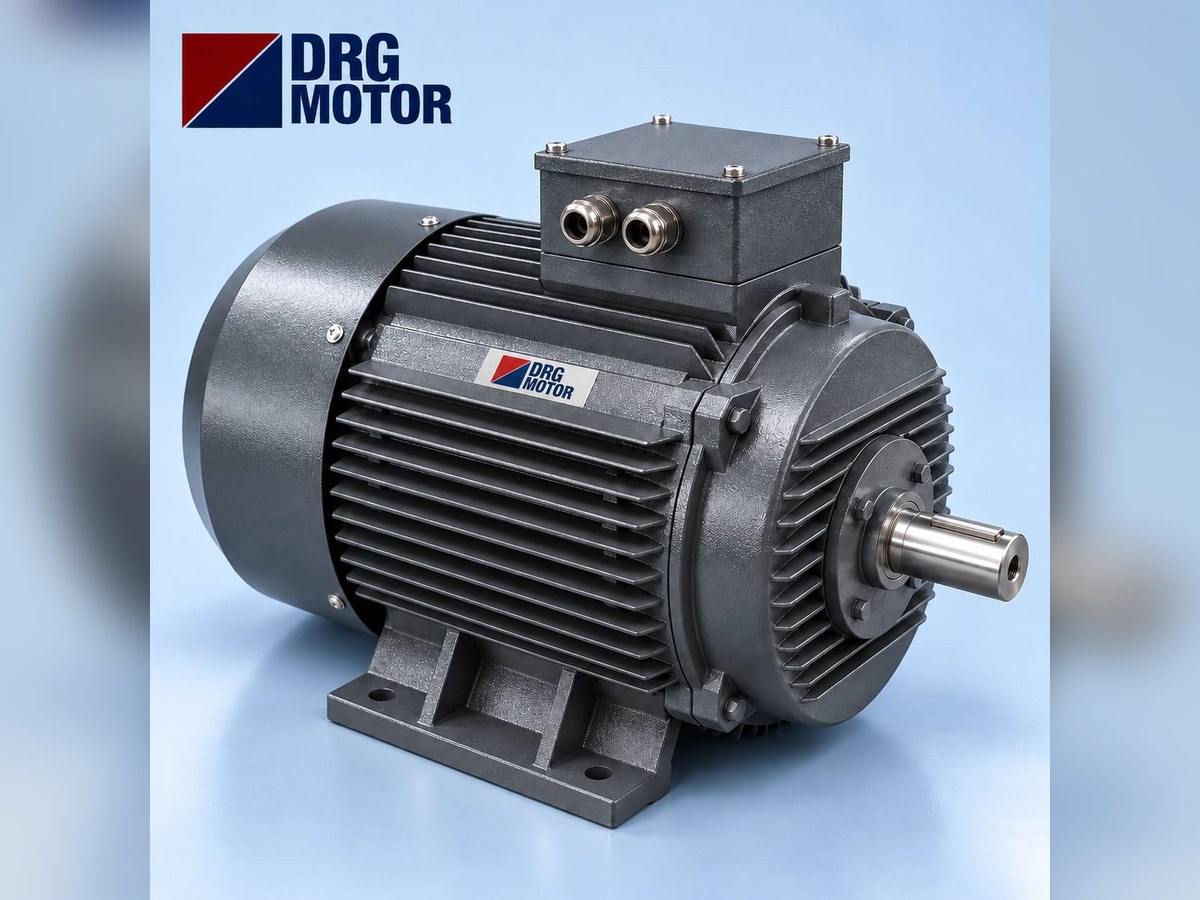
In recycling, a screening motor is what turns the drum of a waste trommel, the shafts of a disc screen, the crankshafts of a ballistic separator, the magnet rotor of an eddy current separator or the fan of an air separator. These machines split mixed waste by size, shape, metal type and density. The motors used are mostly standard three-phase induction motors between 2 and 75 kW; some run slowly through a gearbox, others fast, either direct or by belt.
We talk about the motor inside the machine here, not about the machine. DRG Motor does not sell screens, separators, gearboxes or drives; we provide the motor suited to the machine in your sorting line or to the machine builder's project. Options are on the Buy Electric Motors Online page.
Machines on a waste sorting line and their motors
On lines for household waste, packaging waste and demolition rubble the machines usually follow this order: bag opener, trommel or disc screen, ballistic separator, magnetic separator, eddy current separator, air separator and optical sorting. Each machine's motor runs at its own speed with its own kind of load.
Waste trommel
The perforated drum sits on drive rollers below it and turns at well under a few dozen revolutions a minute through a geared motor. Waste trommels may carry bag-splitting knives inside the drum, and their holes are far larger than in a quarry trommel. The motor starts against a full drum, and when waste piles up on one side the drum loads the motor slightly differently on every turn.
Disc (star) screen
Shafts set side by side and fitted with stars or discs turn in the same direction; small pieces drop through the gaps while cardboard and large items travel on top. The shafts are chain-driven from one or more geared motors. Friction rises quickly once film and rope wind round the shafts.
Ballistic separator
Inclined, perforated paddles move in a circular path on crankshafts. Flat, light items (paper, film) climb upwards, rolling and heavy items (bottles, cans) drop down, and fines pass through the holes. A standard motor with a gearbox drives the crankshafts; larger models use two motors.
Magnetic and eddy current separators
An overband magnet lifts ferrous pieces off the belt, and a small geared motor turns its own belt. In an eddy current separator the magnet rotor spins at high speed inside the belt pulley and throws non-ferrous metals such as aluminium forward. The rotor usually runs on a 2-pole motor with inverter speed control, while the belt side often uses a drum motor. Drum motors are not in our range.
Air separators and optical sorting
In an air separator one or two fans blow or suck air across the material falling from an acceleration belt; the light fraction flies, heavy items drop. Motor load here follows the fan curve. The optical sorter itself draws little power; the main electrical load is the compressor that feeds it with air and the acceleration belt.
How it differs from a quarry trommel: wrapping, blinding, uneven load
Trommel drives and speed calculations for crushing and screening plants are covered in detail on our Trommel Screen Motor page. On a waste line the machine principle is similar, but different things strain the motor.
Wrapping
Bags, stretch film, rope, textiles and cable wrap round the knives inside a trommel, the shafts of a disc screen and the crank bearings of a ballistic separator. As the wrap builds up, torque demand grows and motor current creeps upward. The maintenance plan should pair cleaning of shafts and knives with a record of running current.
Blinding and bridging
Wet paper and organic waste blind the screen holes, and bulky pieces jam between discs. On disc screens a brief reversal of the shafts is a common cure; that function is set up in the drive or control system, and the motor only needs to be able to run in both directions.
Uneven and changing load
When waste heaps on one side of a trommel, the drum asks for a different torque on every turn; when feed stops and restarts, the load changes at once. The motor's breakdown torque margin (2.0–2.3 times rated torque in our range) absorbs these swings, but running permanently clogged heats the motor.
Click to see current electric motor prices and order nowSEE PRICES →
Motor power on sorting machines
A) Powers seen in manufacturer catalogues
Figures are per machine, drawn from builders' data sheets and one sorting plant's equipment list:
| Machine / size | Motor power | Single / total | Note |
|---|---|---|---|
| Waste trommel, 1.5–1.8 m drum | 11–15 kW | single drive | two manufacturer catalogues, small model |
| Waste trommel, 2.5 m drum | 45–75 kW | single drive | manufacturer catalogue, large model |
| Cardboard (OCC) disc screen, 14 shafts | 2 × 3.7 kW (2 × 5 HP) | two motors | equipment list of a sorting plant |
| Star screen (two decks) | 8–33 kW | total connected power | manufacturer sheet, by equipment |
| Ballistic separator | 4 kW – 2 × 18.5 kW | one / two motors | manufacturer catalogue, light and heavy series |
| Eddy current separator, 800 mm | rotor 5.5 kW · belt 2.2 kW | separate motors | manufacturer sheet; vibrating feeder |
| Air separator (wind sifter) | fans 2 × 7.5 kW · belts 3 kW | separate motors | manufacturer sheet |
Depending on model and capacity, motors of roughly 2–75 kW are seen in this machine group. On trommels power grows with drum diameter and length, on disc screens with the number of shafts and screen width, and on air separators with fan flow and pressure.
B) What the DRG range covers
Our catalogue covers all of it, with aluminium or cast iron housings to 11 kW and cast iron from 15 to 75 kW. Slow trommel, disc screen and ballistic separator drives use a 4-pole (about 1500 rpm) motor with gearbox, while the eddy current rotor and air separator fan mostly use a 2-pole (about 3000 rpm) motor. Drum motors, vibration motors and Ex-certified motors fall outside this coverage.
Worked example: air separator fan motor
Fan shaft power is flow times pressure divided by fan efficiency: P = Q × Δp / ηfan, with Q in m³/s and Δp in Pa.
- Fan flow 15,000 m³/h = 4.17 m³/s, total pressure 2,500 Pa, fan efficiency 0.65 (taken from the fan maker's curve).
- P = 4.17 × 2,500 / 0.65 ≈ 16.0 kW.
- About ten per cent extra for uncertainty in duct losses and for a belt drive: ≈ 17.6 kW. The next standard rating is 18.5 kW: DRG-160L-2 (2940 rpm).
- If the fan is direct-coupled, fan speed equals motor speed; with a belt, the pulley ratio sets the fan speed.
Because fan power changes with the cube of speed, power moves quickly when speed is set by an inverter. Enlarging or shrinking the motor without the fan curve and operating point from the machine builder will not give a sound result.
What you need to know when choosing the motor
- Machine type and size: drum diameter and length, number of shafts on a disc screen, number of paddles on a ballistic separator.
- Drive layout: geared, belt or direct? Gearbox input flange and ratio.
- Speed required: gearbox output on slow drives, motor speed on fast rotors.
- Need for reversing and inverter use (drive from the machine builder).
- The nameplate of the motor you are replacing, or frame size and a shaft photo if it is unreadable.
- Surroundings: dust, moisture, open air; whether paper or plastic dust can form an explosive atmosphere.
Speed and mounting
On trommel and disc screen drives the motor usually joins a shaft-mounted gearbox with a B5 flange; belt-driven fans and rotors usually take a B3 foot motor on adjustable rails. The exact type comes from the machine builder's drawing. Fit is only stated after kW, speed, voltage, frame, mounting type, shaft and key and the coupling, pulley or gearbox interface have been checked against the current nameplate and machine documents.
Starting and protection
A full trommel or a loaded disc screen starts heavily; even then a 4-pole motor from our range pulls away with 2.0–2.4 times its rated torque. Fans need little starting torque, but high inertia stretches the run-up, so overcurrent protection must suit the starting time. Where the hall is classed as an explosive-dust zone, only a certified motor may be fitted, and our standard motors carry no such certificate.
Screening machines driven by vibration motors
Vibrating screens, the feed chute of an eddy current separator and some fine-fraction screens run on a vibration motor with unbalanced weights rather than a standard induction motor. The two cannot replace each other. Vibration motors are a separate product group; let us know what you need. For details see the vibration motors article.
DRG motors for screening and sorting machines
DRG Motor is a manufacturer, supplier and seller of electric motors. Our motors in the ratings used most on waste sorting lines are IP55 three-phase induction IEC motors. Sample models:
| Model | Power / speed | Frame · shaft D×E | Current 400 V |
|---|---|---|---|
| DRG-112M-4 | 4 kW / 1450 rpm | 112M cast iron · 28×60 | 7.95 A |
| DRG-132S1-2 | 5.5 kW / 2930 rpm | 132S cast iron · 38×80 | 10.1 A |
| DRG-160M-4 | 11 kW / 1465 rpm | 160M cast iron · 42×110 | 20.4 A |
| DRG-160L-2 | 18.5 kW / 2940 rpm | 160L cast iron · 42×110 | 32.5 A |
| DRG-200L-4 | 30 kW / 1475 rpm | 200L cast iron · 55×110 | 53.8 A |
| DRG-225S-4 | 37 kW / 1485 rpm | 225S cast iron · 60×140 | 66.1 A |
Live price table
Prices for motors chosen in trommel, disc screen, ballistic separator, eddy current rotor and fan ratings come live from the shop:
| Model | Power / speed | Frame · current 400 V | Price |
|---|---|---|---|
| DRG-100L1-43 HP | 2.2 kW · 1500 rpm | Cast iron 100L · 4.52 A | $188.32 (€168.18) Details & buy → |
| DRG-112M-45.5 HP | 4 kW · 1500 rpm | Cast iron 112M · 7.95 A | $254.38 (€227.18) Details & buy → |
| DRG-132S-47.5 HP | 5.5 kW · 1500 rpm | Cast iron 132S · 10.7 A | $342.01 (€305.44) Details & buy → |
| DRG-132S1-27.5 HP | 5.5 kW · 3000 rpm | Cast iron 132S · 10.1 A | $338.72 (€302.50) Details & buy → |
| DRG-132M-410 HP | 7.5 kW · 1500 rpm | Cast iron 132M · 14.3 A | $394.89 (€352.66) Details & buy → |
| DRG-160M-415 HP | 11 kW · 1500 rpm | Cast iron 160M · 20.4 A | $568.76 (€507.94) Details & buy → |
| DRG-180M-425 HP | 18.5 kW · 1500 rpm | Cast iron 180M · 33.5 A | $873.49 (€780.08) Details & buy → |
| DRG-160L-225 HP | 18.5 kW · 3000 rpm | Cast iron 160L · 32.5 A | $714.00 (€637.65) Details & buy → |
| DRG-200L-440 HP | 30 kW · 1500 rpm | Cast iron 200L · 53.8 A | $1,235.00 (€1,102.93) Details & buy → |
| DRG-225S-450 HP | 37 kW · 1500 rpm | Cast iron 225S · 66.1 A | $1,527.18 (€1,363.87) Details & buy → |
DRG MOTOR motors are guaranteed against material and manufacturing defects for 2 years from the delivery date (warranty certificate).
Motors in this power range
- DRG-112M-4 – 4 kW – 1450 rpm – 112M cast iron
- DRG-132S1-2 – 5.5 kW – 2930 rpm – 132S cast iron
- DRG-160M-4 – 11 kW – 1465 rpm – 160M cast iron
- DRG-160L-2 – 18.5 kW – 2940 rpm – 160L cast iron
- DRG-200L-4 – 30 kW – 1475 rpm – 200L cast iron
Click to see current prices and order these motors nowSEE PRICES →
A motor for your screening line: models in trommel, separator and fan ratings are on the Buy Electric Motors Online page. Send the machine name and a photo of the motor nameplate via WhatsApp and we will settle the frame and speed together.
For a general overview of motor selection in recycling plants, see our recycling plant electric motor article.
Frequently asked questions
How many kW is a trommel screen motor?
For waste trommels, catalogues show 11–15 kW on small drums and 45–75 kW on large 2.5 m drums. The exact value depends on drum size, fill level and drive layout.
Why does an eddy current rotor use a 2-pole motor?
The magnet rotor has to spin fast; a 2-pole motor reaches that speed directly or with a short belt ratio. Speed is usually trimmed with an inverter.
Why does my disc screen motor keep tripping?
The most frequent cause is film and rope wound round the shafts. Clean the shafts and measure current; if it stays above the nameplate value after cleaning, check the power choice and gearbox oil together.
Where can I see prices for sorting machine motors?
Rating, pole count and housing set the price; today's figure sits in the live table on this page and on each model's own page.
Send the machine name and motor nameplate and we will find the equivalent together: phone +90 (542) 666 11 11, WhatsApp +90 542 666 11 11, e-mail [email protected], contact page. All models: Buy Electric Motors Online.


