 English
 Le français
 Türkçe

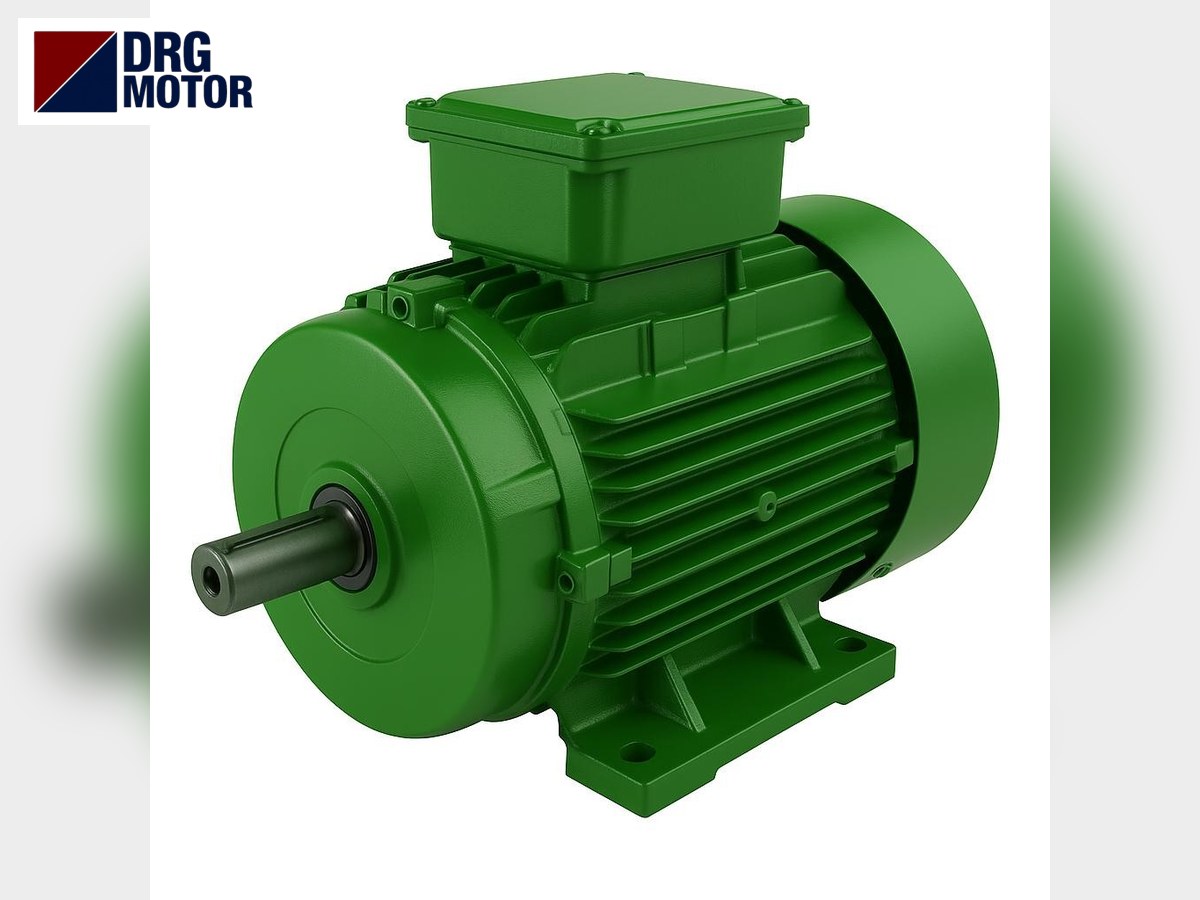
A hammer crusher for brick raw material grinds dry or slightly moist pieces of clay, shale and marl by striking them with free-swinging hammers on a fast rotor, and passes the fine material through the grate bars below to the line. The electric motor drives this rotor through belts and pulleys; twin-rotor types give each rotor its own motor. For brick and tile works, catalogue figures run from 45 to 132 kW per rotor, and large hammer mills reach 200 kW. For machines crushing limestone and aggregate see our stone crushing hammer crusher motor page, and for rotor inertia and run-up time see our hammer mill motor article; this page covers the dry grinding step of clay preparation.
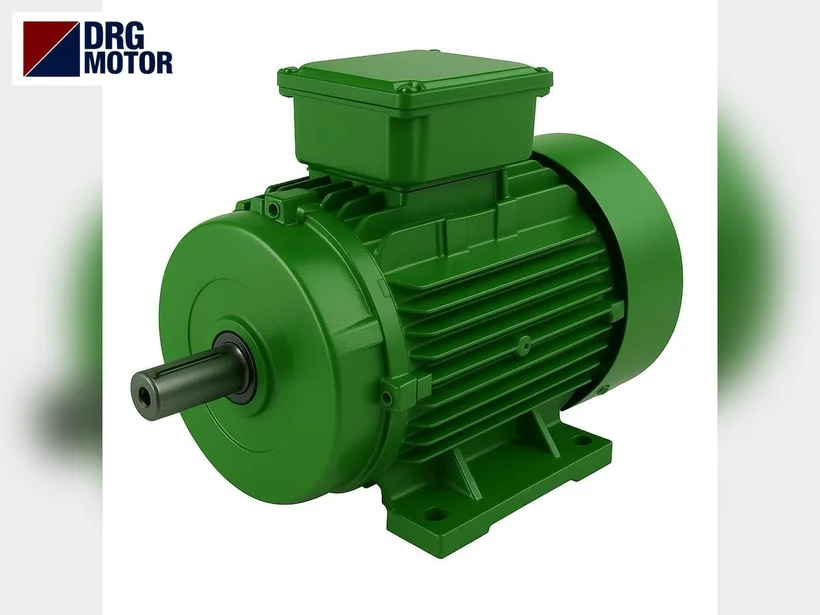
DRG Motor is a manufacturer, supplier and seller of electric motors. We do not sell the crusher, hammers, grate bars, belts or the drive (inverter); the item we supply is the three-phase asynchronous motor turning the rotor. Models are on the Buy Electric Motors Online page.
The hammer crusher’s job in a dry preparation line
In plastic (wet) preparation, clay is rolled and kneaded with water. In dry preparation it is first broken, then ground to dust and fine grains in a hammer crusher; the fine part is screened off and the coarse part returns to the rotor. A domestic maker states that its single- and twin-rotor crushers bring 15–20 cm pieces down to 0–8 mm. This step is usually followed by crushing rolls or mixers, and good grinding lightens the load on the rolls.
Clay, shale and marl: which raw material goes to the hammer crusher?
A hammer crusher works well on brittle, fairly dry raw material: shaly clay, marl, dried clay lumps. One maker says its crushers run without trouble at around 15 per cent moisture, while a large international maker states that its hammer mills handle material at 8–12 per cent moisture. Above these limits clay smears on hammers and liners, the grate clogs and motor current climbs. For wet, sticky clay the right machines are roll-type clay crushers and crushing rolls, not a hammer crusher.
Fired brick waste (grog) and coal
Broken fired bricks and the coal used in firing are also ground in a hammer crusher and returned to the body. One maker’s data sheet lists a 45 kW, belt-driven crusher for this duty that reduces 10–100 mm pieces to 0–8 mm, with working moisture limited to 10–15 per cent. Fired brick is far more abrasive than clay; as hammers and liners wear, crushing becomes less effective and the motor stays loaded longer for the same output.
Rotor, grate and motor load
Hammers hung on pins between the rotor discs swing out under centrifugal force. Product fineness is set by the grate opening: a smaller opening keeps material in the rotor longer and the motor spends more energy. Asking for finer product on the same machine means either lower capacity or a stronger motor. If the grate clogs, the rotor starts carrying material round and the current rises quickly; set the thermal relay so it catches this.
Single and twin rotor
Twin-rotor types have two rotors side by side, each with its own motor; in the catalogues the two motors are equal (for example 2 × 90 kW). The motors start on separate starters, not at the same instant. A single-rotor type uses one larger motor; one data sheet gives 90 kW or 132 kW for the same 1100 mm rotor.
Rotor inertia and belts
A hammer rotor is heavy and needs a lot of energy to come up to speed, and a large belt pulley adds to that inertia. Longer run-up heats the motor on direct-on-line starting and makes the star-to-delta changeover critical. The calculation is covered in detail in our hammer mill article, so we do not repeat it here; what is specific to clay crushers is stopping the feeder before the crusher so the rotor never starts loaded.
How many kW for a hammer crusher motor?
A) Published hammer crusher and hammer mill motor ratings for clay and brick raw material:
| Machine type / size | Motor power | Single / total | Note |
|---|---|---|---|
| Single-rotor hammer crusher, 1100 mm rotor | 90 kW or 132 kW | single motor | first maker, 40–60 t/h, rotor 750–800 rpm |
| Twin-rotor hammer crusher, 800×1000 mm | 2 × 75 kW | two motors, 150 kW total | first maker, 40–60 t/h |
| Twin-rotor hammer crusher, 1100×1100 mm | 2 × 90 kW | two motors, 180 kW total | first maker, 50–80 t/h |
| Twin-rotor hammer crusher, 1100×1500 mm | 2 × 110 kW | two motors, 220 kW total | first maker, 70–100 t/h |
| Fired brick and coal crusher | 45 kW | single motor, belt and pulley | first maker, 10–100 mm → 0–8 mm |
| Hammer mill, 650×250 mm rotor | 15–45 kW | single rotor, installed power | second maker, clay listed |
| Hammer mill, 1000×1250 mm rotor | 45–200 kW | single rotor, installed power | second maker |
| Laboratory hammer mill | 5.5 kW | single motor | third maker, for trials |
In this machine group for brick raw material, depending on the maker’s model, rotor width and capacity, about 45–132 kW per rotor is seen; installed power on large hammer mills reaches 200 kW. On a twin-rotor machine the total is the sum of both motors. Small values such as 5.5 kW for laboratory mills are for trials only.
B) Overlap with the DRG range: 45 to 200 kW falls on our 4- and 6-pole cast iron frames from 225M to 315L; 2-pole equivalents are also available. The 5.5 kW motor of laboratory mills is in range as well. The whole band falls inside our range; very large cement-plant hammer crushers belong to another topic.
Click to see current electric motor prices and order nowSEE PRICES →
Example: speed and pulley choice for an 1100 mm rotor
The first maker’s single-rotor crusher has an 1100 mm rotor width and 750–800 rpm rotor speed. Reading the Ø1100 in the model name as a 1100 mm rotor diameter, let us work out hammer tip speed and the pulley ratio for three motor speeds:
| Option | Calculation | Result | Comment |
|---|---|---|---|
| Hammer tip speed, rotor at 750 | π × 1.1 × 750 / 60 | about 43.2 m/s | 1100 mm rotor from the data sheet |
| Hammer tip speed, rotor at 800 | π × 1.1 × 800 / 60 | about 46.1 m/s | upper end of the range |
| Ratio with 4-pole DRG-280M-4 | 1486 / 750–800 | about 1.98–1.86 | sensible belt reduction |
| Ratio with 6-pole DRG-315M-6 | 988 / 750–800 | about 1.32–1.24 | pulleys of similar diameter |
| Ratio with 2-pole DRG-280M-2 | 2975 / 750–800 | about 3.97–3.72 | small motor pulley, less belt wrap |
| Torque on the rotor shaft, 90 kW | 9550 × 90 / 750–800 | about 1,146–1,074 Nm | belt losses ignored |
At this rotor speed, 4- and 6-pole motors keep the belt ratio comfortable; a 2-pole motor can be used, but the motor pulley gets small and belt wrap drops. The roughly 1,100 Nm on the rotor shaft is divided by the pulley ratio at the motor shaft. Keeping the original pole count on replacement means leaving pulleys and rotor speed untouched. Try diameters with the pulley and belt tool.
Why should rotor speed stay the same?
Hammer tip speed governs both product fineness and hammer wear. Speeding the rotor up with a faster motor or a larger pulley may raise the fine fraction, but hammer, pin and bearing loads rise too; rotor balance and casing strength depend on the machine maker’s design. Change speed only with the maker’s approval.
Information needed, dust and items outside our range
- Motor nameplate: kW, speed, voltage and connection; single or twin rotor.
- Rotor and motor pulley diameters, number and profile of belts.
- Grate opening and expected fineness; raw material moisture.
- Starting: star-delta, soft starter or inverter; feeder interlock.
- Mounting: B3 feet, slide rail dimensions, shaft diameter and key.
Dry clay dust and the motor
Dry grinding is the dustiest step of clay preparation. IP55 keeps dust out of our motors, yet a layer on the fan cowl and blades cuts cooling; the motor body should be cleaned regularly and dust extraction at the crusher outlet kept working. Motors for the extraction fan are listed under Fan Motors. If an explosive dust zone is defined in a crusher grinding coal, or in its filter, an Ex-rated motor is required; our standard motors are not supplied with that documentation.
Outside our range
We cannot help with brake motors for feed gates or maintenance hoists, single-phase motors of small workshop grinders, servo motors, or anything above 355 kW. A vibrating chute in front of the crusher driven by vibration motors belongs to a different product family: see our vibration motors article.
DRG models for hammer crushers
Cast iron models matching single- and twin-rotor clay crusher ratings (current at 400 V):
| Model | Power / speed | Frame · shaft D×E | Current 400 V |
|---|---|---|---|
| DRG-225M-4 | 45 kW / 1485 rpm | 225M cast iron · 60×140 | 80.2 A |
| DRG-250M-4 | 55 kW / 1485 rpm | 250M cast iron · 65×140 | 97.6 A |
| DRG-280S-4 | 75 kW / 1486 rpm | 280S cast iron · 75×140 | 129 A |
| DRG-280M-4 | 90 kW / 1486 rpm | 280M cast iron · 75×140 | 155 A |
| DRG-315S-4 | 110 kW / 1488 rpm | 315S cast iron · 85×170 | 187 A |
| DRG-315M-4 | 132 kW / 1488 rpm | 315M cast iron · 85×170 | 224 A |
| DRG-315S-6 | 75 kW / 985 rpm | 315S cast iron · 85×170 | 136 A |
| DRG-315M-6 | 90 kW / 988 rpm | 315M cast iron · 85×170 | 161 A |
Hammer crusher motors stand on B3 feet over an adjustable base that sets belt tension. Our cast iron frames go up to 355 kW and aluminium frames up to 11 kW, all 3-phase IEC asynchronous motors. To compare shaft diameter and foot holes with the old motor, see the technical drawings; we confirm fit from nameplate and dimensions together.
Live price table
Prices of models in hammer crusher power ratings come live from the shop:
| Model | Power / speed | Frame · current 400 V | Price |
|---|---|---|---|
| DRG-225M-460 HP | 45 kW · 1500 rpm | Cast iron 225M · 80.2 A | $1,688.50 (€1,507.94) Details & buy → |
| DRG-250M-475 HP | 55 kW · 1500 rpm | Cast iron 250M · 97.6 A | $2,065.73 (€1,844.82) Details & buy → |
| DRG-315S-6100 HP | 75 kW · 1000 rpm | Cast iron 315S · 136 A | $3,889.23 (€3,473.33) Details & buy → |
| DRG-280S-4100 HP | 75 kW · 1500 rpm | Cast iron 280S · 129 A | $2,916.93 (€2,605.00) Details & buy → |
| DRG-315M-6125 HP | 90 kW · 1000 rpm | Cast iron 315M · 161 A | $4,430.22 (€3,956.46) Details & buy → |
| DRG-280M-4125 HP | 90 kW · 1500 rpm | Cast iron 280M · 155 A | $3,268.56 (€2,919.03) Details & buy → |
| DRG-315S-4150 HP | 110 kW · 1500 rpm | Cast iron 315S · 187 A | $4,863.00 (€4,342.97) Details & buy → |
| DRG-315M-4180 HP | 132 kW · 1500 rpm | Cast iron 315M · 224 A | $5,621.72 (€5,020.55) Details & buy → |
DRG MOTOR motors are guaranteed against material and manufacturing defects for 2 years from the delivery date (warranty certificate).
Motors in this power range
- DRG-225M-4 – 45 kW – 1485 rpm – 225M cast iron
- DRG-280S-4 – 75 kW – 1486 rpm – 280S cast iron
- DRG-280M-4 – 90 kW – 1486 rpm – 280M cast iron
- DRG-315S-4 – 110 kW – 1488 rpm – 315S cast iron
- DRG-315M-6 – 90 kW – 988 rpm – 315M cast iron
Click to see current prices and order these motors nowSEE PRICES →
Browse products, ask for a quote: motors for your hammer crusher are on the Buy Electric Motors Online page. Send the nameplate and pulley side by WhatsApp and we will check rotor count and pulley sizes with you. Phone: +90 (542) 666 11 11.
Frequently asked questions
Is a brick raw material hammer crusher the same as a stone crushing one?
The principle is the same, but raw material and line differ: brick plants grind dry clay, shale and grog, usually to 0–8 mm. See our separate page for stone crushing use.
Can both motors of a twin-rotor crusher start together?
Not recommended; starting the second motor after the first is up to speed reduces the supply dip.
Why does the motor trip when moist clay arrives?
Clay clogs the grate and hammer gaps, the rotor carries material and current rises. Lower the moisture or clear the grate; a new motor alone does not solve it.
What does a hammer crusher motor price depend on?
Power, pole count and frame size; current prices are in the table above.
Questions: +90 (542) 666 11 11 · info@drgmotor.com · contact.


