 English
 Le français
 Türkçe

The easiest way to prepare a motor list is to follow the path of the material through the plant step by step: every machine from the hopper receiving quarry stone to the final stockpile conveyor becomes one line. Once power, speed, drive type and operating environment are written on each line, the list can be used both for requesting quotations and for designing the control panels.
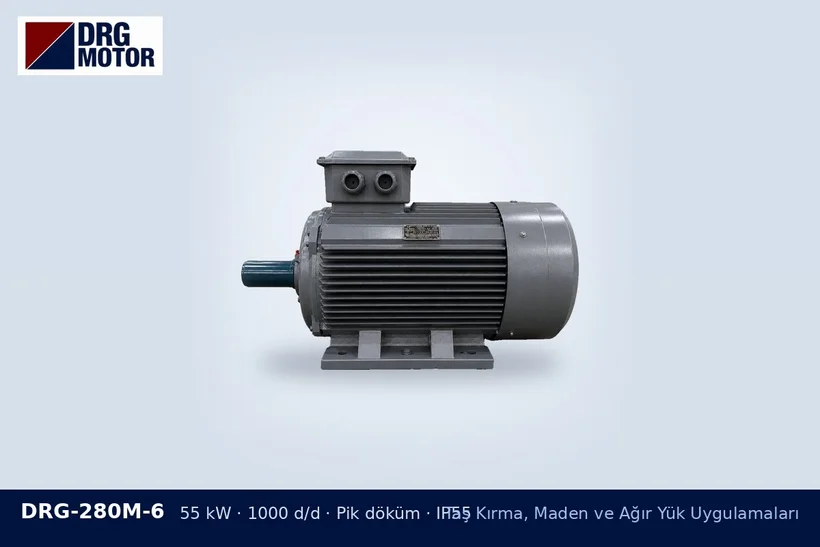
Machines in order of material flow
- Feed hopper and feeder (vibrating, apron or belt)
- Scalping screen or grizzly
- Primary crusher (usually jaw or impact)
- Intermediate conveyors and surge pile
- Secondary crusher (cone or impact)
- Vibrating screens
- Tertiary crusher or vertical shaft impactor (if sand is produced)
- Sand washing, dewatering and water pumps
- Product and stockpile conveyors
- Auxiliaries such as dust collection fan, compressor and lubrication units
Columns to add to each line
| Information | Why it is needed |
|---|---|
| kW recommended by the machine builder | It is the starting point for power selection |
| Speed and drive (belt, coupling, gearbox) | Determines the number of poles and the pulley arrangement |
| Mounting type and frame | The base and support frame are prepared accordingly |
| Is there a start under load? | Affects the starting method and panel size |
Points often missed when preparing the list
Standby equipment, space reserved for a screen or conveyor to be added later, and the transformer capacity on site are often forgotten. It should also be noted that the motors will be started in sequence rather than all at once, because starting currents influence the choice of transformer and generator. Screens and feeders driven by vibrating motors form a separate product group and may fall outside DRG’s standard three-phase IEC range.
For machine-by-machine explanations you can go from the stone crushing plant motors page to the relevant machine, and match the items whose power and speed are settled in the online motor shop.