 English
 Le français
 Türkçe

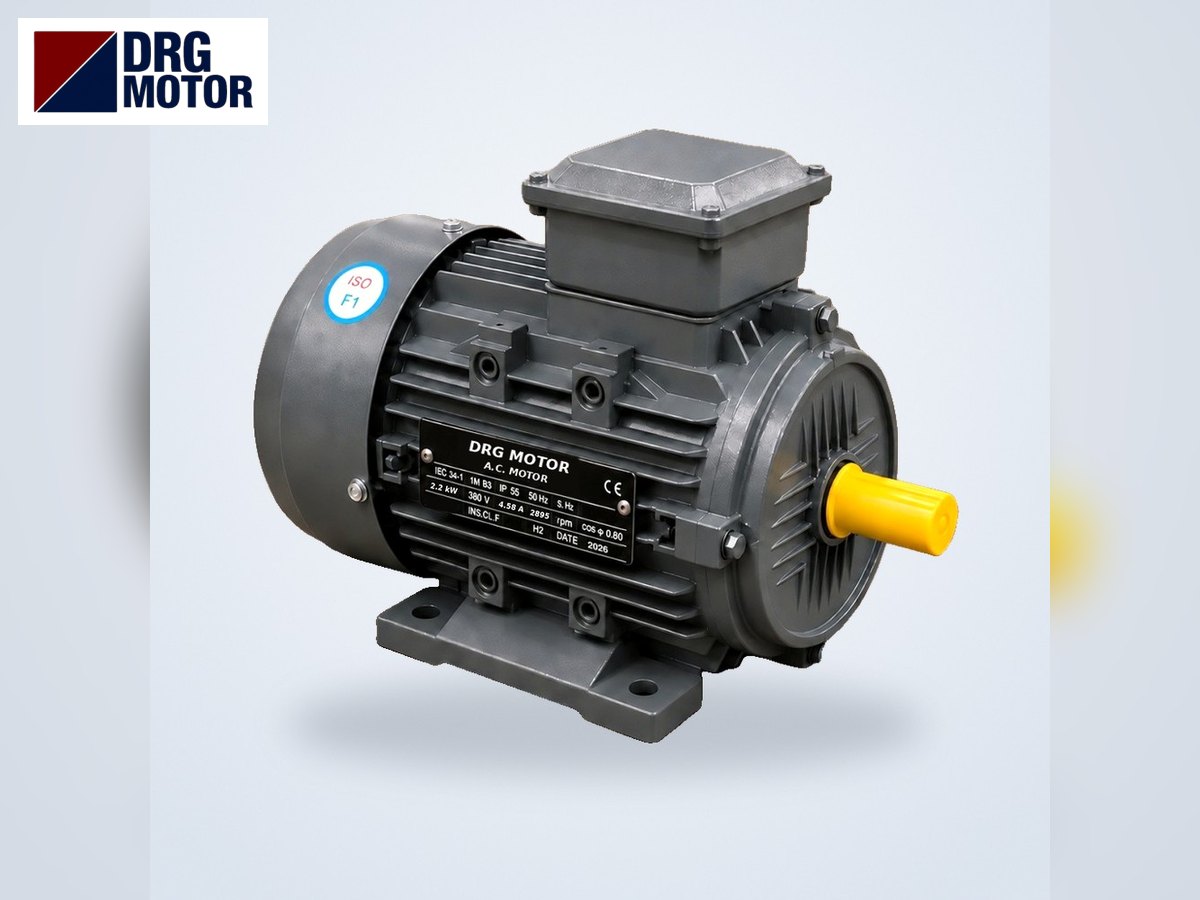
In a bread or pastry oven the motor does not make heat; the burner or the heating elements do. The motor’s job is to move hot air through the baking chamber, turn the dough rack in a rack oven, pull the belt in a tunnel oven, push combustion air into the burner and clear steam from the hood. This page covers those motors in industrial bread, flatbread and pastry ovens and shows where a standard aluminium-housing motor can be fitted.
DRG Motor is a manufacturer, supplier and seller of electric motors. We do not sell ovens, fan impellers, burners, gearboxes, compact motor-and-gear units or inverters; our role is the standard three-phase induction motor. For the models in this series see the Aluminium Housing Electric Motors page; every model on this page has an aluminium housing.
Which part of the oven does the motor drive?
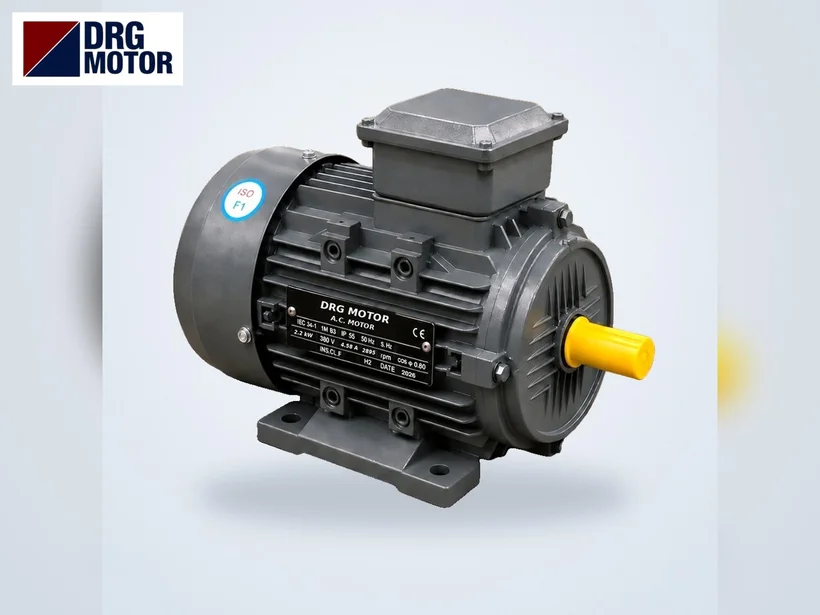
Circulation fan: the core of convection and rack ovens
In convection and rack ovens the radial impeller sits on the back or side wall of the baking chamber while the motor stays outside the insulated wall. Because the impeller is in the hot zone and the motor on the cool side, a long shaft joins them. That shaft is either the motor’s own extended shaft or an intermediate shaft running in its own bearing housing and coupled to the motor. A heat barrier and a small cooling wheel on the shaft slow the flow of heat from the hot impeller to the motor bearing.
Rack rotation in a rack oven
The dough rack hangs on a hook in the oven ceiling or stands on a turntable and turns at a few revolutions per minute. This is usually done by a small unit in which motor and gear unit share one housing; a slip clutch or friction coupling protects it if the rack jams. A standard IEC motor does not substitute for that one-piece unit; its replacement is taken from the oven maker’s documentation.
Belt drive in tunnel ovens
In a mesh-belt or stone-plate tunnel oven, belt speed sets the baking time. The belt is pulled by a gearbox and motor on the drum at one end, with speed set by an inverter; long ovens may have two drives. This motor sits at the drum end outside the oven, away from the hot zone.
Burner fan, steam extractor and hood
In gas and oil-fired ovens the burner’s own fan supplies combustion air; it comes with the burner and is single-phase on small burners. The steam extractor in the hood above the door clears the chamber when the door opens. Large tunnel ovens add separately motorised flue and exhaust fans.
How many kW are oven motors? Values from maker catalogues
A) Motor powers published by oven and burner makers:
| Oven / section | Motor power | Quantity / layout | Note |
|---|---|---|---|
| Rack oven, small (one rack) | 0.75 kW fan · 0.09 kW rotation | one motor each | 1400 / 1350 rpm, 230/400 V |
| Rack oven, medium | 1.5 kW fan · 0.18 kW rotation | one motor each | same catalogue |
| Rack oven, large | 2.2 kW fan · 0.25 kW rotation | one motor each | same catalogue, four models |
| Rack oven steam extractor | 0.37–0.55 kW | 1 on the hood | 1380 rpm |
| Convection oven fan | 0.37 kW | 1, two-speed | two separate data sheets |
| Rack oven gas burner | 0.13–0.25 kW electrical power | 1, single-phase 230 V | one-stage burner series |
| Belt tunnel oven, small | 0.75 kW belt drive | 1 | 3 m long, 24 kW heater |
| Belt tunnel oven, medium | 1.5 kW belt · 3 kW fan · 2.2 kW exhaust | three motors | food tunnel oven data sheet |
In rack ovens the fan grows from 0.75 kW to 2.2 kW with rack size, while the rotation motor stays at 0.25 kW or less. In tunnel ovens the belt motor grows with oven length and belt load; on large lines it is chosen from the machine data. Heater and burner thermal output (kW) is not motor power; those heat values only show the size of the oven.
B) Overlap with the DRG aluminium range: oven duties from 0.37 to 3 kW (circulation fans, steam extractors, tunnel belts, exhaust) are covered by aluminium frames 71–100. Outside our range: rack rotation motors below 0.25 kW and one-piece motor-gear units, single-phase burner fan motors, two-speed fan motors and special oven motors built together with the impeller. All oven motors stay below 11 kW, so no cast iron model is needed on this page.
Where should the motor sit on a hot oven?
Motor outside the hot volume
The catalogue ambient range is −15…+40 °C. A standard motor is not run inside the baking chamber or the hot air duct; it sits on the oven roof or at the back, in a compartment cooled by outside air. A closed, unventilated compartment above the oven easily exceeds that limit; then an air inlet is opened or the motor is moved off the oven. Shaft heat and cold-start calculations are covered on our High Temperature Fan Motors page, and a similar layout for drying ovens in our article on the drying oven circulation fan.
First start in a cold oven
In cold, dense air the fan draws more power than in a hot oven. If the thermal relay trips at the first start in the morning, the motor is not too small; the cold air load is high, and inverter ovens limit the top frequency while cold. Two-speed fan motors are used for the same reason; they are not in our range, but speed can be set with an inverter.
Click to see current electric motor prices and order nowSEE PRICES →
The real benefit of a light housing on an oven
A motor hanging on the oven roof
On most ovens the circulation fan motor hangs by its flange on the oven body or on a support bridge. A light housing puts less load on the support sheet, and one person can change the motor in the tight space on the roof. In frames 71–100 the aluminium housing is common, and its flange and shaft dimensions follow the same IEC standard as the cast iron equivalent.
When is cast iron preferred?
Oven motors do not see heavy impact or hard vibration; an unbalanced or damaged impeller will still shake the motor. In that case the impeller is rebalanced rather than the housing material changed. Heavy-duty machines outside the oven, such as flour silos and dough mixers, may suit a cast iron housing better.
Mounting, shaft and connection: what is checked?
Flange, shaft and speed
Circulation fans are mostly 4-pole; catalogue values are around 1400 rpm. The new motor must have the same pole count as the old one, otherwise airflow and baking balance change. An impeller mounted straight on the motor shaft needs the same diameter, length and key as before; if a special extended shaft is needed, a standard motor can only be used with an intermediate shaft and coupling. With a flange connection, B5 flange dimensions are compared.
Moisture, cleaning and IP55
DRG motors are IP55, protected against flour dust and low-pressure water jets. The area around the oven must not be cleaned with high-pressure water or steam, and the motor must never be submerged. The steam extractor motor meets humid air: keep it outside the duct, point its terminal box downward and leave the housing drain hole clear. Flour dust that clogs the fan cover makes the motor run hot; the cover is cleaned regularly.
Gearbox and starting
Tunnel oven belts and rack rotation run slowly, so the motor is coupled to a gearbox, which we do not supply. For drives with a separate gearbox, the motor is selected with the flange and shaft information on our Electric Motors for Gearboxes page. The belt motor starts with a loaded belt; inverter ramp and starting torque are set for that load. An inclined loader that has to be locked by a brake at standstill calls for a brake motor; we do not offer one.
Worked example: motor current of two rack ovens
Assumption: per oven, a 2.2 kW circulation fan, a 0.37 kW steam extractor and a 0.25 kW rack rotation motor on a separate gearbox. Currents come from the product records:
| Duty | DRG model | Current 400 V | Note |
|---|---|---|---|
| Circulation fan 2.2 kW | DRG-100L1-4 | 4.52 A | about 34.4 A at start (7.6×) |
| Steam extractor 0.37 kW | DRG-712-4 | 0.92 A | on the hood |
| Rack rotation 0.25 kW | DRG-711-4 | 0.66 A | only with a separate gearbox |
| One oven in total | — | 6.1 A | — |
| Two ovens together | — | 12.2 A | — |
One oven’s motors draw about 6.1 A, two ovens together 12.2 A. Started direct on line, the fan motor briefly reaches 7.6 times its rated current; combined with the long start in a cold oven, this calls for a correct thermal relay setting. The three motors are wound for 230/400 V and therefore run in star on 400 V. Heater or burner current is not part of this calculation.
Information needed to replace an oven motor
- Oven type: rack, convection, deck or tunnel; rack size for rack ovens
- Motor duty: circulation fan, rack rotation, belt, steam extractor or exhaust
- Plate photo of the old motor and any two-speed winding details
- Impeller position (motor shaft or its own bearing shaft) plus shaft diameter, length and key
- Flange size or foot hole spacing, and the motor’s position on the oven
- Compartment temperature, daily operating hours and switching frequency
Aluminium DRG motors for bread and pastry ovens
Aluminium-housing models suggested for fan, extractor and belt duties:
| Model | Power / rated speed | Frame · shaft D×E | Current 400 V · torque |
|---|---|---|---|
| DRG-712-4 | 0.37 kW / 1340 rpm (synchronous 1500) | 71 aluminium · 14×30 | 0.92 A · 2.64 Nm |
| DRG-801-4 | 0.55 kW / 1400 rpm (synchronous 1500) | 80 aluminium · 19×40 | 1.31 A · 3.75 Nm |
| DRG-802-4 | 0.75 kW / 1420 rpm (synchronous 1500) | 80 aluminium · 19×40 | 1.75 A · 5.04 Nm |
| DRG-90L-4 | 1.5 kW / 1445 rpm (synchronous 1500) | 90L aluminium · 24×50 | 3.3 A · 9.91 Nm |
| DRG-100L1-4 | 2.2 kW / 1450 rpm (synchronous 1500) | 100L aluminium · 28×60 | 4.52 A · 14.5 Nm |
| DRG-90L-2 | 2.2 kW / 2895 rpm (synchronous 3000) | 90L aluminium · 24×50 | 4.35 A · 7.26 Nm |
| DRG-100L2-4 | 3 kW / 1450 rpm (synchronous 1500) | 100L aluminium · 28×60 | 6.02 A · 19.8 Nm |
DRG-90L-2 is for 2-pole fans such as exhaust and flue fans; it does not replace a 4-pole circulation fan motor. Other oven classes have their own pages, Rotary Kiln Drive Motors and Ceramic Roller Kiln Motors: those cover cement and ceramic kilns, not bread ovens.
Live price table
The prices below are for the aluminium versions and come live from the shop:
| Model | Power / speed | Frame · current 400 V | Price |
|---|---|---|---|
| DRG-712-40.5 HP | 0.37 kW · 1500 rpm | Aluminium 71 · 0.92 A | $76.76 (€68.55) Details & buy → |
| DRG-801-40.75 HP | 0.55 kW · 1500 rpm | Aluminium 80 · 1.31 A | $87.55 (€78.19) Details & buy → |
| DRG-802-41 HP | 0.75 kW · 1500 rpm | Aluminium 80 · 1.75 A | $97.30 (€86.90) Details & buy → |
| DRG-90L-42 HP | 1.5 kW · 1500 rpm | Aluminium 90L · 3.3 A | $137.59 (€122.88) Details & buy → |
| DRG-100L1-43 HP | 2.2 kW · 1500 rpm | Aluminium 100L · 4.52 A | $179.76 (€160.54) Details & buy → |
| DRG-90L-23 HP | 2.2 kW · 3000 rpm | Aluminium 90L · 4.35 A | $147.43 (€131.66) Details & buy → |
| DRG-100L2-44 HP | 3 kW · 1500 rpm | Aluminium 100L · 6.02 A | $194.58 (€173.77) Details & buy → |
DRG MOTOR motors are guaranteed against material and manufacturing defects for 2 years from the delivery date (warranty certificate).
Motors in this power range
- DRG-802-4 – 0.75 kW – 1420 rpm – 80 aluminium
- DRG-90L-4 – 1.5 kW – 1445 rpm – 90L aluminium
- DRG-100L1-4 – 2.2 kW – 1450 rpm – 100L aluminium
- DRG-100L2-4 – 3 kW – 1450 rpm – 100L aluminium
Click to see current prices and order these motors nowSEE PRICES →
Browse the products, ask for a quote: every model is listed on Buy Electric Motors Online. Write the oven type and the motor’s duty and send the plate photo through WhatsApp; we will check the impeller connection and flange with you. Phone: +90 (542) 666 11 11.
Frequently asked questions
Can a standard motor replace a burnt rack oven fan motor?
Yes if the impeller runs in a separate bearing housing coupled to the motor; kW, speed and flange are then matched. If the impeller sits directly on a long special motor shaft, the standard shaft is too short; either an intermediate shaft is added or the maker’s motor is used.
How hot can it get around the motor on the oven roof?
The catalogue ambient limit is +40 °C. If the air around the motor is hotter, the compartment needs ventilation; the motor is never placed in the hot air duct or the baking chamber.
Can I buy a three-phase motor for the burner fan?
On small oven burners the fan motor is usually a single-phase motor built into the burner and sold as the burner maker’s spare part. Single-phase motors are outside our range; on large burners with a separate three-phase fan motor, it is matched by its plate values.
Does a pastry oven need a two-speed motor to change fan speed?
No. An inverter does the same job, and a standard single-speed motor can run on one. The inverter comes from the oven maker or an automation supplier.
Contact us: +90 (542) 666 11 11 · info@drgmotor.com · contact.


