 English
 Le français
 Türkçe

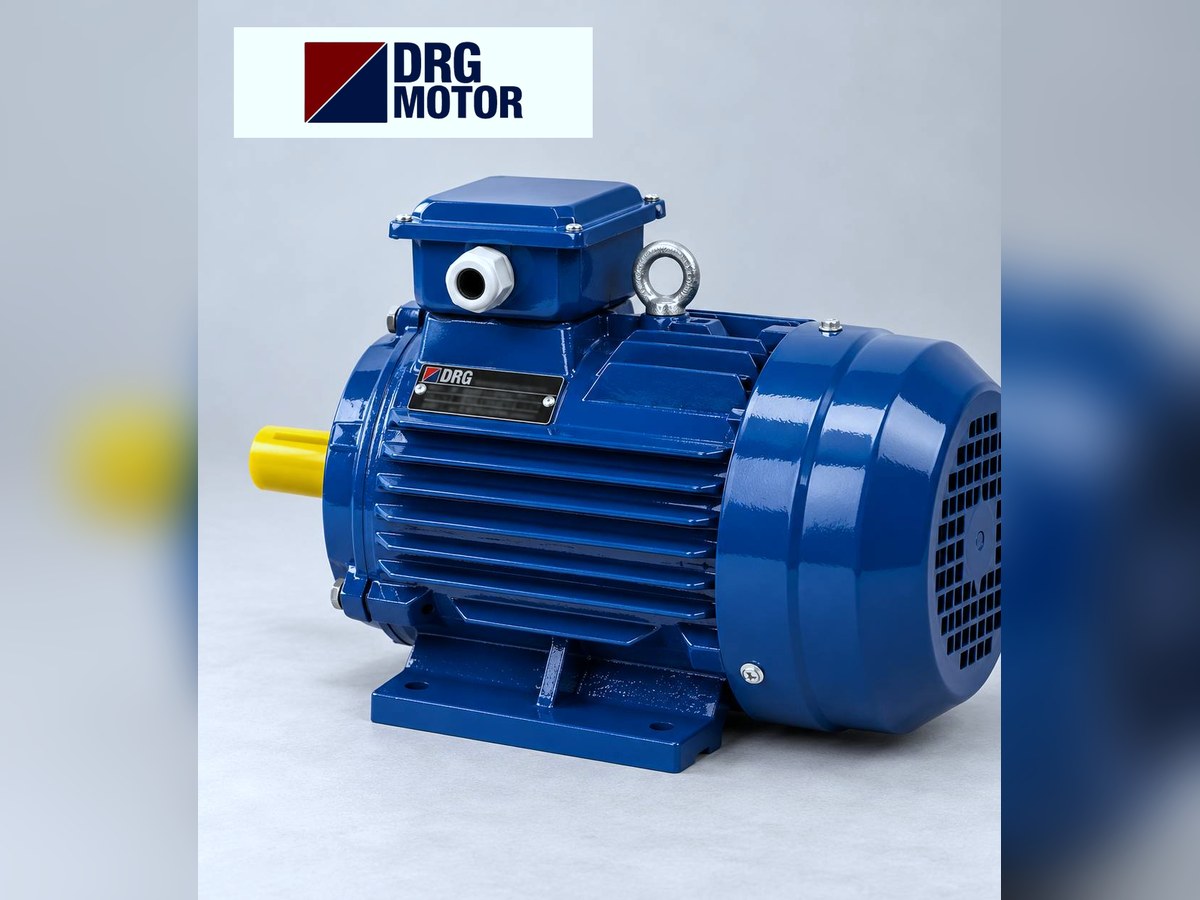
On a marble resin line the slab is first dried, then cracks and pores on the surface are filled with resin or epoxy, a mesh is glued to the back where needed, and the resin is cured in an oven. Electric motors on this line drive the conveyors carrying the slabs, the fans circulating hot air through the oven, resin mixers and metering pumps, and the vacuum pump if there is one. Maker data sheets show 2.2–5.5 kW motors on oven fans and 0.75–1.1 kW on conveyor drives.
Where this page stops: DRG Motor is a manufacturer, supplier and seller of electric motors. We do not sell resin lines, ovens, heaters or burners, fan impellers, vacuum pumps, metering machines, gearboxes, hydraulic units or drives (inverters); nor do we offer spindles or servo motors. The three-phase motors that turn this equipment are on Buy Electric Motors Online.
Where do motors work on a resin and epoxy line?
A line usually runs in this order: loading, preheating or drying, resin application and mesh laying, curing (polymerisation) oven, cooling and unloading. Most of the installed power goes into heating; the motors take a smaller share, yet the flow of the line depends on them. If one fan motor stops, temperature layers form inside the oven and the resin no longer cures the same way on every slab.
Conveyor, roller table and chain carrier
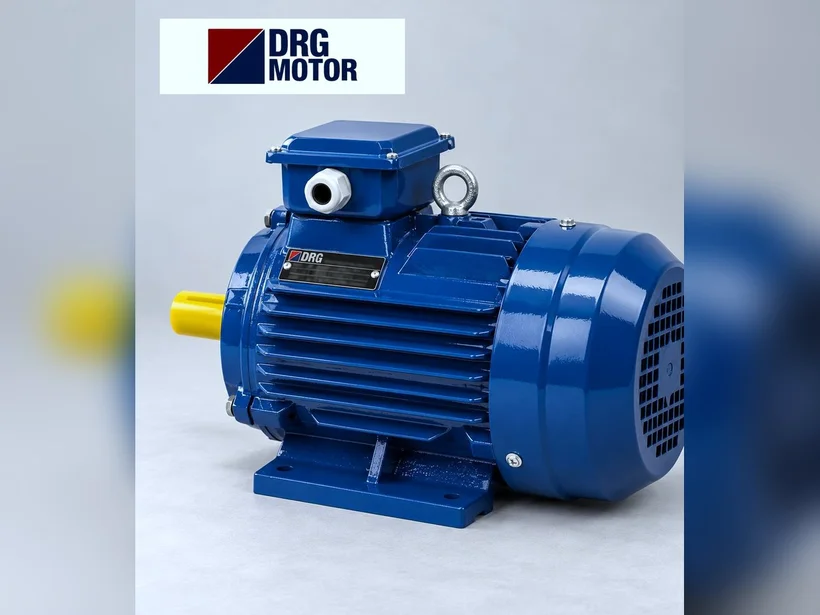
Slabs move on roller tables, chain carriers or, in tower ovens, shelf lifts. These drives are slow; data sheets mention feed speeds such as 0.3–1.8 m/min. The motor works with a gearbox and the speed is mostly set by an inverter. The key point is that at low speed the motor’s own fan cools less; for a motor that will run at very low frequency for long periods, load and temperature should be discussed with the line builder.
Resin mixer and metering pumps
Two-component epoxy and hardener are mixed at a set ratio by gear or piston metering pumps. These pumps and the mixer run on small motors; accuracy comes from the pump and the controls, not from the motor. We could not find a reliable general power range for this group, so it is selected from application data. Needed: the kW and speed the pump or mixer maker asks for, the mounting form and whether speed is adjusted.
Mesh laying and vacuum unit
Mesh is laid by hand on most lines, or with a small carrier. The vacuum unit helps resin enter deep cracks; on some lines slabs go into a vacuum chamber after the resin is applied. The vacuum pump motor is selected from the flow and ultimate vacuum given by the pump maker. We do not sell the pump itself; with the kW, speed and flange data on its label we can match a suitable motor.
Drying oven: circulation fans and the hot environment rule
The pre-drying oven removes moisture from the slab; trade publications mention 50–62 °C for this step and around 80 °C for curing. Fans move the hot air along the shelves or over the slab surface. Maker data sheets show three 2.2 kW heat distribution fans on one oven and two 5.5 kW circulation fans on another through-type oven.
The motor stays outside the oven and is chosen with the ambient temperature stated
On oven fans the motor is mounted outside, on the cool side of the casing wall; the impeller is inside, the motor outside, and the shaft passes through a bearing in the wall. Do not place standard DRG motors inside the oven or in the hot air stream; special insulation or temperature classes for high ambient temperatures are not offered as a product in our range. When selecting, tell us the ambient temperature where the motor sits: a motor on the oven roof works in hotter air than one at floor level. If it is high, ventilation, moving the motor, or a cooling disc and longer distance between shaft and motor are assessed with the fan maker.
Heat coming through the shaft and flange
The fan shaft comes from the hot zone and conducts heat towards the motor bearing. That is why fan makers fit a cooling wheel or a bearing-supported intermediate shaft between motor and impeller on hot gas fans. If your fan has this part, leave it in place when the motor is replaced; flanging the motor straight onto a hot casing degrades the bearing grease quickly.
Click to see current electric motor prices and order nowSEE PRICES →
Fan motor power: hot air versus cold air
A fan is designed for hot air, yet the oven starts cold every morning. Cold air is denser, so the same fan at the same speed draws more power. By the fan laws power changes in direct proportion to density, and density is inversely proportional to absolute temperature. Oven fan figures can be checked with our online power tool for fans.
Example: a 9000 m³/h circulation fan
Assumptions: the fan gives 800 Pa at 9000 m³/h, fan efficiency 0.65, working temperature 80 °C, first start at 20 °C:
| Step | Operation | Result | Meaning |
|---|---|---|---|
| 1 | 9000 / 3600 | 2.5 m³/s | fan flow |
| 2 | 2.5 × 800 / 0.65 | 3.08 kW | fan shaft power in hot air at 80 °C |
| 3 | (273 + 80) / (273 + 20) | 1.20 | density ratio of cold air |
| 4 | 3.08 × 1.20 | 3.71 kW | power at first start with a cold oven |
| 5 | next standard size | 4 kW | DRG-112M-4, 26.3 Nm |
Judged on hot air alone, 3 kW would look enough; the cold start needs 3.71 kW, so 4 kW is chosen. The other route is to hold the fan at low speed with an inverter until the oven warms up; that decision belongs to whoever designs the oven controls.
Preheating and cooling sections
Preheating
On some lines the slab passes through a short preheating tunnel just before resin application. Fans carry the hot air here as well and the motor stays outside the tunnel. Because the tunnel is short, the fans are usually smaller than those in the drying oven; power is read from the fan data sheet.
Cooling
Cured slabs are cooled with room air before unloading. Fans in the cooling section blow air at ambient temperature; if the motor is not near the hot zone, a standard IP55 motor is used without difficulty. Impeller and duct design belong to the fan maker; our responsibility is the motor’s kW, speed and mounting dimensions.
Power ranges: what the maker sheets show
A) Values given in drying oven and epoxy line data sheets:
| Section / equipment | Motor power | Single / total | Note |
|---|---|---|---|
| Drying oven, heat distribution fan | 3 × 2.2 kW | Total 6.6 kW | maker data sheet; oven set at 50–350 °C |
| Conveyor of the same oven | 0.75 kW | Single motor | same sheet |
| Through-type drying oven, circulation fan | 2 × 5.5 kW | Total 11 kW | second maker; 14,000 m³/h of air |
| Chain feed drive of the same oven | 1.1 kW | Single motor | same sheet; 12.15 kW installed in total |
| Fully automatic epoxy line (oven towers included) | 108–530 kW | Line total | three different makers; mostly heating |
According to the maker sheets, a single motor on this kind of line is roughly 2.2–5.5 kW on oven fans and 0.75–1.1 kW on conveyor and chain drives. The 108–530 kW quoted as line totals is not motor power; electric heaters, fans, robots and every auxiliary are included. As the number of oven levels and slabs per hour rises, both the number of fans and the heating power rise.
B) Where DRG fits: every fan and conveyor motor in the 0.75–5.5 kW band is covered by our 2- and 4-pole aluminium or cast iron frame motors. Heaters, burners and motors placed inside the oven are outside our scope. For general information on fan duties, see our Fan Motors page.
Checklist for a motor replacement
- The motor’s job on the line: oven fan, preheating fan, cooling fan, conveyor, metering or vacuum.
- kW, speed, voltage and connection on the old nameplate.
- Ambient temperature where the motor sits and its distance from the oven wall.
- Mounting type: on fans often B5 or B35 flange, on conveyors a flange to suit the gearbox.
- Shaft diameter, key and flange spigot size.
- Whether it runs on an inverter and the lowest operating frequency.
These are verified against the machine and fan makers’ documents; we give no firm guarantee of fit.
DRG motors: options for fans and conveyors
4-pole motors in the power band of resin and epoxy lines (current at 400 V):
| Model | Power / speed | Frame · shaft D×E | Current 400 V |
|---|---|---|---|
| DRG-802-4 | 0.75 kW / 1420 rpm | 80 cast iron · 19×40 | 1.75 A |
| DRG-90L-4 | 1.5 kW / 1445 rpm | 90L cast iron · 24×50 | 3.3 A |
| DRG-100L1-4 | 2.2 kW / 1450 rpm | 100L cast iron · 28×60 | 4.52 A |
| DRG-112M-4 | 4 kW / 1450 rpm | 112M cast iron · 28×60 | 7.95 A |
| DRG-132S-4 | 5.5 kW / 1460 rpm | 132S cast iron · 38×80 | 10.7 A |
Our aluminium frame range is 0.25–11 kW and our cast iron range 0.55–355 kW, with 2-, 4- and 6-pole (3000/1500/1000 rpm) options; there is no 8-pole motor. Feet, flanges and their vertical versions are all available: B3, B5, B14, B34, B35, V1, V3, V5 and V6. If the fan hangs vertically from the roof, say so in the order, and let the fan maker approve the axial force the impeller puts on the motor bearing.
Live price table
Prices of our motors in oven fan and conveyor sizes come live from the shop:
| Model | Power / speed | Frame · current 400 V | Price |
|---|---|---|---|
| DRG-802-41 HP | 0.75 kW · 1500 rpm | Cast iron 80 · 1.75 A | $101.93 (€91.03) Details & buy → |
| DRG-90S-41.5 HP | 1.1 kW · 1500 rpm | Cast iron 90S · 2.48 A | $124.09 (€110.82) Details & buy → |
| DRG-90L-42 HP | 1.5 kW · 1500 rpm | Cast iron 90L · 3.3 A | $144.14 (€128.73) Details & buy → |
| DRG-100L1-43 HP | 2.2 kW · 1500 rpm | Cast iron 100L · 4.52 A | $188.32 (€168.18) Details & buy → |
| DRG-100L2-44 HP | 3 kW · 1500 rpm | Cast iron 100L · 6.02 A | $203.84 (€182.05) Details & buy → |
| DRG-112M-45.5 HP | 4 kW · 1500 rpm | Cast iron 112M · 7.95 A | $254.38 (€227.18) Details & buy → |
| DRG-112M-25.5 HP | 4 kW · 3000 rpm | Cast iron 112M · 7.45 A | $225.65 (€201.52) Details & buy → |
| DRG-132S-47.5 HP | 5.5 kW · 1500 rpm | Cast iron 132S · 10.7 A | $342.01 (€305.44) Details & buy → |
DRG MOTOR motors are guaranteed against material and manufacturing defects for 2 years from the delivery date (warranty certificate).
Motors in this power range
- DRG-90S-4 – 1.1 kW – 1445 rpm – 90S cast iron
- DRG-100L1-4 – 2.2 kW – 1450 rpm – 100L cast iron
- DRG-100L2-4 – 3 kW – 1450 rpm – 100L cast iron
- DRG-112M-4 – 4 kW – 1450 rpm – 112M cast iron
- DRG-112M-2 – 4 kW – 2905 rpm – 112M cast iron
Click to see current prices and order these motors nowSEE PRICES →
Browse the products, ask for a quote: for a fan or conveyor motor on your epoxy line, look through Buy Electric Motors Online. Send the nameplate and a photo of where the motor sits via WhatsApp or call +90 (542) 666 11 11.
Frequently asked questions
Can a marble drying oven motor go inside the oven?
Not with our standard motors. The motor must stay outside the oven with the fan shaft passing through the wall. Tell us the ambient temperature at the motor; the selection is made on that basis.
Why does an epoxy line electric motor trip in the morning?
In cold air the fan draws more power. If the motor was sized at the limit for hot air, current rises at the first start. Check the cold start power as in the example above.
2-pole or 4-pole for a marble resin line motor?
It depends on the design speed of the fan impeller, shown on its label or in the fan data sheet. On the conveyor side a 4-pole motor with a gearbox is common.
Questions on oven fan or line motors are welcome at +90 (542) 666 11 11, by mail to info@drgmotor.com or via the contact page. All motor options for resin, epoxy and drying lines are on Buy Electric Motors Online.


