 English
 Le français
 Türkçe

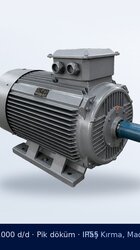
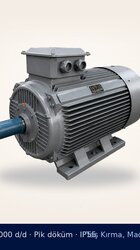
The crusher itself does not dictate the motor speed; the target flywheel speed is reached through the pulley ratio. This means both 1000 and 1500 rpm motors can be used on most crushers. The decision depends on whether the pulley diameters fit, whether the motor frame sits on the base, and whether the existing arrangement is to be kept.
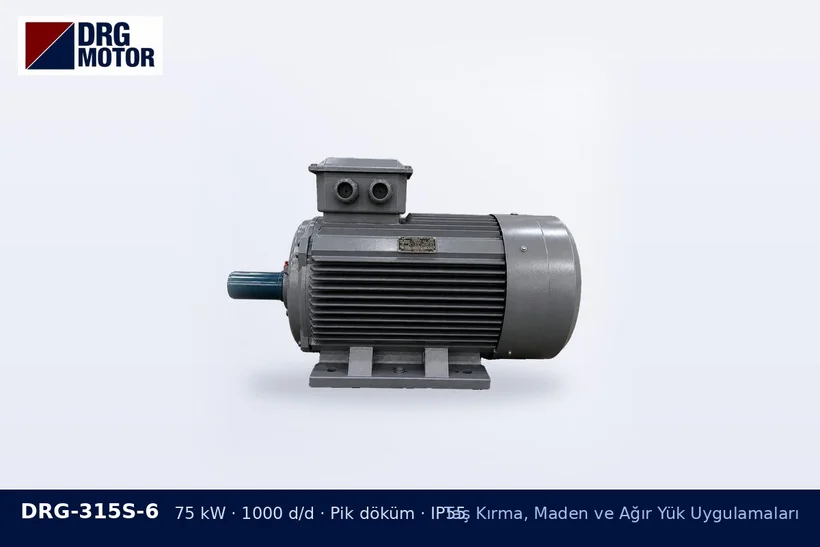
Two different pulleys for the same flywheel
Take a jaw crusher with a 1000 mm flywheel and a target speed of 250 rpm. With a 4-pole motor running at about 1480 rpm under load, the motor pulley required is 250 × 1000 / 1480 ≈ 169 mm. With a 6-pole motor running at about 985 rpm, this rises to ≈ 254 mm. Belt speed does not change in either case because it is set by the flywheel circumference; what changes is the size of the pulley on the motor side.
Differences that affect the choice
| Item | 1500 rpm (4-pole) | 1000 rpm (6-pole) |
|---|---|---|
| Rated torque at the same kW | Lower | About 1.5 times |
| IEC frame at 75 kW | 280S | 315S |
| Motor pulley | Small; check the minimum pulley diameter | Large; better belt wrap |
| Weight and space | More compact | Heavier, larger base |
The torque difference does not give the crusher more power; the power is the same. The difference is that the motor shaft transmits the same power at a lower speed with higher torque.
Keeping the existing arrangement on replacement
When replacing the motor on an installed crusher, the safest route is to choose the same speed as the old motor and keep the pulley ratio and base holes. If the speed is to be changed, the new pulley diameter should be checked with the pulley and belt calculator, and belt length and tensioning allowance should be reviewed too. For crusher motors of 75 kW and above, DRG provides a service factor of 1.15; this margin applies to both speed options.
Options by application can be reviewed on the jaw crusher motor page and in the three-phase motor list with cast iron frames.