 English
 Le français
 Türkçe

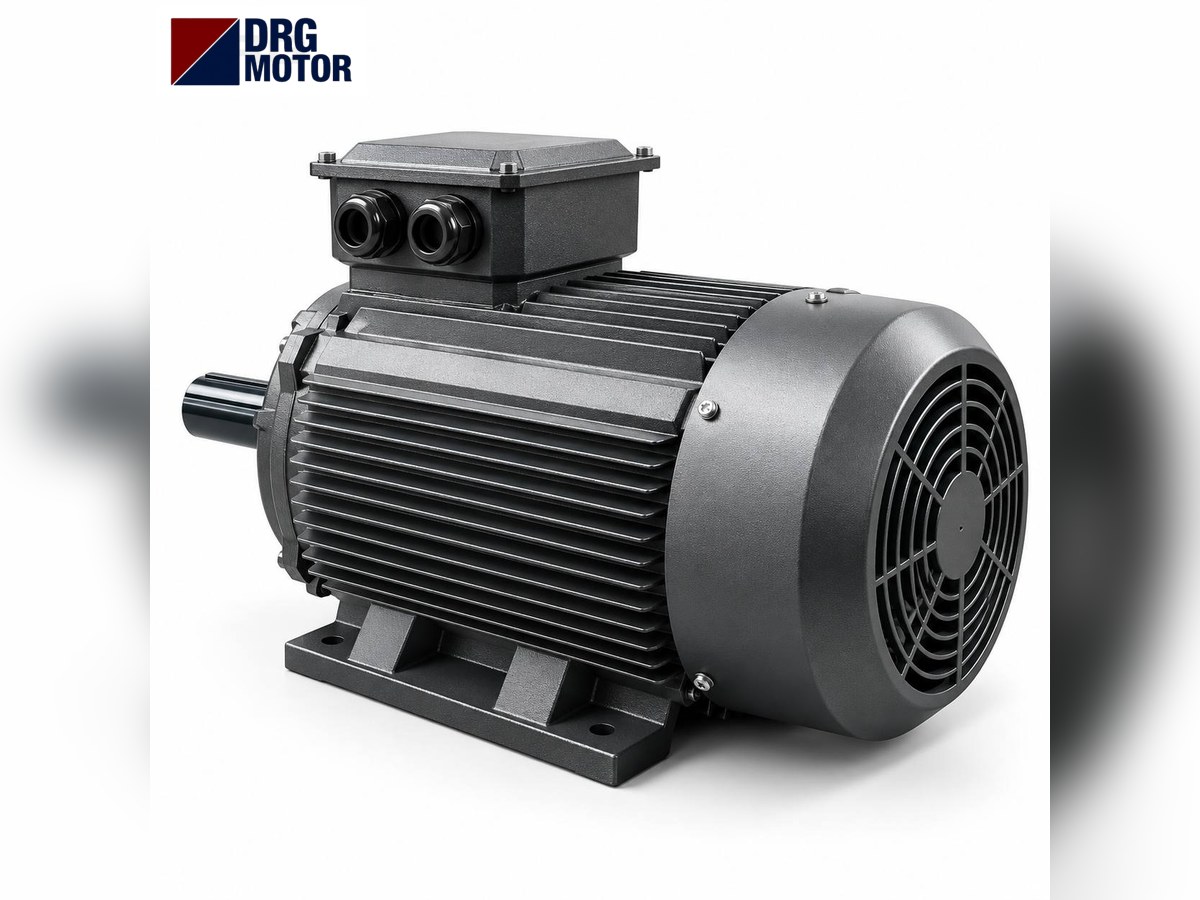
A flour mill aspiration and fan motor is a three-phase induction motor that drives the central aspiration fan pulling flour dust from the machines, the high-pressure pneumatic fan lifting intermediate products from the roller mills to cyclones on the upper floor, and the rotary lobe blower pushing flour and bran into silos. Milling machinery catalogues show 4–45 kW motors for aspirators and aspiration fans and 15–132 kW for pneumatic conveying fans. Most of a mill's motors sit on conveying and sifting machines, but these few fans draw a large share of the electricity.
The mill's project engineer selects the fan, its curve and the duct network; the motor supplier's job is to provide a motor that matches the shaft power, speed, mounting and environment the fan requires. The technical explanation of fan types and fan motor selection is in the Fan Motors category; this page covers mill-specific use. You can see suitable motors on the Buy Electric Motors Online page.
What jobs does air do in a flour mill?
Air does three separate jobs in a mill, each with a different fan:
- Dust extraction (aspiration): separators, destoners, scourers, elevator boots, screw covers and roller mills are kept under slight vacuum. The dusty air is cleaned in a filter and exhausted.
- Separation: air channels and aspirators in the cleaning section separate husks, straw and light impurities from wheat by air. Purifiers also separate semolina from bran with a controlled air flow.
- Conveying (pneumatic): break and reduction products from the roller passages is drawn up through pipes to the plansifter floor; flour, bran and semolina are blown into silos or a bulk truck.
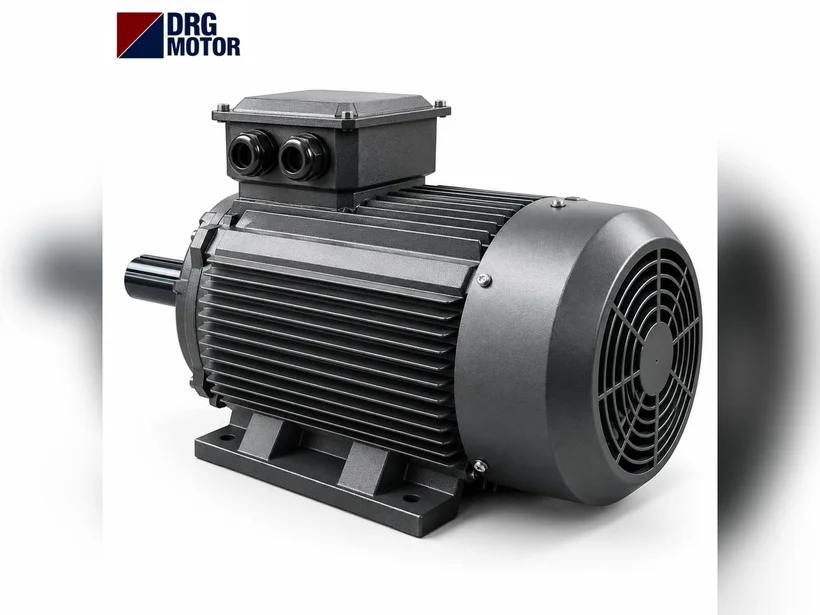
Central aspiration and the jet filter fan
The aspiration network and the fan's role
In central aspiration one fan draws on dozens of suction points at once through a duct network. The fan usually sits on the clean air side of the filter, so the impeller meets filtered air rather than dusty air, and wear is reduced. One milling machinery builder supplies its aspirator range with 4–30 kW motors at 1500 rpm; another builder's low-pressure aspiration fans range from 5.5 to 45 kW.
The jet filter's own motors
Filter bags are cleaned one by one either by a compressed air pulse (pulse jet) or by a suction nozzle on a rotating arm. Small compressed-air types carry their own suction fan on top: one maker's single-cartridge jet filter for mounting on elevators and screws has a 0.75 kW fan motor and a recommended airflow of 300 m³/h. On reverse-air filters with a rotating arm, the geared motor turning the arm is 0.75 kW in a Turkish catalogue. The rotary airlock under the filter returns the collected flour to the line and turns with a separate motor; in one catalogue airlock feed motors range from 0.37 to 1.5 kW.
Pneumatic conveying fan and blower
The high-pressure pneumatic fan
The fan that lifts products from the roller mills to the cyclones carries one of the largest motors in the mill. A Turkish milling machinery builder's pneumatic fan range uses 15–132 kW motors. In one fan manufacturer's mill application, the pneumatic fan runs in a direct drive layout (arrangement 4) with the impeller on the motor shaft, driven by a 2-pole, foot-mounted B3, 400/690 V, 110 kW motor. The manufacturer notes that in this layout the impeller load stays on the motor bearings, which is why special attention was paid to impeller balance. When replacing the motor, check the bearing type, shaft size and flange or foot fixing against the fan maker's drawing.
The drive motor of a rotary lobe (Roots) blower
Positive displacement rotary lobe blowers are used to convey flour over long distances between silos or into bulk trucks. The blower delivers a roughly fixed volume of air per revolution; the power drawn by the motor rises with the pressure difference in the line. One compressor manufacturer's range runs from 7.5 kW to 250 kW motors with pressure differences up to 1000 mbar. On these blowers the motor is usually belt driven and can be replaced separately. In enclosed packages with an integrated drive, replacing the motor depends on the manufacturer's approval. Power and speed sizing for blower motors is covered in our article on Roots blower motor selection.
Click to see current electric motor prices and order nowSEE PRICES →
How many kW is a mill fan motor?
A) Motor powers seen in catalogues
| Fan / equipment | Motor power | Single or total | Note |
|---|---|---|---|
| Dust aspirator, 8 models | 4–30 kW | Single motor, 1500 rpm | Turkish maker catalogue |
| Low-pressure aspiration fan | 5.5–45 kW | Single motor | Turkish maker catalogue |
| Pneumatic conveying fan | 15–132 kW | Single motor | Turkish maker catalogue |
| Mill pneumatic fan | 110 kW, 2-pole | Single motor, direct | Fan maker, application |
| Rotary lobe blower range | 7.5–250 kW | Single motor | Maker product page |
| Small jet filter fan | 0.75 kW | Per filter | Maker product page |
| Rotary airlock | 0.37–1.5 kW | Auxiliary motor | Turkish maker catalogue |
According to manufacturer catalogues, mill aspiration fans use roughly 4–45 kW motors, pneumatic conveying fans 15–132 kW and blowers 7.5–250 kW. Filter and airlock motors are 0.37–1.5 kW auxiliaries; they are not added to the main fan's power but listed on a separate line. The mill's total fan power is the sum of all its fans.
B) What the DRG range covers
DRG Motor is an electric motor manufacturer, supplier and seller. Our range is 0.25–11 kW in aluminium frames and 0.55–355 kW in cast iron, 1000/1500/3000 rpm, 3-phase 230/400 V or 400/690 V; B3, B5, B14 and B35 mounting is specified on the order. All the ranges above, including the largest 250 kW blower motor, fall within it. What the DRG range does not cover: Ex motors for explosive dust zones, a fan maker's special-shaft or special-flange motor (if its dimensions cannot be confirmed) and packaged blowers whose drive is integrated into the motor.
| Model | Power / speed | Frame · current 400 V | Price |
|---|---|---|---|
| DRG-132M-410 HP | 7.5 kW · 1500 rpm | Cast iron 132M · 14.3 A | $394.89 (€352.66) Details & buy → |
| DRG-160M-415 HP | 11 kW · 1500 rpm | Cast iron 160M · 20.4 A | $568.76 (€507.94) Details & buy → |
| DRG-160L-420 HP | 15 kW · 1500 rpm | Cast iron 160L · 27.3 A | $678.13 (€605.61) Details & buy → |
| DRG-180L-430 HP | 22 kW · 1500 rpm | Cast iron 180L · 39.7 A | $919.45 (€821.13) Details & buy → |
| DRG-200L-440 HP | 30 kW · 1500 rpm | Cast iron 200L · 53.8 A | $1,235.00 (€1,102.93) Details & buy → |
| DRG-200L2-250 HP | 37 kW · 3000 rpm | Cast iron 200L · 64 A | $1,484.05 (€1,325.35) Details & buy → |
| DRG-225M-260 HP | 45 kW · 3000 rpm | Cast iron 225M · 76.8 A | $1,761.85 (€1,573.44) Details & buy → |
| DRG-250M-275 HP | 55 kW · 3000 rpm | Cast iron 250M · 93.5 A | $2,180.99 (€1,947.76) Details & buy → |
| DRG-280S-2100 HP | 75 kW · 3000 rpm | Cast iron 280S · 127 A | $2,883.93 (€2,575.53) Details & buy → |
| DRG-315S-2150 HP | 110 kW · 3000 rpm | Cast iron 315S · 185 A | $4,984.85 (€4,451.78) Details & buy → |
How do you estimate pneumatic fan power? An example
A mill energy study published in a trade magazine states that pneumatic fans account for about 20% of a flour mill's electricity use, that installed pneumatic fan power is generally chosen as 10.5 kW per tonne of wheat milled per hour, and that the power drawn is expected to stay below 8 kW per t/h.
Example: take a mill that grinds 240 tonnes of wheat a day, i.e. 10 tonnes an hour.
- Installed pneumatic fan power: 10 × 10.5 = 105 kW. Expected power drawn: below 10 × 8 = 80 kW.
- This power is not on a single fan but split across several fans by passage. Suppose one fan draws 6000 m³/h at a pressure difference of 9000 Pa and the fan efficiency is 0.70: shaft power = 1.667 m³/s × 9000 Pa / 0.70 ≈ 21.4 kW.
- The power a fan draws is proportional to air density. Air at 0 °C is about 11% denser than at 30 °C; on a cold winter start the shaft power rises to about 23.8 kW.
The next standard size is therefore 30 kW. For a direct-coupled 2-pole design, the DRG-200L1-2 (2960 rpm, 52.1 A at 400 V) covers this power. Fan pressure and flow must come from the mill's measured data; the values here were chosen as an example. The pump and fan motor power calculator lets you repeat this with your own fan data.
Flour dust, long running hours and explosion risk
Dust load and fan motor heating
Even when the aspiration fan is on the clean air side, its motor stands on a floor where flour dust is present. Dust sticking to the motor fins impairs cooling, and pneumatic fan motors build up heat because they turn without stopping as long as the mill runs. Routine maintenance should include cleaning the motor fins and fan cowl and monitoring bearing temperature and vibration.
Starting and speed control
A large fan impeller has high inertia and takes a long time to start. Keeping the damper closed during start reduces the motor load. Every DRG motor of 4 kW or more has a 400/690 V winding, which makes star-delta starting possible on a 400 V network. For a comparison see the star-delta starting page. On pneumatic fans, speed control with an inverter keeps the air velocity in the pipes matched to the product flow, cutting energy use and preventing blockages.
Where an Ex motor is required
Flour dust can explode when mixed with air in certain proportions. Filter interiors, cyclones, dirty air ducts and silo tops are classified as explosive dust zones in most plants. The plant's risk assessment then requires an Ex-marked motor. The DRG range has none, so DRG motors are recommended only for fans outside classified areas.
Checklist for choosing a mill fan motor
- The fan's job: aspiration, pneumatic conveying, filter fan or blower. Two fans of the same power can differ in speed and mounting.
- The old motor's nameplate: kW, speed, voltage, current, frame and mounting type.
- Drive layout: is the impeller on the motor shaft, coupled or belt driven? With direct drive, compare shaft diameter, shaft length and bearings with the fan drawing.
- Speed: direct-coupled pneumatic fans are mostly 2-pole, aspiration fans and aspirators 4-pole. A motor of different speed changes the fan's flow and pressure.
- Zone classification: is the motor's location an explosive dust zone? If so, an Ex motor is required.
- Starting and panel: star-delta, soft starter or inverter; set the overload relay to the new motor's nameplate current.
DRG motor options for mill fans
The table shows a selection of 4-pole cast iron models seen on aspiration fans and 2-pole models seen on pneumatic fans:
| Model | Power / speed | Frame | Current 400 V |
|---|---|---|---|
| DRG-160M-4 | 11 kW / 1465 rpm | 160M cast iron | 20.4 A |
| DRG-180L-4 | 22 kW / 1470 rpm | 180L cast iron | 39.7 A |
| DRG-200L-4 | 30 kW / 1475 rpm | 200L cast iron | 53.8 A |
| DRG-200L1-2 | 30 kW / 2960 rpm | 200L cast iron | 52.1 A |
| DRG-225M-2 | 45 kW / 2965 rpm | 225M cast iron | 76.8 A |
| DRG-250M-2 | 55 kW / 2970 rpm | 250M cast iron | 93.5 A |
| DRG-280S-2 | 75 kW / 2975 rpm | 280S cast iron | 127 A |
| DRG-315S-2 | 110 kW / 2978 rpm | 315S cast iron | 185 A |
DRG MOTOR motors are guaranteed against material and manufacturing defects for 2 years from the date of delivery (warranty certificate). General information on fans in dusty environments is on the dust collector fan motors page, and on straight-blade fans that carry material on the radial blade fan motors page.
Motors in this power range
- DRG-160L-4 – 15 kW – 1465 rpm – 160L cast iron
- DRG-200L1-2 – 30 kW – 2960 rpm – 200L cast iron
- DRG-200L2-2 – 37 kW – 2960 rpm – 200L cast iron
- DRG-250M-2 – 55 kW – 2970 rpm – 250M cast iron
- DRG-280S-2 – 75 kW – 2975 rpm – 280S cast iron
Click to see current prices and order these motors nowSEE PRICES →
Flour mill fan motor: frequently asked questions
How many kW is a flour mill pneumatic fan?
Milling machinery catalogues show 15–132 kW for pneumatic fans. In a mill grinding 10 tonnes of wheat an hour, the total installed pneumatic fan power is about 105 kW, split across several fans.
Why does a pneumatic fan motor trip its overload so often?
The most common causes are motor fins covered with dust, higher load in cold air, a line whose capacity has changed and a wrong overload setting. The fan's operating point also shifts as pipes block and clear; measure the current and compare it with the nameplate value.
Can a 2-pole motor be fitted to an aspiration fan?
Not if the fan was designed for 4 poles. When the speed doubles, the power the fan draws rises about eightfold and the impeller may not withstand that speed. Speed is chosen from the fan maker's data.
How many amps does a 110 kW pneumatic fan motor draw?
The 2-pole DRG-315S-2 draws 185 A at 400 V. Size cables and switchgear for this current; the motor cable size calculator helps.
Send us the fan's nameplate, the old motor's label and where the fan stands (with its zone classification); we will match a motor to it. Phone +90 (542) 666 11 11, e-mail [email protected], contact page. For all models and current prices, visit Buy Electric Motors Online.


