 English
 Le français
 Türkçe

Because induction motors briefly draw several times their rated current while running up, and if these currents occur at the same moment they add up. The voltage on the common supply line drops noticeably, the main switch or fuse may open, and the weaker motors struggle to run up. Switching the motors in a few seconds apart breaks this peak into pieces.
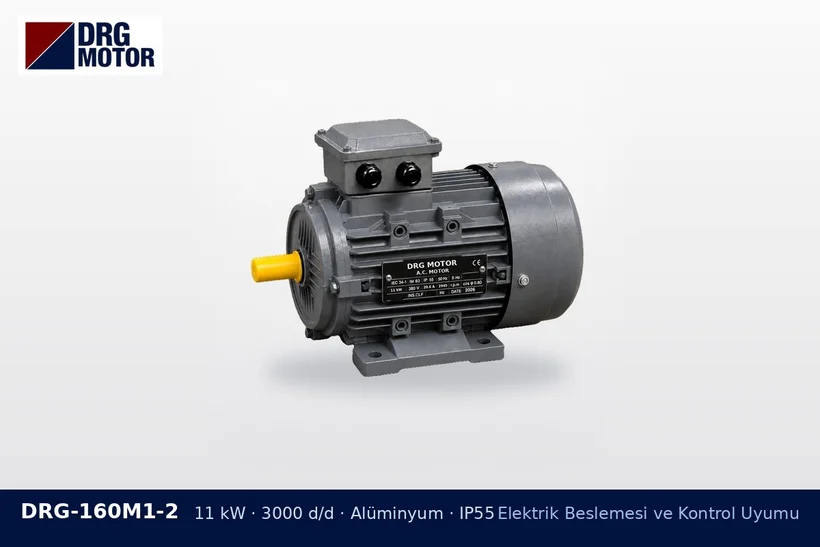
Side effects of simultaneous starting
- Voltage dip: Contactor coils on the same line may drop out, lighting flickers and sensitive control devices restart.
- Prolonged starting: As the voltage falls, the starting torque of each motor decreases; run-up time lengthens and the windings heat up more.
- Main protection tripping: The total current may exceed the threshold of the protective device at the main incomer; the entire line stops.
- Generator or weak transformer: With these sources the effect is much more pronounced.
How is the order determined?
The general approach is to switch on the largest or hardest-starting motor first, while the line is not yet loaded, and then bring in the smaller ones. The process also sets the order: on a conveying line, the belt at the end of the flow is started first and the feeder last, so that material does not pile up on a stationary belt. When stopping, the order is usually reversed.
Who sets it up in practice?
The delays are provided by timer relays, the PLC program or the drives' own start inputs. Times and interlocking logic depend on the motor nameplate, the documentation of the control components and the judgement of qualified electrical personnel. For motors using star-delta, a soft starter or a drive, the starting surge is already small, so the intervals can be shortened.
You can read about the causes of starting current in the article on starting and run-up current. For conveying lines, where sequential operation is most typical, take a look at the belt conveyor motors page.