 English
 Le français
 Türkçe

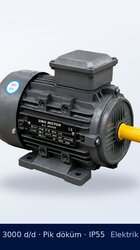
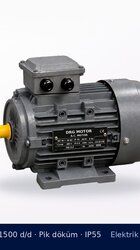
To find out, four layers are examined: the connection capacity in the contract with the local utility, the capacity of the transformer or main supply cable, the site's present peak demand, and the voltage dip the new motor will cause on the line at the moment it starts. If any one of these falls short, the motor either struggles to start or the main protection trips.
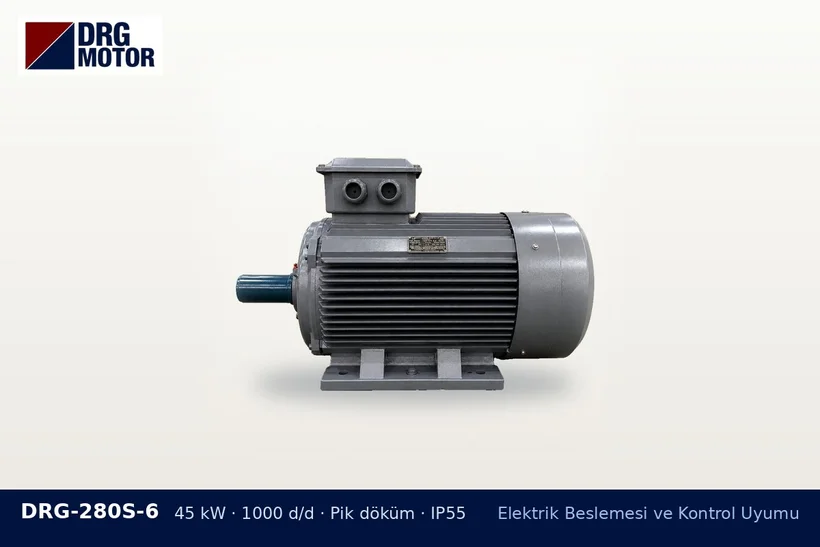
Start by measuring present usage
The electricity bill shows monthly consumption, but not the highest power the site draws at any one time. For that, look at the maximum demand record on the meter, or at an energy analyser connected to the main incomer for a few weeks. The gap between the peak in the busiest shift and the connection capacity gives a rough idea of the headroom left for the new load.
Layers to check
| Layer | Where to find it | What happens if it is insufficient? |
|---|---|---|
| Contracted capacity | Supply agreement, local utility | An application for a capacity increase is needed |
| Transformer / main cable | Site electrical design, transformer rating plate | Overheating, main breaker tripping |
| Peak demand | Analyser log | Risk of outages at busy hours |
| Starting surge | Motor nameplate, starting method | Voltage collapse on other machines |
Reducing the starting surge
If capacity is tight, the starting current can be reduced with star-delta, a soft starter or a frequency inverter. Which method is suitable depends on the starting torque of the load. The reactive power demand of the new motor must also be taken into account on the power factor correction side.
Who makes the decision?
Connection capacity and transformer adequacy are assessed by a qualified engineer who knows the site's electrical design; if necessary, an application is made to the local utility. On the motor side, the data required are the rated power and current of the chosen model. You can see the high-power cast iron models on the three-phase induction motors page and in the shop listing.