 English
 Le français
 Türkçe

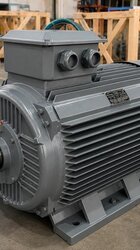
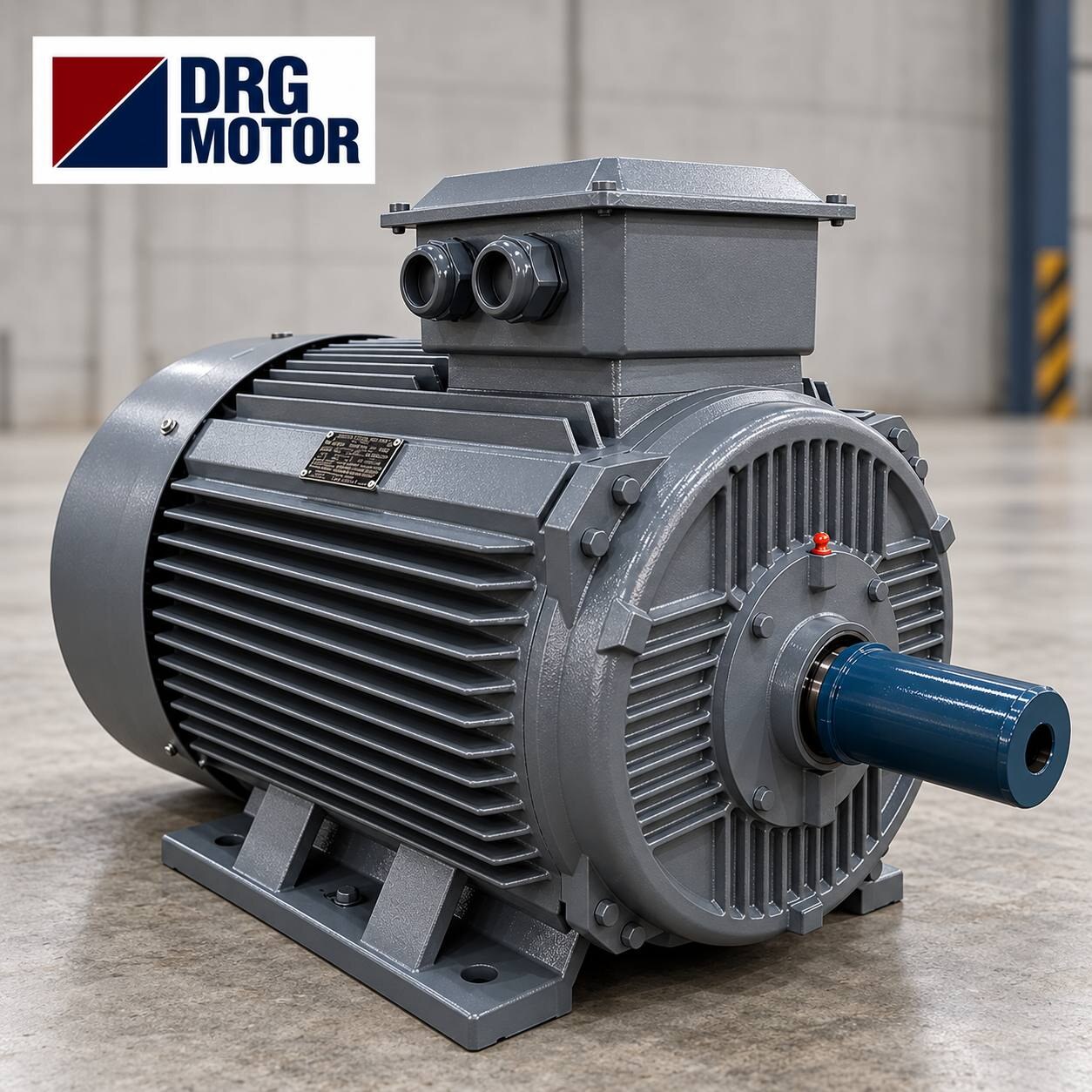

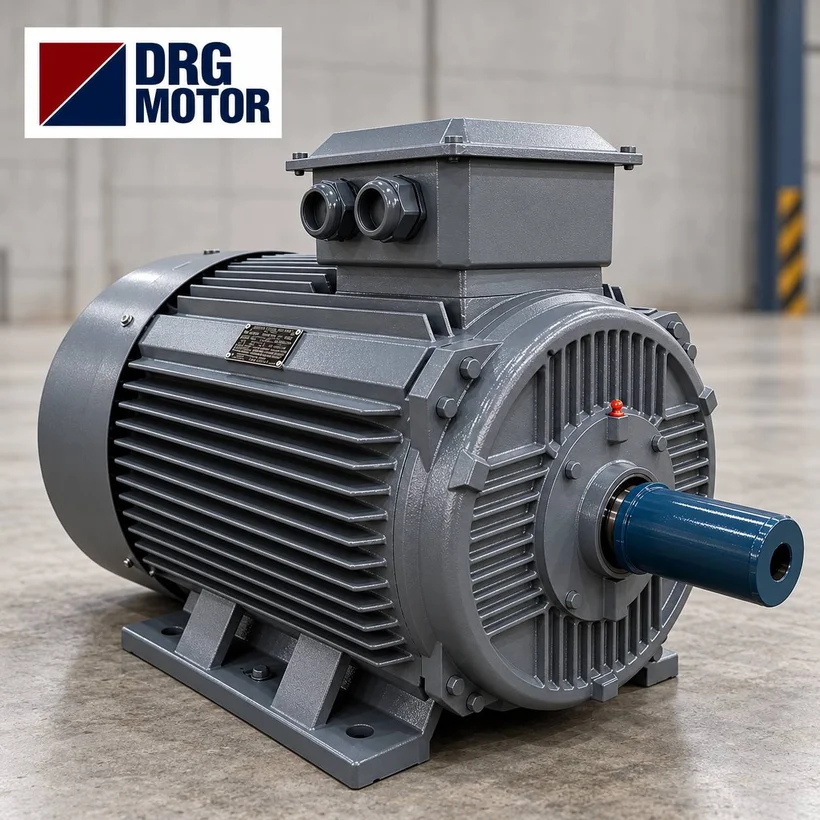
The moment an electric motor is first energized is one of the most demanding moments it experiences throughout its working life. A stationary asynchronous motor draws a current far above its rated current at the instant it starts. This sudden, high current is called the starting current or inrush current, and it usually reaches 6 to 8 times the rated current. This phenomenon affects many things, from fuse selection to contactor sizing, from voltage fluctuation on the supply to motor life. At DRG Motor, in our IE3, IE4, and IE5 efficiency-class asynchronous motors, correctly understanding and managing the starting current is the foundation of a safe installation. In this article we look in detail at why the starting current is so high, what effects it causes, and how it can be reduced.
What Is Starting Current?
The starting current is the high current drawn from the supply at the first moment the motor is energized. Because the motor is not yet turning, this current is far above the motor's normal running current. Within a few seconds, as the motor reaches speed, the current falls rapidly and approaches its rated value. This brief but intense current surge is a critical parameter that affects the entire installation design.
Why Is the Starting Current So High?
The basic reason is the behavior of the stationary rotor. When the motor is not turning, the relative speed between the rotor and the stator's magnetic field is at its highest; that is, the slip is one hundred percent. In this state the motor behaves like a short-circuited transformer in which a very high current is induced. As the rotor turns, the slip decreases, the induced current drops, and the current drawn from the supply returns to normal.
The Relationship Between Slip and Starting Current
Slip is the rate at which the rotor lags behind the magnetic field. At the moment of starting, slip is at its maximum; therefore the current induced in the rotor is also at its maximum. As the motor accelerates, slip drops to a few percent and the current falls to the rated value. The physical origin of the starting current is precisely this high initial slip. We covered the relationship between pole count and speed in our article on pole count and speed.
The Transformer Analogy
The easiest way to understand a stationary asynchronous motor is to think of it as a transformer with its secondary winding short-circuited. In this case a very high current flows from the primary winding. As the motor turns, the rotor begins to leave this short-circuit condition and the drawn current decreases. This analogy intuitively explains why the starting current is so high.
The Role of Rotor Resistance
The resistance of the rotor determines both the starting current and the starting torque together. A high rotor resistance lowers the starting current somewhat while raising the starting torque; however, it reduces the running efficiency. For this reason motor designers strike a careful balance between starting behavior and running efficiency. High-efficiency motors strike this balance in favor of efficiency.
6 to 8 Times the Rated Current
In a standard asynchronous motor the starting current is usually between 6 and 8 times the rated current. For example, a motor with a rated current of 20 amperes may draw 120-160 amperes at the moment of starting. This value varies with the motor's design, pole count, and load condition. In high-efficiency motors the starting current may be somewhat higher, because a low-loss design has lower resistance.
The Duration of the Starting Current
The starting current is not permanent; it lasts only until the motor reaches speed. This duration depends on the inertia of the load. A motor that starts with no load reaches speed in under a second, while a motor connected to a large flywheel or heavy load may draw high current for several seconds. As the starting time lengthens, the thermal load on the motor and the protective devices increases.
The Torque Curve During Starting
The torque produced by an asynchronous motor changes with speed. At the moment of starting there is a certain starting torque; as the motor accelerates, the torque first rises, reaches the breakdown point, and then settles at the rated speed. When selecting a starting method, this torque curve must meet the torque required by the load at every speed; otherwise the motor cannot reach speed and remains stuck at high current.
Starting Current Table
We have gathered the effect of different starting methods on the starting current in the table below. This table lets you quickly see how much each method reduces the current.
| Starting Method | Starting Current (× rated) | Starting Torque |
|---|---|---|
| Direct-on-line starting | 6 - 8 times | Full (high) |
| Star-delta | 2 - 3 times | Low (about 1/3) |
| Soft starter | 2 - 4 times (adjustable) | Adjustable |
| Frequency inverter | 1 - 1.5 times | Controlled, high |
The Effect on Supply Voltage
A high starting current creates a sudden power demand on the supply. This demand causes a temporary voltage drop on the feeder line. The start of a powerful motor can be felt as a brief flicker of lights or a voltage fluctuation in other devices connected to the same line. On a weak supply this effect is more pronounced.
Click to see current electric motor prices and order nowSEE PRICES →
Why Is Voltage Drop Important?
The voltage drop during starting affects not only other devices; it also strains the motor itself. A falling voltage reduces the motor's starting torque. As torque decreases, the motor struggles to handle the load, the starting time lengthens, and the high current lasts longer. This creates a vicious cycle. For this reason the voltage drop is carefully calculated for powerful motors.
Fuse and Circuit Breaker Selection
The starting current directly determines the selection of protective devices. The fuse or circuit breaker must not trip unnecessarily on the brief starting current surge, yet it must quickly interrupt the circuit on a genuine overload or short circuit. For this reason protective devices with a time-delayed (type D or motor-protection) characteristic are preferred in motor circuits.
Contactor Sizing
The contactor that runs the motor is also selected according to the starting current and the operating category. Contactors in the AC-3 category are used for motor loads; these are designed to withstand the high starting current and frequent switching. An undersized contactor experiences early wear and welding on its contacts.
Compensation and Starting
Capacitor banks are used in facilities to correct the power factor. The sudden current changes during motor starts can affect the response of the compensation system. For this reason, in facilities with many large motors, compensation and starting behavior are planned together.
Thermal Relay and Overload Protection
The thermal relay must be slow enough not to react to the brief starting current surge, yet sensitive enough to detect a sustained overload. A correctly set thermal relay allows starting but protects the motor under a genuine strain. We covered this topic in detail in our article on overload protection.
The Effect of Starting Current on Motor Life
Every start means a thermal and mechanical stress created by the high current in the windings. A motor that starts frequently exposes its windings to faster aging. For this reason, in applications that stop and start very often, reducing the starting current is also important for motor life.
Reducing Current with Star-Delta
The classic method of reducing the starting current is star-delta starting. The motor is connected in star at start, so the voltage across each winding is reduced and the starting current drops to about one third. When the motor reaches speed it switches to delta. We covered how star and delta connections are made in our article on terminal connections.
The Limits of Star-Delta
While the star-delta method reduces current, it also reduces starting torque. For this reason it can be used only in applications that can start with no load or a light load. In machines that require a difficult start under load this method falls short and more advanced solutions are needed.
The Solution with a Soft Starter
A soft starter smooths the starting current by gradually increasing the voltage applied to the motor. The current surge disappears, the voltage drop decreases, and mechanical stress is minimized. Soft starting protects both the motor and the machine it drives; in pumps in particular it also prevents water hammer.
The Solution with a Frequency Inverter
The solution that minimizes the starting current is the frequency inverter. The inverter starts the motor from a low frequency and accelerates it gradually, so the starting current stays at almost the rated current level. In addition, a frequency inverter provides energy saving through speed control. In this respect it optimizes both starting and running.
The Difference Between a Soft Starter and an Inverter
A soft starter smooths only starting and stopping; after the motor reaches speed it is connected directly to the supply. An inverter, on the other hand, controls starting and also adjusts the speed throughout running. If only the starting current is a problem, a soft starter is an economical solution; if speed control is also needed, an inverter is a more comprehensive investment.
Which Method, When?
The right starting method depends on the application. For small-power motors that start rarely, direct-on-line starting is sufficient. For medium-power motors that start with no load, star-delta is an economical option. In applications that require precise starting or speed control, a soft starter or inverter is preferred.
The Effect of Load Type on Starting
The character of the load the motor drives determines the duration of the starting current. A high-inertia load (a large fan or flywheel) delays the motor reaching speed, which causes the high current to last longer. With low-inertia loads starting completes quickly. Correctly recognizing the load type is an important part of selecting the starting method.
The Risks of Frequent Starting
A motor that starts very frequently cannot find time to dissipate the heat accumulated at each start and heats up gradually. Suppliers therefore specify the maximum number of starts permitted per hour. Exceeding this limit leads to overheating of the motor and rapid aging of the insulation. In applications that require frequent starting, an inverter or soft starter should be preferred.
Starting Current and Heating
The high starting current produces extra heat in the windings. A motor that starts frequently may not find time to dissipate this heat accumulated at each start. In this case the motor temperature rises gradually. For this reason the starting frequency should be evaluated together with the motor's cooling capacity. We covered the monitoring of temperature in our article on temperature control.
Starting and Phase Balance
If a phase is weak at the moment of starting or there is a problem in the connection, the motor draws an unbalanced current and is strained. In the event of phase loss, starting may not occur at all, or the motor may vibrate and overheat. For this reason phase loss protection is also necessary for a safe start.
Ambient Temperature and Starting
A high ambient temperature narrows the motor's already tight thermal margin. A motor that starts frequently in a hot environment has less room to cool down. Under these conditions, methods that reduce the starting current become even more important. We covered the effect of environmental conditions in our article on ambient temperature and altitude.
Nameplate Information and Starting Current
The motor nameplate states the rated current and sometimes the starting current ratio (Ia/In). This value is a starting point for installation design. Reading the nameplate information correctly is the first step in selecting protective devices correctly. We covered this topic in our article on nameplate information.
Cable Cross-Section and Starting
Because the starting current is brief, the cable cross-section is usually selected according to the rated current; however, in applications that start very frequently or have long cables, the voltage drop caused by the starting current must also be considered. A thin cable causes a greater voltage drop at start and strains the motor.
Commissioning and Starting Observation
When a motor is commissioned for the first time, its starting behavior should be observed carefully. A motor drawing high current for longer than normal indicates either that the load is too heavy or that there is a connection problem. Monitoring the current with a clamp meter during starting reveals hidden problems early and prevents costly failures.
Insulation and Starting Stress
The high current at each start creates an electrical and thermal stress on the winding insulation. Over time these stresses wear out the insulation. The right starting method reduces this stress and allows the insulation to complete its intended life. We covered the importance of insulation class in our article on insulation class.
Protection Class and the Starting Environment
The environment in which the motor operates during starting is also important. In dusty or humid environments, the high current surge can cause leakage current in a weak insulation. For this reason the right IP protection class selection is also part of a safe start.
Starting Current Management in Industry
In industry, the simultaneous starting of many motors can cause serious voltage fluctuations on the supply. For this reason, in large facilities the starts of motors are spread over time or controlled with soft starters. In three-phase motor in industry applications, starting management is critical for both power quality and continuity.
The Importance of Accounting for Starting Current
If the starting current is ignored, fuses trip unnecessarily, contactors wear out early, and unwanted fluctuations occur on the supply. A correct design accounts for the starting current from the outset, selecting the protective devices correctly and determining the appropriate starting method. This foresight prevents many failures experienced in the field.
DRG Motor for Your Starting Solution
The starting current is a motor's strongest but briefest moment; yet it directly affects the entire installation design and the motor's life. Correctly understanding this current, which reaches 6-8 times the rated current, is the foundation of selecting the right protective devices and determining the appropriate starting method. At DRG Motor, we evaluate our IE3, IE4, and IE5 efficiency-class asynchronous motors together with starting solutions suited to your application's starting requirements. For the right starting management, the right protection, and the right motor, you can review our industrial electric motors page. If you are curious about the working principle of electric motors, our what is an electric motor article is a good starting point.
DRG Electric Motors Suited to This Topic
The models below are available in the DRG Motor online shop. Click a model code to see its technical data, dimensions and current price, and order right away.
- DRG-100L1-4 – 2.2 kW – 1450 rpm – aluminium frame
- DRG-132S-4 – 5.5 kW – 1460 rpm – cast iron frame
- DRG-160M-4 – 11 kW – 1465 rpm – cast iron frame
- DRG-180L-4 – 22 kW – 1470 rpm – cast iron frame
Click to see current prices of all electric motors and order nowSEE PRICES →