 English
 Le français
 Türkçe

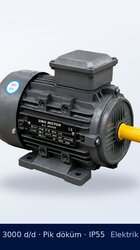
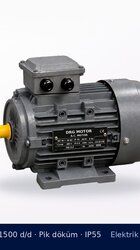
What matters with a construction site panel is that the supply is limited and variable. Before choosing the motor, you need to know which source feeds the panel, up to what current the panel and its socket-plug arrangement allow, the cable length between motor and panel, and how the motor will be started. Outdoor conditions and earthing are also an inseparable part of this list.
Questions to ask on the supply side
| Information | Why is it asked? |
|---|---|
| Source: mains or generator? | A generator is more sensitive to the starting surge |
| Protection at the panel incomer and socket current | Motor current must stay below these limits |
| Voltage and phase sequence | Direction of rotation may change as the panel is moved |
| Cable length and cross-section | Voltage drops on a long portable cable and starting becomes harder |
Environment and handling conditions
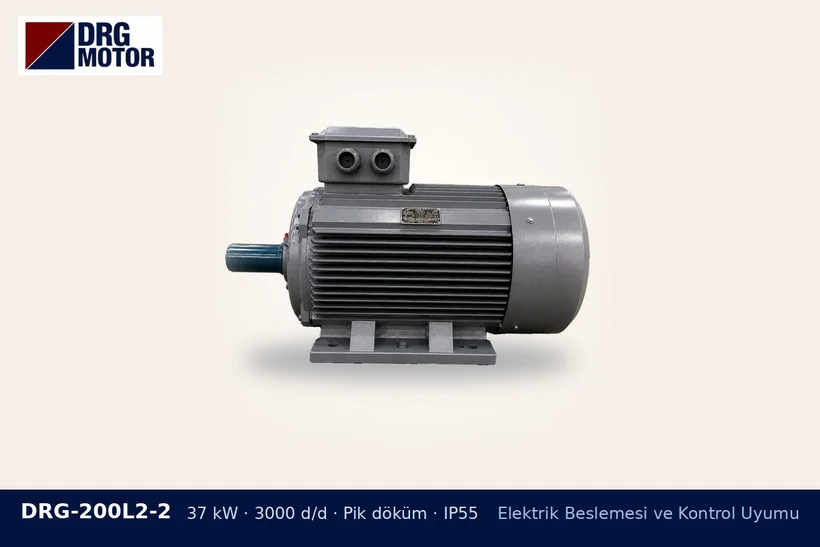
On a construction site, a motor faces cement dust, rain, mud splashes and frequent relocation. IP55 protection is designed against dust and water jets, but the motor must not sit directly in standing water, and the terminal box cover and cable entries must be kept closed. Bearings can be damaged on a motor that takes knocks during transport and lifting; impact damage is not covered by the warranty. In harsh conditions, a cast iron frame is a more robust option.
Safety
In a temporary installation, it is vital that the motor frame is connected to the protective earth conductor and that the panel has residual current protection. Carrying out these checks and connections depends on the motor nameplate, the applicable regulations and the judgement of qualified electrical personnel. An easily reachable means of stopping next to the machine should also be planned.
For one application close to construction work, see the concrete batching plant motors page, and filter cast iron models by power and speed in the shop listing.