 English
 Le français
 Türkçe

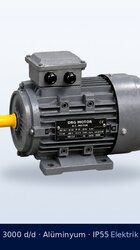
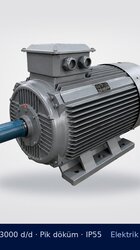
In most cases, yes. If the power, speed, rated voltage and starting method of the new motor are the same as those of the old one, the panel can stay as it is; usually the only thing that needs to change is a review of the protection setting against the new rated current. If the power increases or the starting method differs, the panel components must be checked one by one.
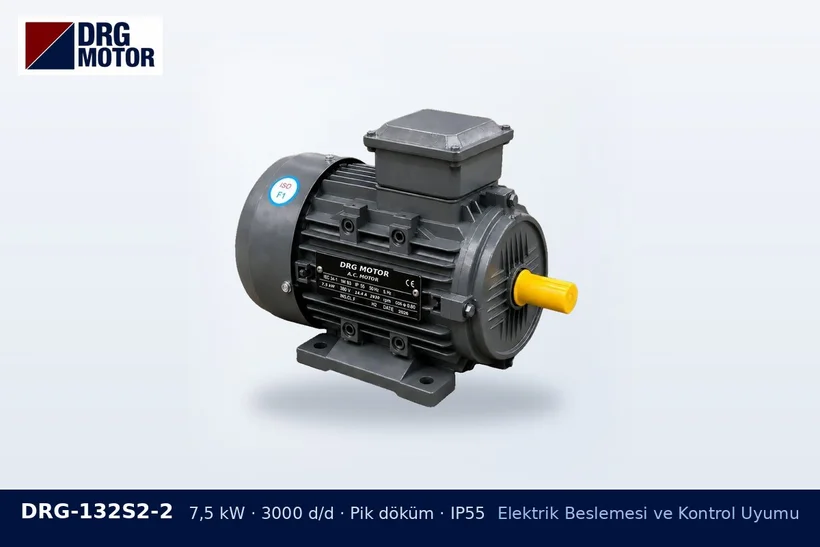
First, put the two nameplates side by side
Comparing the old motor's nameplate with the technical data of the new motor is half the job. The lines to check are power (kW), speed, voltage and connection, rated current and frequency. In the DRG range, models up to 3 kW carry 230/400 V on the nameplate; from 4 kW upwards the nameplate reads 400/690 V. This distinction is decisive especially in panels with a star-delta starter.
Panel components to review
- Switch or fuse: Is its rating suitable for the running and starting current of the new motor?
- Contactor: Was it selected for the motor power, and are its contacts worn?
- Overcurrent relay: Does its setting range cover the new rated current?
- Starting arrangement: Direct-on-line, star-delta, soft starter or drive; is the new motor suitable for this arrangement?
- Cable: Are the cross-section and length adequate for the new current?
When the panel is not enough
If you are moving to a higher power, if the old motor was rewound for a different voltage, or if the panel has aged, with blackened contacts and cables hardened by heat, renewal on the panel side may be unavoidable. This assessment and any setting work depend on the motor nameplate, the manufacturer's documentation and the judgement of qualified electrical personnel; we do not give setting values here.
For a general framework on component selection, take a look at the overload relay, fuse and contactor selection tool, and compare models with the same power and speed as your current motor in the shop.