 English
 Le français
 Türkçe

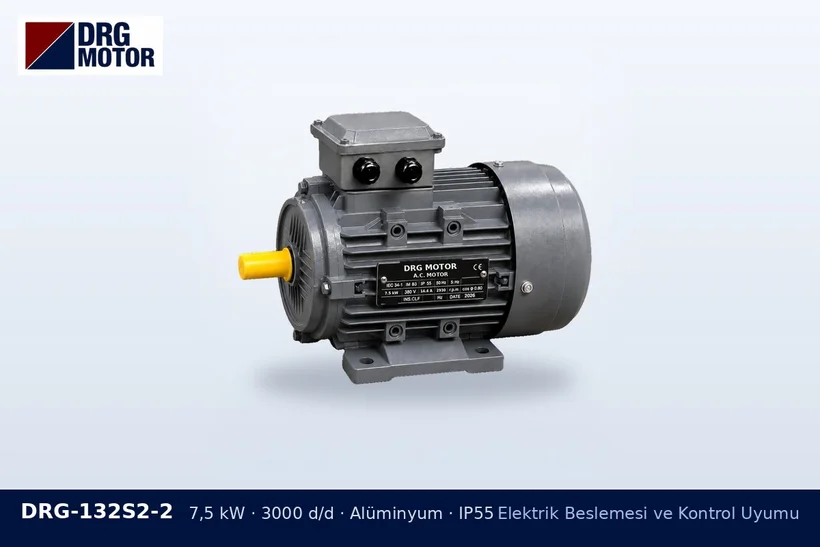
No, a standard three-phase induction motor needs no special equipment. The motor simply turns when it is energised; what decides who energises it and from where is the contactor in the panel and the control circuit driving it. Remote starting is therefore set up on the panel side.
Where is remote control set up?
The contactor coil can be triggered by a remote push-button station, a PLC output, a timer relay, a float switch, a pressure switch, or a module receiving commands over GSM or a network. If a frequency inverter is used, start and speed commands are given through the drive's control inputs. In every case the motor itself stays the same; what changes is the design of the control circuit. Setting up this circuit depends on the motor nameplate, the documentation of the control components and the judgement of qualified electrical personnel.
Additional arrangements for monitoring and safety
- Winding temperature sensor: Monitoring temperature is valuable on a motor that runs unattended; however, a winding sensor is not a ready option on DRG's standard models, so this need should be assessed separately with the system integrator.
- Remote monitoring: Current, running hours and fault information are usually taken from the measuring device on the panel side.
- Local isolator: A lockable isolator placed next to the motor prevents a remote command from starting the motor during maintenance.
The safety dimension
A machine that starts remotely means unexpected movement for anyone working beside it. A warning sign on the machine, guards over exposed rotating parts and a lock-out procedure for isolating energy during maintenance are therefore important. Whether the machine will restart on its own after a power cut should also be decided at the outset in the control design.
Pumps top the list of remotely operated applications; for examples, see the pump motors page, and browse models by power and speed in the shop.