 English
 Le français
 Türkçe

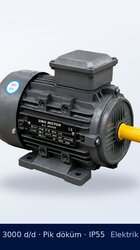
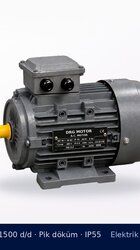
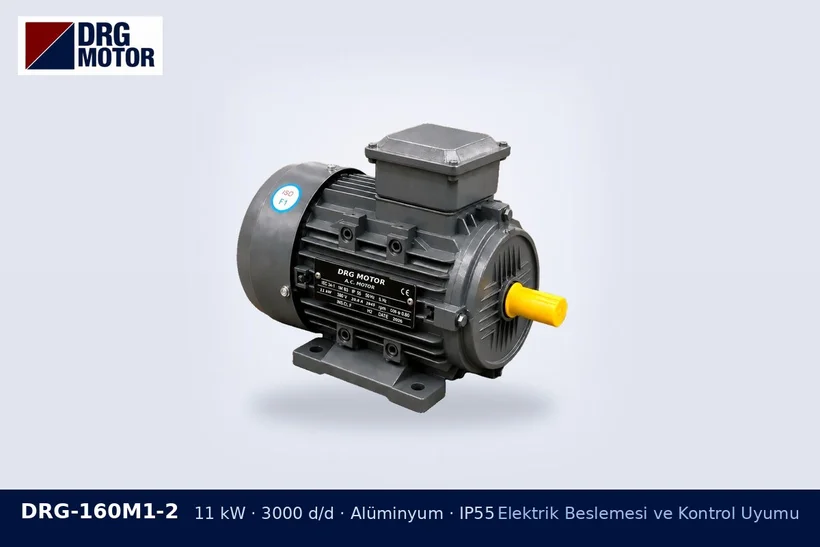
Electrically, the power, pole number (speed), rated voltage and connection, and rated current must match; mechanically, the frame size, shaft diameter and length, and foot or flange dimensions. In addition, the speed range in which the machine operates must be known. Once the motor is fitted, the nameplate values of the new motor are entered into the drive.
Matching checklist
| Value | Why does it matter? |
|---|---|
| Pole number | The drive gives a different speed at the same frequency; if the poles change, the machine speed changes |
| Rated voltage and connection | There must be a connection compatible with the drive output voltage |
| Rated current | Must not exceed the drive's rated current; motor protection is entered based on this value |
| Shaft and mounting dimensions | So that it fits without changing the coupling, pulley and base |
Why must the drive parameters be re-entered?
Drives operating in vector control mode build the electrical model of the motor from the nameplate values and an auto-tuning measurement. Driving the new motor with values belonging to the old one can disturb torque control and leaves the protection thresholds wrong. Entering the parameters and running the auto-tune depend on the motor nameplate, the drive documentation and the judgement of qualified electrical personnel.
Do not forget the special equipment of the old motor
- If the old motor had a separate fan, an encoder or a winding temperature sensor, plan from the outset how that function will be covered; DRG standard models are self-ventilated (IC411) and this equipment is not offered as a standard option.
- If the machine runs for long periods at low speed with high torque, reassess the cooling margin.
- If a long motor cable or a filter is used, the same arrangement should be kept with the new motor.
For comparing dimensions, use the technical drawing page; see how torque varies with frequency in the frequency-torque-power tool, and review candidate models in the shop.