 English
 Le français
 Türkçe

Not automatically; you first need to check what rated current the new motor has. Two motors with the same kW rating can draw different currents because of differences in pole number, power factor and efficiency. If the old setting is well above the new current, the protection responds late; if it is below, the motor stops unnecessarily even though it is healthy.
Why does the same power not mean the same current?
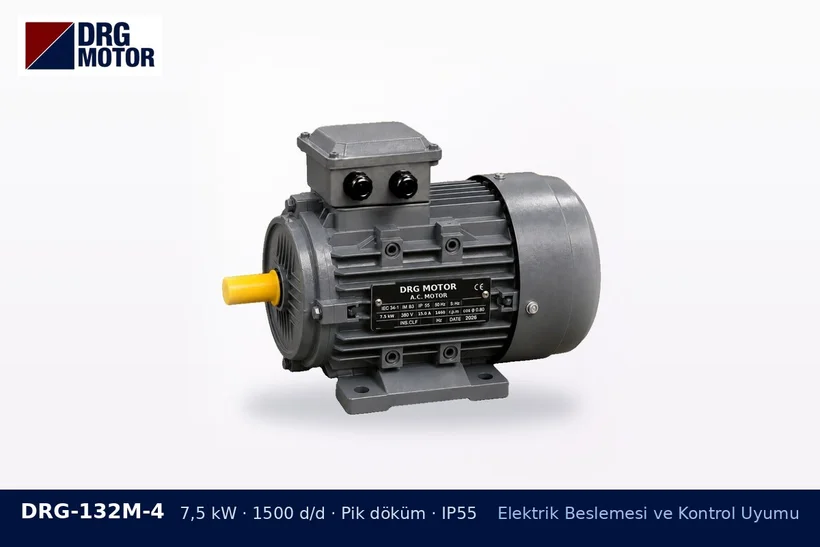
The kW figure printed on the rating plate refers to mechanical output at the shaft. The current drawn from the supply carries, in addition to this power, the motor's internal losses and the reactive component needed for magnetisation. Compared with a 4-pole machine of equal output, a 6-pole motor generally runs at a lower power factor and draws more current. If the old motor has been rewound, the value on its nameplate may no longer reflect reality, which makes it unclear what the old setting was based on.
Checklist during replacement
- Read the current on the new motor's nameplate from the line corresponding to the supply voltage.
- Have someone check whether the setting range of the relay in the panel covers this value.
- Note whether the relay sits in the line or, as in a star-delta arrangement, in the phase winding branch; the reference current changes with this position.
- During the first run under load, measure the current and check it against the rated value.
Who sets it, and on what basis?
The protection setting depends on the motor nameplate, the protective device manufacturer's documentation and the judgement of qualified electrical personnel. Ambient temperature, starting time and starting frequency also enter this assessment. This page does not recommend a setting value; the aim is to remind you that the old setting should not be left unquestioned.
You can compare typical current values by power and pole number in the motor current table, and see the nameplate data of each model on the product pages.