 English
 Le français
 Türkçe

Even if the model name and kW value look the same, the quotations may involve a different frame material, mounting arrangement, voltage or delivery terms. The right approach is to write every technical and commercial detail of the two quotations on the same rows and ask the supplier about any cells left blank or that differ.
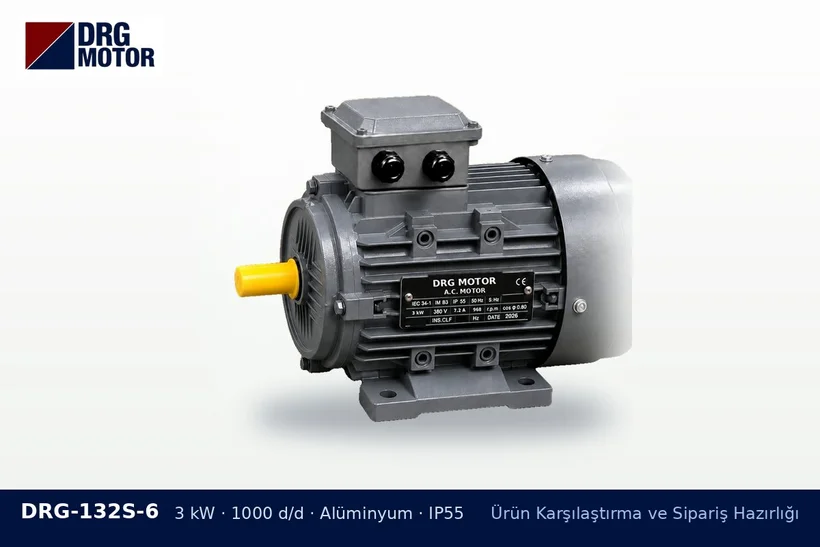
Technical matching table
| Item | Why it matters |
|---|---|
| Power and synchronous speed | Determines the load and machine speed |
| Voltage and connection | Compatibility with the supply and starting arrangement |
| IEC frame number | Shaft height and foot dimensions |
| Mounting arrangement and flange | How it attaches to the machine |
| Shaft diameter and length | Pulley or coupling fit |
| Frame material | Weight and resistance to the environment |
| Protection and insulation class | Dust, water and thermal endurance |
Points to check on the commercial side
- Whether the price is given excluding or including VAT
- Whether shipping is included, and the place of delivery
- The warranty period and the date from which it starts
- Discounts depending on the payment method
- Return and exchange conditions
How to ask when something is unclear
Gather the cells left blank in the quotation into a single written question and keep the answer as an annex to the quotation. Asking for a dimension drawing is the fastest way to clear up uncertainty about the frame and shaft. An item for which no answer can be obtained may indicate that the quotation covers a different product.
Do not decide on a single criterion
Once the same rows are filled in, the price difference becomes meaningful. First the scope is made equal, then the price is compared.
You can see the technical values of DRG models side by side on the motor comparison page, access dimension drawings in the technical drawing section and match your quotation against the product pages in the shop.