 English
 Le français
 Türkçe

For a sound recommendation, the motor nameplate, the shaft end, the fixing method (feet or flange), the drive element, the direction the terminal box faces and an overall view of the machine should each be photographed separately. Several close, sharp shots rather than one distant picture answer most of the dimension questions up front.
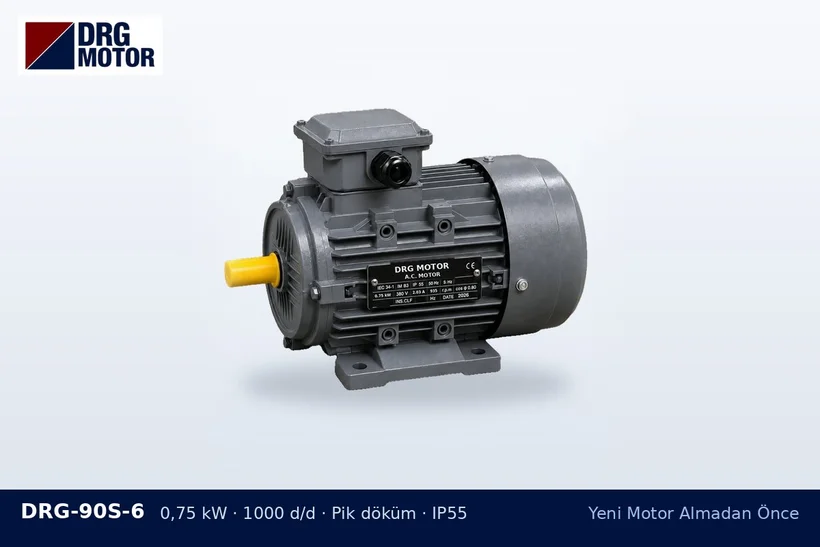
Shot-by-shot list
- Nameplate: Square on, without flash glare; if it is hard to read, take a second shot with light coming from the side.
- Side profile of the motor: Showing the full length from the shaft end to the fan cover.
- Shaft end: Together with the pulley or coupling hub; place an extended tape measure next to it.
- Feet or flange: The bolt holes and where they meet the base.
- Terminal box: Its position with the lid closed and the direction of the cable entry.
- The whole machine: A wide shot showing where the motor sits on the machine and the space around it.
- Machine rating plate: Model, serial number and total power.
What photos cannot tell you
A photo gives no scale; shaft diameter or shaft height cannot be judged by eye. So at the very least the shaft diameter and the height from the underside of the feet up to the middle of the shaft should be measured separately. There is no need to open the terminal box to photograph the internal connections; that should only be done by qualified electrical personnel after the supply has been switched off and locked out.
When sending
Send the photos uncompressed, at original resolution if possible, and add a short note to each one, such as “pump side” or “fan side”. A single sentence on what the machine does and what the problem is speeds up the recommendation.
With the frame and speed identified from the photos, you can look at the three-phase motor models in the shop and reach us with any questions through the channels listed on the contact page.