 English
 Le français
 Türkçe

A more powerful motor does not by itself make the machine do more work; but during a jam or sudden load it can transmit higher torque to the drive train. So before power is increased, check whether the shaft and key, coupling, belts, bearings, gearbox, machine frame and electrical supply are suited to the new rating.
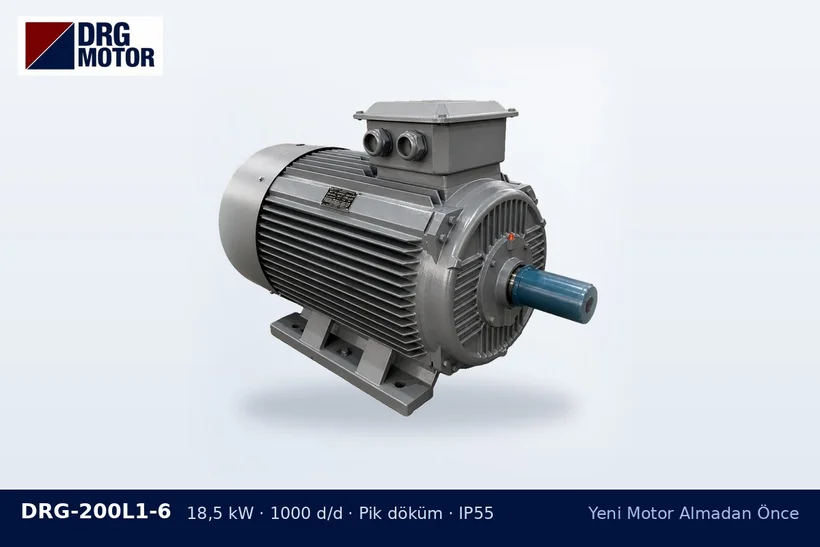
The mechanical chain, link by link
- Machine shaft and key: The shaft diameter and key section were chosen for a certain torque. The starting torque of a larger motor can exceed this limit.
- Coupling: Every coupling has a rated and a maximum torque; the flexible element wears out faster with a stronger motor.
- Belt and pulley: The number and profile of belts are calculated for the power to be transmitted; as power rises, so does the risk of slipping and snapping.
- Bearings: Higher belt tension increases the radial load on the bearings.
- Gearbox: The input power and output torque on its nameplate must not be exceeded; if they are, gear damage follows.
- Chassis and base: A larger frame is heavier; the reaction torque on starting strains the fixing bolts.
Questions on the electrical side
A power increase affects cable cross-section, protective devices and the starting method. This check depends on the motor nameplate, the manufacturer's documentation and the assessment of qualified electrical personnel; for a first idea, the cable cross-section calculator can be used.
Is power really the problem?
If the motor runs hot or the protection trips, look for the cause first: a binding bearing, an over-tensioned belt, low supply voltage or phase imbalance. In these cases more power does not solve the problem, it only delays the symptom. Upsizing makes sense when the measured load really is above the motor rating and the machine manufacturer approves the higher power.
If the checks are positive, look at three-phase induction motors one power step up together with their frame dimensions; the shop listing shows power and frame side by side.