 English
 Le français
 Türkçe

Standard three-phase induction motors can usually run in either direction; rotation is determined by the phase sequence of the supply and set during installation. So the direction does not normally change the motor model. Even so, on machines where direction is critical, it is important to note it in the order and to check it at the first start.
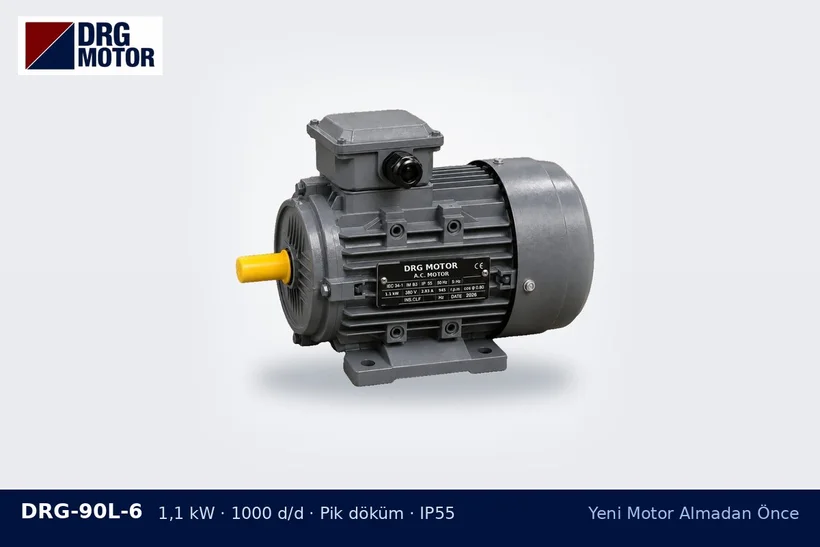
Machines where direction is critical
- Centrifugal pumps: A pump running backwards seems to deliver water, but its pressure and flow drop; impellers screwed onto the shaft may work loose.
- Fans: In reverse the airflow weakens and performance is lost even if the current looks normal.
- Screw compressors and augers: Reverse rotation can cause mechanical damage within a short time.
- Backstop arrangements: On inclined conveyors the backstop blocks rotation in the wrong direction and creates strain.
How should direction be described?
When stating the direction, always give the viewpoint, for example “clockwise when looking at the shaft end”. The arrow on the machine often shows the rotation of the machine's own shaft; with a belt drive, motor and machine turn the same way, whereas with a gear drive they may turn in opposite directions.
Is the motor itself affected by direction?
On self-ventilated motors, the cooling fan on most frames is designed to work in both directions. On some large-frame, high-speed motors, fan or noise behaviour may depend on direction; in such cases the motor nameplate and the manufacturer's documentation take precedence. Changing direction is done through the connections; carrying it out depends on the motor nameplate, the manufacturer's documentation and the assessment of qualified electrical personnel.
For applications where direction matters, you can look at the pump motors page and compare three-phase motor models in the shop at the speed your machine needs.