 English
 Le français
 Türkçe

Models of a machine sharing the same name differ in capacity, working speed, processed material and optional equipment, so their motor power differs too. That is why the figure in a sister model's catalogue is no yardstick for your machine; the data for your own model and serial number should be the basis.
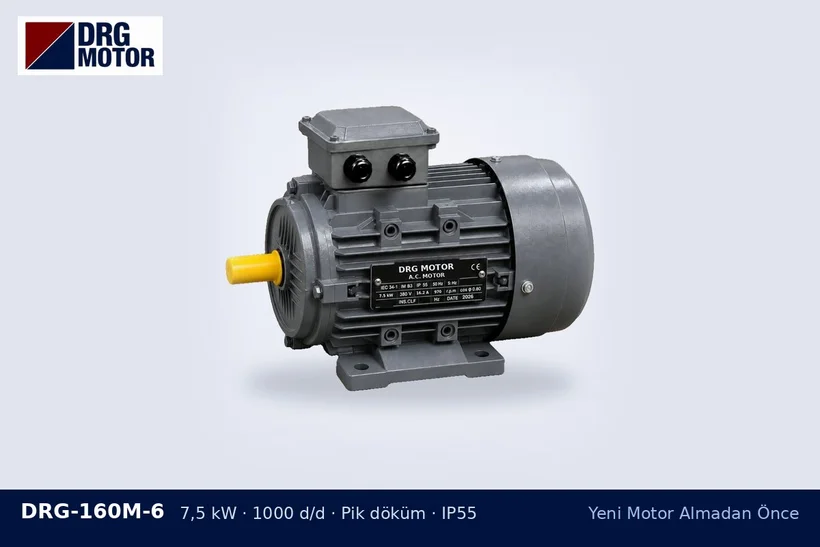
The main reasons power changes
- Capacity: A wider blade, a longer belt or a larger hopper puts more material to work at the same time.
- Speed: If the shaft turns faster on the higher model, more power is needed for the same torque; power is proportional to torque multiplied by speed.
- Material: A model planned for softwood and a version processing hardwood or plastic see different loads.
- Options: If an extra feed unit, brush or fan is connected to the same motor, the total demand grows.
- Market: Versions prepared for 60 Hz countries may have been given a different motor speed and power.
If you use the wrong model's data
If the motor from the small model is fitted to the large machine, it runs hot under heavy load and the protection trips frequently. In the opposite case, a large motor on a small machine adds needless weight and connection differences; the bigger frame may not fit the base, the pulley or the guard.
How do you confirm your own model?
The machine's rating plate shows the model and serial number and, often, the total installed power. Contacting the manufacturer or its dealer with this information is the soundest route. If there is no plate, the frame and shaft size of the existing motor are assessed together with the machine's capacity figures. For example, two planers with different cutting widths may have motors in different frames; from this angle you can look at the motor options used on planing machines.
Once the model data is clear, you can review the three-phase motors listed by power and speed and pick the option that suits your machine's real requirement.