 English
 Le français
 Türkçe

A definite answer cannot be given without looking at the fan curve. When the new branch is added as a parallel leg, the fan at the same speed usually delivers more total airflow, but the air reaching each outlet may fall; the motor load may rise or it may stay the same. The right approach is to calculate the airflow and pressure the new branch requires, find the corresponding point on the fan curve and confirm it by measuring the current of the existing motor.
What does a new branch do to the system?
Adding a parallel leg opens an extra path for the air and can reduce the total resistance; the fan then moves more air, and the power requirement rises, especially on forward-curved fans. Adding an extension to the end of the duct, on the other hand, increases the resistance along that path. Either way, the fan ends up running at a different point on its curve.
Information to collect
- The fan maker's curve, or at least the fan type, impeller diameter and speed
- The required air volume at the existing outlets and on the new branch
- The length of the new branch, the number of bends and fittings such as grilles and filters
- Motor current measured before and after the branch is added
If the fan falls short, so does the motor
If the required airflow and pressure lie outside the fan curve, the problem is fan size, not motor power. In that case, fitting a more powerful motor does not raise the impeller speed; the fan turns at the same speed. Increasing the speed (by changing pulleys on a belt-driven fan) raises the power requirement roughly with the cube of the speed; this calls for checking the motor and the maximum permissible speed of the impeller.
When is the existing motor adequate?
If the shaft power at the new operating point stays below the motor's rated power, the measured current leaves a reasonable margin to the nameplate current and the air distribution can be balanced, the motor can stay. Balancing should be carried out with dampers.
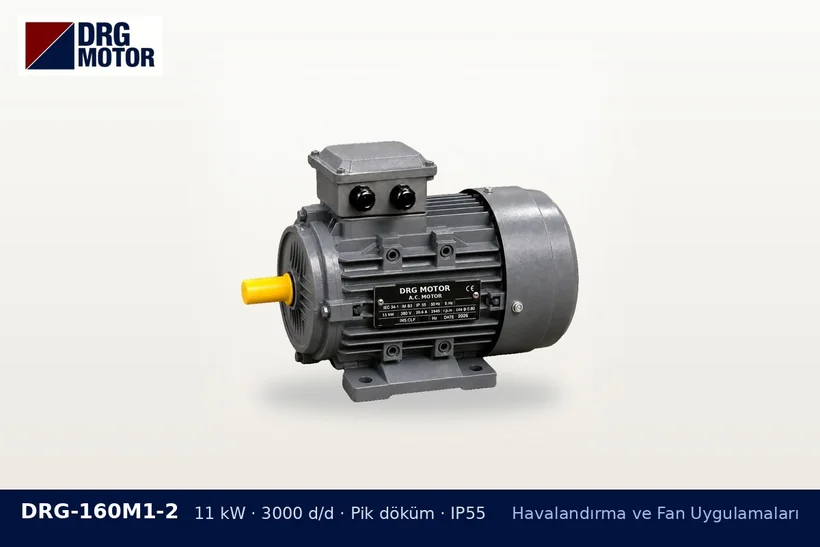
For a preliminary calculation you can use the fan motor power calculator; if a larger motor is needed, you can assess suitable options on the fan motors page.