 English
 Le français
 Türkçe

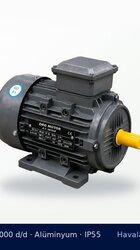
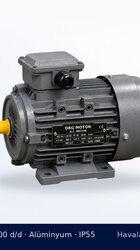
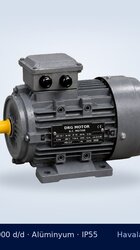
Because hot air is lighter than cold air, a fan running at the same speed draws less power in hot operation; the real load appears at the first start-up, while the oven is still cold. The motor should therefore be sized not for the hot operating point but for cold start and intermediate conditions. The second issue is the transfer of gas temperature to the motor through the shaft and the frame.
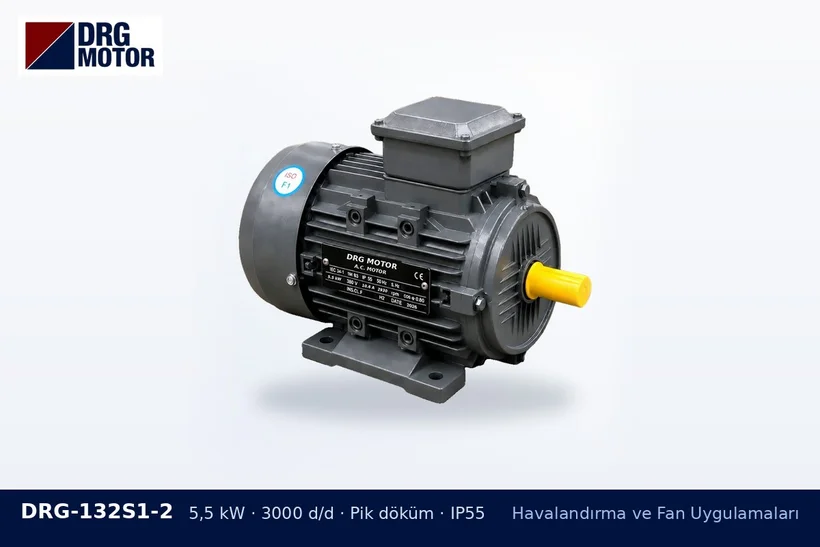
When density changes, fan power changes too
The power drawn by a fan is roughly proportional to the density of the gas it handles. The power figure given by the fan supplier usually refers to gas at operating temperature. When the boiler stops and cools down, the same impeller moves much denser air and the shaft power rises noticeably. If there is no closed-damper start, gradual heating or speed control, the motor rating should be checked against the cold-air condition. Asking for two separate power values (hot and cold) on the fan data sheet is the safest approach.
How heat reaches the motor
Conduction through the shaft
On direct-coupled fans the impeller shaft is close to the motor shaft, so heat travels as far as the drive-end bearing. A cooling disc (heat slinger), an extension bearing or a belt drive moves the motor away from the hot zone.
Ambient temperature
Standard motor nameplate ratings are usually given for a 40 °C ambient temperature. Next to an oven, above a hot duct or inside an enclosed cabinet, this value is easily exceeded; in such a location the cooling air of a self-ventilated (IC411) motor is hot as well. Class F insulation provides some margin, but whether derating is needed for a high ambient temperature should be assessed separately.
Information to gather before ordering
- Fan shaft power at the operating gas temperature and at the cold-start temperature
- Fan speed and drive type (direct-coupled or belt-driven)
- Maximum ambient temperature where the motor is located
- Mounting arrangement, shaft diameter and flange size
Shaft heat and protection options for hot process fans are covered in detail on the high-temperature fan motors page. Once power and speed are clear, you can review suitable cast iron frame options in the motor shop.