 English
 Le français
 Türkçe

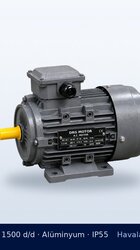
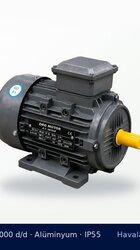
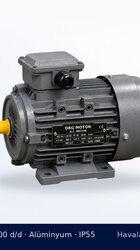
It is a solution only if the noise comes from the air itself and the fan can afford to deliver less air. When speed drops, the sound decreases noticeably, but airflow falls with speed and pressure with the square of speed. The source of the noise must therefore be identified first, and then it must be calculated whether the reduced speed still meets the ventilation requirement.
Where is the noise coming from?
| Symptom | Likely source | Does lowering speed help? |
|---|---|---|
| Whooshing, hum at the duct outlet | Air velocity, blade tip speed | Yes, but airflow drops |
| Knocking or vibration that varies with speed | Impeller balance, loose fixing | Masks the problem, does not solve it |
| Metallic noise, hot bearing | Bearing damage | No |
| Belt noise, squeal | Tension, misalignment | No |
| High-pitched whistle with an inverter | Switching frequency | No, the drive settings should be reviewed |
What is lost if speed is reduced?
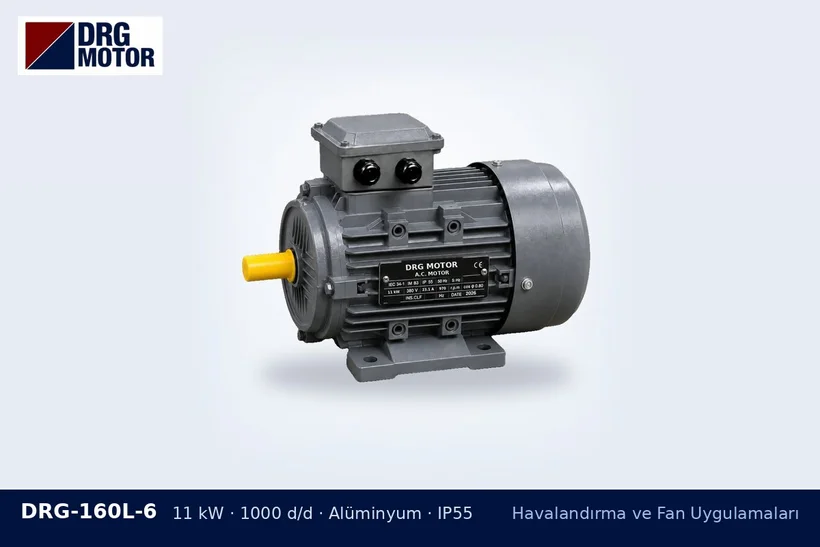
For example, a fan going from 1500 rpm to 1000 rpm delivers about one third less air and the pressure it produces falls below half. In a system with high duct resistance this loss is felt even more; the fan may fail to get air to the grilles at the far end of the duct. Obtaining the same air volume more quietly usually requires a larger-diameter, slower-turning fan; changing the motor alone does not achieve this.
Steps worth trying first
- Checking impeller balance and fan casing fixings
- Using anti-vibration mounts and flexible duct connectors
- Reviewing duct and grille velocities, adding a silencer
Types of motor-generated noise are covered separately in the article on magnetic noise. If, after calculating the air requirement, a lower speed is acceptable, you can review the axial fan motor criteria together with 1000 rpm model options in the shop.