 English
 Le français
 Türkçe

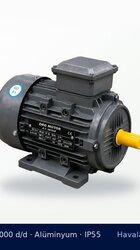
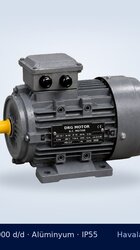
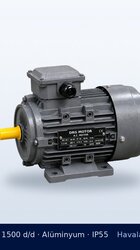
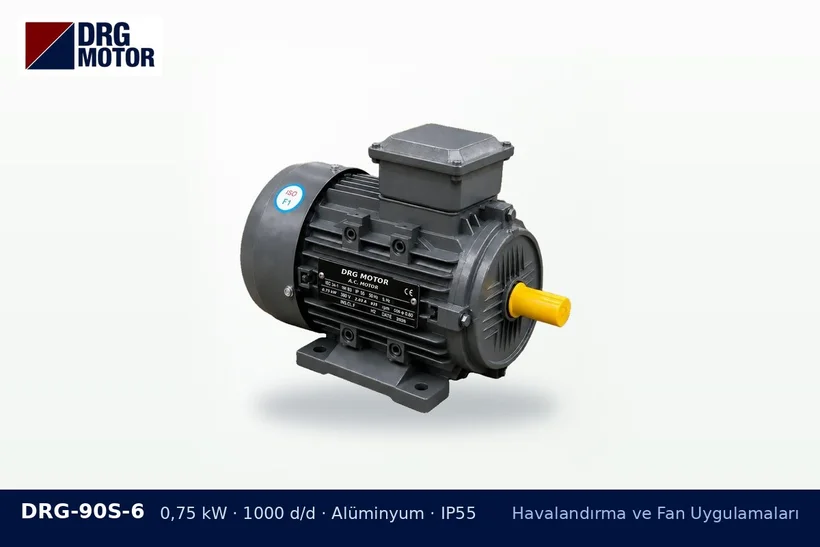
For a greenhouse fan, the motor is selected according to the power and speed the fan requires, the humid, chemical-laden air of the greenhouse and the electrical supply. The total load of the group of fans switching on at the same time, not just a single fan, must also be taken into account. Motor power should be taken from the fan data sheet, and protection requirements from the way the greenhouse is operated.
Why is greenhouse air so demanding?
Relative humidity inside a greenhouse climbs very high in the morning, and temperature rises quickly during the day. Fogging and pad cooling systems carry water droplets around the motor; after spraying, the air may contain sulphur, copper or other crop-protection residues. An enclosed, IP55-protected motor offers protection against dust and water jets; however, chemical residue and constant condensation gradually take their toll on the paint, bolts and terminal box seals. Where possible, it is an advantage to place the motor away from the fogging and spraying zone and out of the direct path of the humid airflow.
Power and speed by fan type
Large box-type greenhouse fans are mostly belt-driven and run at low impeller speed; in this case, motor speed is assessed together with the pulley ratio. On direct-coupled fans, by contrast, motor speed equals impeller speed and the value specified by the fan manufacturer must not be exceeded. The shaft power on the fan data sheet is the lower limit for the motor's kW rating.
Electrical supply and group starting
- DRG's standard range consists of three-phase motors; if the greenhouse only has a single-phase supply, this must be resolved in advance.
- On long supply lines, voltage drop can make starting harder.
- Starting many fans at the same time raises the inrush current; staggered switching is generally preferred.
- If a thermostat or climate computer switches the fans on and off frequently, the number of starts per hour should also be asked about.
Protection and connection arrangements depend on the motor nameplate, the manufacturer's documentation and the assessment of qualified electrical personnel.
You can see the overall picture, along with other applications in agricultural facilities, on the agricultural machinery motors page. If the fan's power and speed are known, you can review suitable aluminium frame three-phase models in the shop.