 English
 Le français
 Türkçe

In most cases, no; first you need to find out why consumption has gone up. If more energy is being used for the same amount of production, the cause is frequently not the motor itself but friction, clogging or leakage in the system the motor drives. A new motor will not remove these faults.
Causes to look for outside the motor
- On fans: dirty filters, blocked ducts or a fouled impeller
- On pumps: a worn impeller, a throttled valve or increased system resistance
- On compressed air lines: leaks and an unnecessarily high pressure setting
- On conveyors: a misadjusted drum, seized rollers, an over-tensioned belt
- Coupling misalignment and bearings that have run dry
The electrical side should also be checked
A voltage difference between phases creates additional losses and heating in the motor. If the reactive energy charge on the bill has increased, this is a separate matter from active consumption and the condition of the power factor correction system needs to be examined; the power factor correction calculation page helps in understanding the concept. Interpreting the measurements and taking corrective action depend on the assessment of qualified electrical staff.
Signs that point to the motor itself
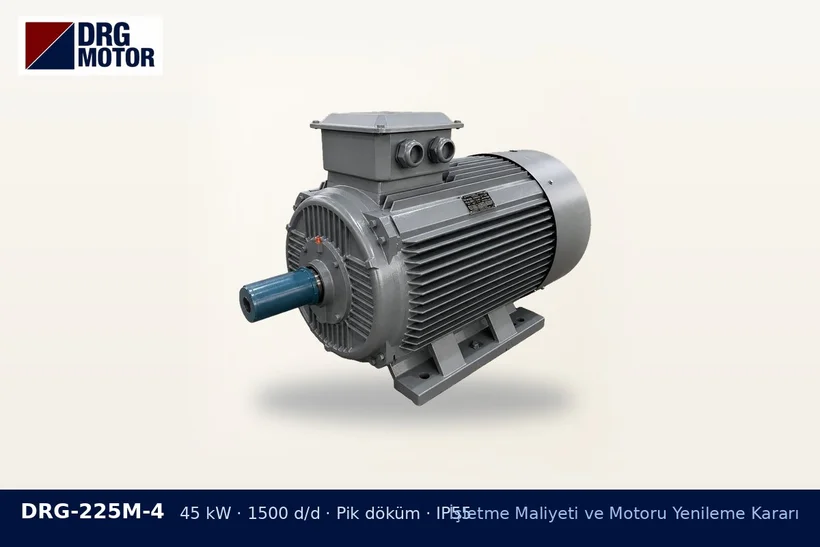
If, after the load and the system have been checked, the motor still draws close to or above its nameplate current, the frame runs hotter than in previous months, it has recently been rewound or the bearing noise has changed, motor replacement comes onto the agenda. At that point, besides a new motor of the same power, one rating lower can also be considered if load measurement shows the motor is running at low load.
A measurement-based sequence
- Narrow down which line or panel the increase is on using a separate meter.
- Record the current, voltage and power factor of the suspect motor under load.
- Carry out the mechanical checks and repeat the measurement.
- If the difference persists, assess motor replacement with a cost table.
If replacement proves necessary, you can review general-purpose industrial motor options suited to the measured load, or go directly to the power list in the shop.