 English
 Le français
 Türkçe

They do, because two motors of the same kW and speed coming from different brands can differ in frame length, terminal box position, flange or shaft details. In that case a separate spare may be needed for each one, and the number of motors in the store rises more than necessary.
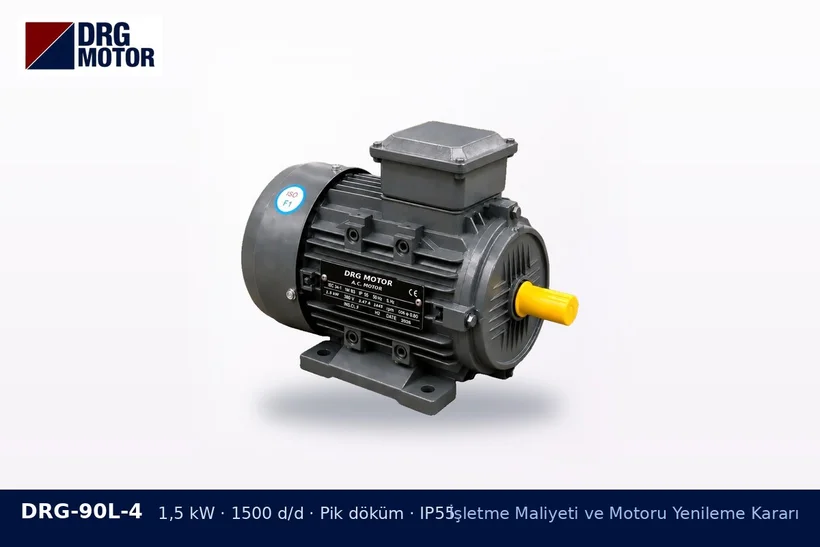
Thinking in dimensions, not brands
The IEC frame number provides a common reference for shaft height, foot fixing distances and shaft dimensions. When the spare plan is built around this dimensional group rather than the brand name, it is often possible to define a shared spare for motors of different makes. Even so, each match must be verified individually on site; overall length, terminal box location and cable entry direction can cause problems depending on the machine.
The hidden costs of a mixed fleet
- Separate spare parts for different bearing and seal sizes
- The maintenance team working with different documentation
- Time lost in a breakdown working out which spare is the right one
- Loss of dimensional traceability on motors whose nameplate data has worn off
Where to start simplifying
First, all motors are listed with their power, speed, frame number, mounting arrangement and shaft dimensions. Then the number of different brands and versions within each dimensional group is counted. If, every time a motor fails or reaches the end of its life, it is replaced with the common model chosen for that group, the fleet gradually converges on a single type; no wholesale replacement is required.
A caution for the spare decision
A shared spare must also meet the most demanding application in the group: if one motor runs in a dusty environment and another in an enclosed compartment, the protection and cooling conditions must be checked separately.
You can compare dimensions on the motor comparison page and review the powers you are considering as a shared spare by frame number in the model list in the shop.