 English
 Le français
 Türkçe

If the budget is limited, first place goes to motors that both run long hours and whose failure stops production. They are followed by motors that have been rewound more than once, fail frequently or are wrongly sized for their load. Motors that run little and already have a spare can be left at the end of the list.
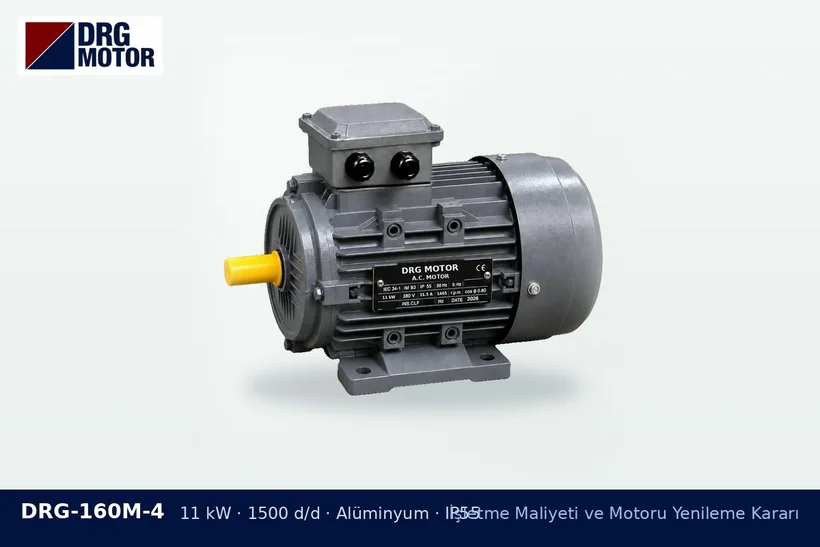
Ranking by scoring
Scoring every motor against the same criteria takes the decision out of the realm of personal impression. The table below is a simple starting suggestion; you can change the weightings to suit your plant's priorities.
| Criterion | Low score | High score |
|---|---|---|
| Annual operating hours | Seasonal or occasional | Multi-shift |
| Importance in the line | Has a parallel twin | Line stops when it stops |
| Failure and rewinding history | No recorded failures | Repeated failures, several rewinds |
| Loading condition | Close to nameplate, steady | Very low load or overload |
Assess the energy effect separately
A small loss difference on a high-power motor that runs long hours can amount to more energy than a large difference on a small motor. The energy saving calculation must always be made with measured load and real operating hours; the energy saving calculator can be used for this comparison.
A plan for motors outside the budget
For the motors left further down the list, what to do in case of failure should be decided in advance: which model will be bought, whether the dimensions match, which parts will be needed for installation. That way even unplanned replacements move towards the same target model.
For the motors on the priority list, you can work out the corresponding power and frame from general-purpose industrial motors or from the shop list and add them to the budget table.