 English
 Le français
 Türkçe

The bill shows the plant's total consumption; the part attributable to motors can only be separated out by measurement. The surest method is to fit sub-meters on large motor groups and, where that is not possible, to take sample measurements with a portable analyser and convert them to an annual figure using operating hours.
Why calculating with nameplate power is not enough
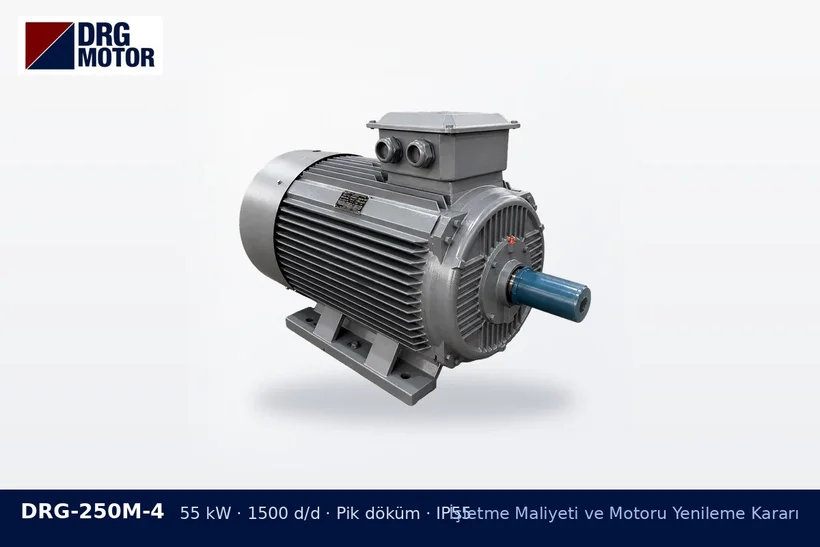
The nameplate kW figure is shaft output: it tells you what the motor is able to supply to the machine, not what it takes from the network. The motor is often loaded below its nameplate, and sometimes the load changes during the day. Multiplying the nameplate kW by operating hours usually gives a consumption figure that differs from reality.
Steps for separating by measurement
- List: write down all motors with their power, location and the panel they are connected to.
- Grouping: single out the highest powers and the longest-running units; most of the consumption is in these.
- Measurement: on these motors, record active power (kW) and energy (kWh) over a representative period.
- Hours: obtain the annual operating hours from the PLC, a meter or the shift log.
- Comparison: compare the calculated total with the bill; the difference is lighting, heating and other loads.
From an instantaneous reading to power
In a three-phase motor, the input active power is found approximately from P = √3 × U × I × cos φ. The power factor must therefore be measured along with the current; measuring current alone overstates the power at low load. The measurement must be carried out by qualified electrical staff.
Read the reactive item on the bill separately
Motors are also a main source of reactive energy. If a reactive energy charge appears on the bill, it should be examined as an item separate from active consumption, and the power factor correction situation should be assessed separately.
By entering the measured values into the energy consumption calculator you can build a table per motor, and compare replacement candidates with high-efficiency motor options.