 English
 Le français
 Türkçe

On a machine that runs a few months a year, annual hours are low, so the energy gain alone does not justify a new motor. What decides is what a breakdown during the season would cost, how the motor comes through the long idle period, and whether it starts up without trouble at the beginning of the season.
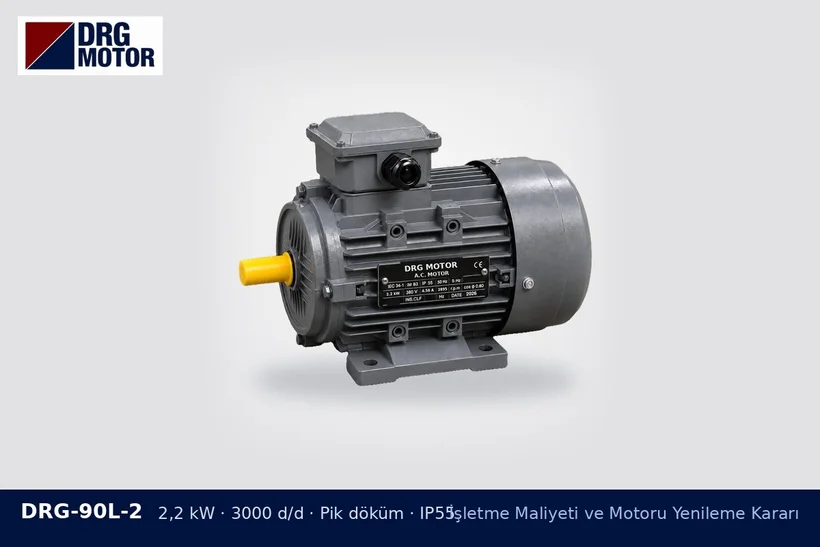
The weight of an in-season breakdown
In work such as harvesting, irrigation, drying or grain processing, the season is short and lost days cannot be made up later. For this reason the motor decision on a seasonal machine is based mainly on reliability. If the old motor causes problems at the start of every season, the real return on replacement is the removal of this uncertainty.
How the idle period affects the motor
- During long standstills condensation can form inside the frame; insulation resistance may drop.
- Bearing grease can lose its consistency, and stationary balls may leave marks in the raceway.
- On motors left outdoors, bird nests, dust and leaves may build up in the fan cover.
- Rodents can damage cables and the terminal box.
Covering the motor at the end of the season, storing it in a dry place if possible and having insulation measured by qualified staff at the start of the season reduce these risks.
How to set up the calculation
On one side, write the price of the new motor and installation; on the other, the expected loss from an in-season breakdown plus the maintenance and repair costs of the old motor. The energy difference remains a small row in this table; even so, for a high-power pump or fan it is worth checking with the energy saving calculator.
Choice of frame
For machines working outdoors in vibrating, dusty conditions, a cast iron frame can be considered; in enclosed, light-duty locations an aluminium frame is also among the options.
You can review options for agricultural and irrigation applications on the agricultural machinery motors page and pick a model by power and speed from the shop list.